Arugula is the leafy green that divides dinner tables — loved for its bold, peppery bite, or avoided for exactly the same reason. Known also as rocket, this slender-leaved green belongs to the brassica family, alongside broccoli, cabbage, and mustard greens, and it has been part of Mediterranean cooking for centuries, scattered over pizzas, folded into pasta, and tossed with lemon and olive oil.
If you have only ever met arugula as a small garnish beside a main dish, this guide will help you see it differently. Arugula is easy to use, needs almost no cooking, and fits comfortably into a balanced diet: it is light and hydrating, and it provides vitamin K, folate, calcium, vitamin C, and antioxidants. Below you will find what arugula is, what it may offer for general health, and the simplest ways to enjoy it raw, wilted, and blended — plus the myths worth setting aside and when to seek medical advice about related health concerns.
Choose bright, perky arugula leaves with no yellowed or wilted bunches.
Key Takeaways
- Arugula, also called rocket, is a peppery leafy green in the brassica family, related to broccoli, cabbage, and mustard greens.
- It is naturally light and hydrating, and provides vitamin K, folate, calcium, vitamin C, and antioxidants.
- Arugula can be eaten raw in salads and sandwiches, tossed over warm pasta and pizza, or wilted briefly into cooked dishes.
- Its flavour is fresh and peppery raw, and it turns mellow and gently nutty when warmed.
- Buy bright green, crisp leaves, wash them well, and use them within a few days for the best flavour.
1. What Is Arugula?
Arugula (Eruca vesicaria) is a fast-growing leafy green with slender, deeply lobed leaves and a distinctive peppery, slightly mustard-like flavour. The name "rocket" is common in the United Kingdom and Australia, while "arugula" is the usual term in the United States — both refer to the same plant. It is harvested young for tender salad leaves, while older, larger leaves develop a stronger, spicier bite.
As a brassica, arugula shares family traits with kale, broccoli, and radish: it contains glucosinolates, the natural compounds that give brassicas their characteristic sharpness and that researchers continue to study for their role in a healthy diet. In the kitchen, that sharpness is an asset rather than a flaw. A handful of arugula can lift a plain grain bowl, balance rich cheese, and cut through the sweetness of roasted vegetables.
2. Arugula Nutrition at a Glance
Arugula is a good example of a food that adds a great deal of flavour and nutrients for very few calories. A generous handful is mostly water, so it is light and hydrating, and it contributes fibre, vitamin K, folate, calcium, and vitamin C, along with smaller amounts of vitamin A, magnesium, and potassium. Vitamin K supports normal blood clotting and bone health, folate supports cell growth, and calcium contributes to bone and teeth maintenance — all as part of an overall varied diet, not from any single food alone.
Arugula also contains antioxidants, including carotenoids and vitamin C, which help protect cells from everyday oxidative stress. No single green can cover all nutritional needs, and arugula works best as one part of a varied pattern of eating that includes other vegetables, fruits, whole grains, legumes, and protein sources. Think of it as an easy upgrade: swapping half a plate of plain lettuce for arugula adds flavour and nutrients without adding heaviness.
3. Arugula and Bone Health
Arugula may support bone health as part of a balanced diet, largely because it is a useful source of vitamin K and calcium. Vitamin K plays a role in bone metabolism, and calcium is a building block of bone tissue. Studies suggest that diets rich in leafy greens are associated with better bone outcomes in older adults, although arugula alone cannot prevent or treat bone conditions such as osteoporosis.
For everyday eating, pairing arugula with other calcium sources — such as yoghurt, cheese, fortified plant drinks, or canned sardines with soft bones — makes a meal more bone-friendly overall. Regular weight-bearing movement, adequate vitamin D, and not smoking also matter far more for bone health than any single ingredient, and anyone concerned about bone density should discuss screening and nutrition with a clinician.
4. Arugula, Immunity, and Antioxidants
The vitamin C and antioxidants in arugula may help support normal immune function as part of a varied diet. Vitamin C contributes to the normal functioning of the immune system and helps protect cells from oxidative damage, while the carotenoids in dark green leaves add further antioxidant activity. Arugula will not prevent colds or infections on its own, and claims that any one food "boosts" immunity beyond normal function should be treated with caution.
What arugula can do reliably is make healthy meals more appealing. A salad that tastes bright and peppery is a salad you are more likely to finish, and consistent, enjoyable vegetable intake is what supports general health over time. Pair arugula with citrus, bell peppers, or tomatoes for extra vitamin C, and with a drizzle of olive oil, which may help the body absorb fat-soluble nutrients from the leaves.
5. Arugula and Heart Health
Leafy greens like arugula are a natural fit for a heart-friendly eating pattern. Arugula is low in sodium and fat, provides potassium and magnesium, and adds bulk and flavour to meals without heaviness. Diets rich in vegetables are consistently associated with better heart health in population studies, and arugula contributes to that pattern when eaten regularly alongside other vegetables, whole grains, legumes, and healthy fats.
Arugula also contains natural nitrates, as many leafy greens do, which the body converts in part to nitric oxide — a compound that helps blood vessels relax. This is one reason researchers are interested in leafy greens and blood pressure, though the effect of one food is modest and should never replace prescribed blood pressure treatment. The practical takeaway is simple: using arugula often, in place of heavier or saltier sides, is a small habit that supports an overall heart-healthy diet.
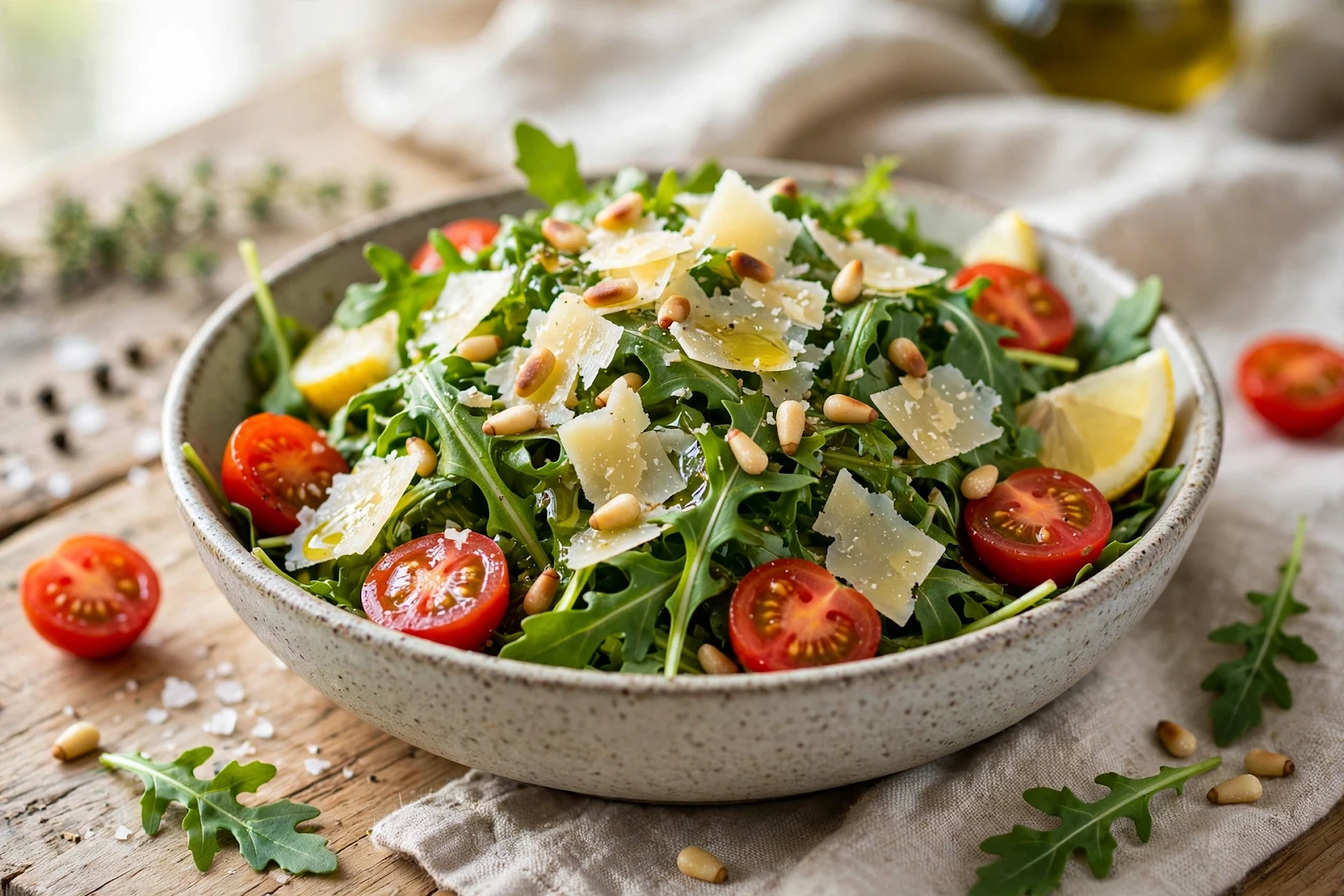
Arugula pairs beautifully with lemon, parmesan and cherry tomatoes in a simple salad.
6. Arugula, Digestion, and Weight-Friendly Eating
Arugula's fibre and high water content may help support comfortable digestion as part of a varied diet. Fibre adds bulk, supports regular bowel movements, and helps meals feel satisfying, while the peppery compounds in brassicas can stimulate appetite and digestion for some people. Arugula is not a remedy for digestive disorders, and anyone with persistent bloating, pain, or bowel changes should seek medical advice rather than relying on diet tweaks alone.
For weight-friendly eating, arugula is a useful tool because it adds volume and flavour for very few calories. A large base of arugula lets a salad, sandwich, or grain bowl feel generous without feeling heavy, which may help you feel satisfied on a smaller portion of richer foods. Combine it with protein and healthy fat — for example, chickpeas, eggs, nuts, or olive oil — so the meal keeps you full for longer.
7. Simple Ways to Enjoy Arugula Every Day
The easiest way to eat more arugula is to treat it as a finishing green rather than a side dish that needs its own recipe. Try these simple ideas:
- Classic salad: Toss arugula with lemon juice, olive oil, salt, shaved parmesan, and cherry tomatoes.
- Sandwiches and wraps: Layer a generous handful into sandwiches with cheese, egg, or grilled vegetables for peppery crunch.
- Pasta and pizza: Scatter arugula over warm pasta or pizza just before serving so it wilts slightly.
- Grain bowls: Use arugula as the base for rice, quinoa, or farro bowls with roasted vegetables and a tahini or yoghurt dressing.
- Soups and eggs: Stir arugula into hot soup at the last minute, or fold it into scrambled eggs and omelettes.
- Pesto twist: Blend arugula with basil, nuts, garlic, olive oil, and parmesan for a peppery pesto.
- Smoothies: Add a small handful to a fruit smoothie — the pepperiness disappears behind banana, mango, or berries.
Start with a small amount if you are new to the flavour, and balance it with sweet or creamy partners such as roasted squash, pear, goat cheese, or avocado. Arugula's bite softens when paired with fat and acid, which is why lemon and olive oil are its classic companions.
8. How to Choose, Wash, and Store Arugula
Choose bunches or bags with bright green, crisp leaves and no yellowed, slimy, or wilted patches. Baby arugula is milder and more tender, while mature leaves are larger and spicier — both are good, so pick the one that suits your dish. If buying loose bunches, check that the stems are fresh and the leaves smell green and peppery, not musty.
Wash arugula gently but thoroughly, since soil and grit can hide in the lobed leaves. Swish the leaves in a large bowl of cool water, lift them out rather than pouring through a colander, and repeat if the water looks gritty. Dry them well in a salad spinner or with clean towels, because wet leaves wilt quickly and dilute dressings. Store dry arugula in the fridge in a container lined with a paper towel, and use it within a few days. Dress salads only just before serving to keep the leaves crisp.
Tossed over warm pasta, arugula wilts just slightly and adds a fresh peppery finish.
Myths vs Facts
Myth: Arugula is too bitter to be healthy food. Fact: Arugula's peppery bite comes from natural brassica compounds, not from anything harmful, and the flavour mellows with lemon, olive oil, and creamy or sweet partners.
Myth: Only baby arugula is worth eating. Fact: Baby leaves are milder, but mature arugula is equally nutritious and its stronger flavour works well in cooked dishes, pesto, and hearty salads.
Myth: Arugula alone will detox your body. Fact: The liver and kidneys handle detoxification, and no single food detoxes the body. Arugula supports general health as part of a varied diet, not as a cleanse.
Myth: Arugula is just a garnish with no nutrition. Fact: A handful of arugula provides vitamin K, folate, calcium, vitamin C, and antioxidants for very few calories — far more than a decorative garnish.
Myth: People on blood thinners can never eat arugula. Fact: Vitamin K matters for blood clotting, but most clinicians advise keeping vitamin K intake consistent rather than avoiding greens entirely. Anyone on blood-thinning medication should discuss their diet with their clinician rather than cutting out leafy greens on their own.
When to See a Doctor
Arugula is a common food and is well tolerated by most people, but seek medical advice if you notice any of the following:
- Signs of an allergic reaction after eating arugula or other brassicas, such as swelling of the lips or tongue, difficulty breathing, or widespread hives.
- Persistent digestive symptoms — ongoing bloating, pain, diarrhoea, or constipation — that do not settle with simple diet changes.
- Questions about vitamin K intake while taking blood-thinning medication such as warfarin.
- Concerns about bone health, anaemia, or a restrictive diet that limits many food groups.
- Unexplained weight loss, blood in the stool, or severe abdominal pain, which should always be checked promptly.
These points are general information, not a diagnosis. A clinician who knows your history can give advice that fits your situation.
Sponsored: check today's offers on recommended wellness products
Frequently Asked Questions
Is arugula the same as rocket? Yes. Arugula and rocket are two names for the same leafy green, Eruca vesicaria. "Rocket" is more common in the UK and Australia, while "arugula" is the usual American term.
Can you eat arugula raw? Yes, arugula is most often eaten raw in salads and sandwiches. Wash it well first, and dress it just before serving to keep the leaves crisp.
Does cooking arugula destroy its nutrients? Brief cooking, such as wilting arugula into pasta or soup, preserves most of its nutrients, though some vitamin C is heat-sensitive. Both raw and lightly cooked arugula are nutritious choices.
How long does fresh arugula last in the fridge? Washed and thoroughly dried arugula, stored in a container lined with a paper towel, usually keeps well for three to five days. Discard leaves that look slimy or smell off.
Is arugula good for everyday eating? Yes, arugula can be eaten daily as part of a varied diet. Rotate it with other leafy greens such as spinach, kale, and lettuce for a wider range of nutrients and flavours.
Arugula proves that a small leaf can carry a big flavour. Keep a bag in the fridge, wash it well, and let its peppery bite lift the meals you already make — from a simple lemon-dressed salad to pasta, pizza, and grain bowls. What is your favourite way to use arugula? Share your ideas in the comments below.
Disclaimer: This article provides general health information only and is not medical advice. It is not a substitute for professional medical advice, diagnosis, or treatment. If you have a health condition, take medication, or have concerns about your diet, please consult a qualified healthcare professional.




Comments
Post a Comment