Bananas are one of the most popular fruits in the world, and for good reason: they come in their own natural packaging, need no preparation, and taste sweet without any added sugar. They travel well in a lunchbox, work in breakfasts, snacks, smoothies and baking, and are usually affordable all year round. Yet behind that everyday convenience sits a genuinely useful nutritional profile, led by potassium, vitamin B6, vitamin C and fibre.
This guide explains what bananas actually provide, what the research does and does not say about their health effects, how to choose and store them at every stage of ripeness, and simple ways to enjoy them more often. It is general health information only, not personal medical advice. Bananas are a wholesome fruit for most people, but if you have kidney disease, diabetes, a latex allergy, or take medication that affects potassium levels, talk to a qualified health professional about how much suits you.
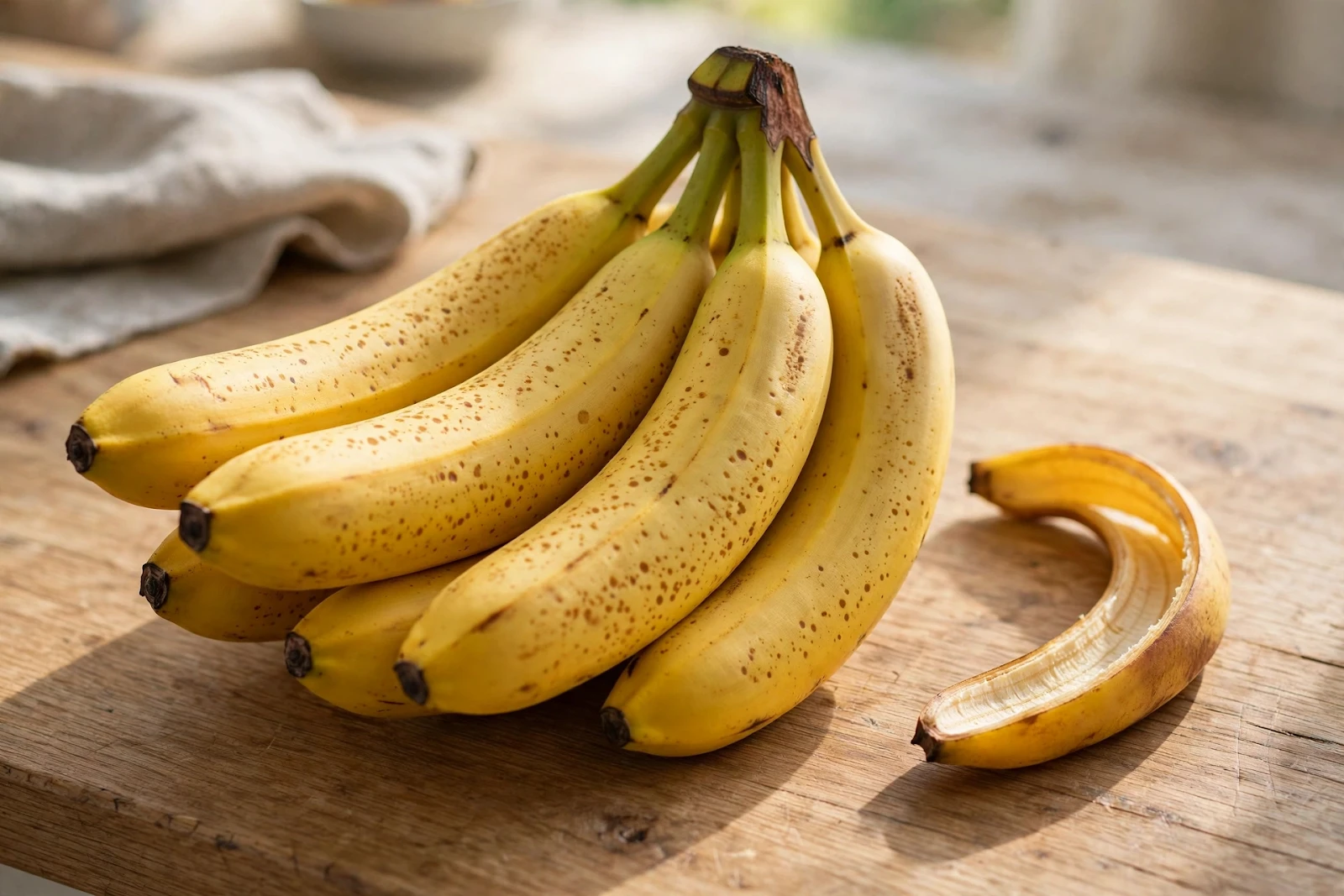
Look for yellow bananas with a few brown speckles for the sweetest flavour — green tips mean they need a day or two more.
Key Takeaways
- Bananas provide potassium, vitamin B6, vitamin C, magnesium and fibre, all for a modest number of calories.
- Their potassium and fibre content may support heart health as part of an overall balanced diet, but no single food protects the heart on its own.
- Bananas are a convenient source of quick energy, which is why they are popular before and after exercise.
- Ripeness changes the fruit: greener bananas are firmer and starchier, while speckled bananas are sweeter and softer.
- Pairing banana with protein or healthy fat, such as yoghurt or peanut butter, makes a more filling snack than banana alone.
1. What Is in a Banana?
A medium banana is mostly water and carbohydrate, with a small amount of protein and almost no fat. Its natural sugars — glucose, fructose and sucrose — arrive packaged with fibre, which slows digestion compared with sugary foods that contain little or no fibre. That combination is part of why a banana tends to satisfy hunger better than a biscuit or a sweet drink, even though both taste sweet.
On the micronutrient side, bananas are best known for potassium, a mineral that helps the body manage fluid balance and supports normal muscle and nerve function. They also provide vitamin B6, which the body uses in energy metabolism and in making red blood cells, and vitamin C, which supports the immune system and helps the body absorb iron from plant foods. Smaller amounts of magnesium, manganese and folate round out the picture. None of this makes banana a miracle food, but it does make it a nutrient-dense choice for an everyday fruit.
2. Bananas and Heart Health
Heart health depends on the whole pattern of eating, not on one food, but bananas fit well into a heart-friendly diet. Diets rich in potassium are associated with healthier blood pressure in population studies, and health authorities such as the World Health Organization and the American Heart Association encourage eating plenty of potassium-rich plant foods. Bananas contribute to that pattern alongside other fruits, vegetables, beans and whole grains.
Fibre matters too. The soluble fibre in bananas may help support healthy cholesterol levels when eaten as part of a diet low in saturated fat, and fibre in general supports digestive health and steadier fullness after meals. If you are watching your blood pressure, the most useful step is usually the overall shift — more plant foods, less added salt and fewer heavily processed foods — with bananas as one easy piece of that shift rather than a treatment in themselves.
3. Bananas for Energy and Exercise
Bananas have a well-earned reputation as a workout snack. Their carbohydrate provides readily available energy, their potassium replaces some of what is lost in sweat, and they are easy to eat on the go without a spoon or a wrapper to unwrap. Many runners and gym-goers keep one in their bag for exactly that reason.
For longer or harder sessions, a banana works best as part of a larger snack rather than the whole plan: pair it with water for hydration, and add something with protein afterwards, such as yoghurt or a handful of nuts, to help recovery. For a gentle walk or a short workout, a banana on its own is usually plenty. The key point is practical, not magical — bananas are convenient fuel, not a performance enhancer.
A banana smoothie bowl makes a filling breakfast — add oats, yoghurt or nut butter for protein and staying power.
4. Bananas and Digestion
Bananas are often recommended as a gentle food when digestion feels unsettled, and there is some sense behind that reputation. Ripe bananas are soft, easy to chew, and low in fat, which makes them easier on the stomach than rich or spicy foods. Their fibre supports regular bowel movements, while the resistant starch in greener bananas acts as food for friendly gut bacteria — one reason underripe bananas feel quite different in the gut from very ripe ones.
That said, bananas affect people differently. Some people find that very ripe bananas loosen their stools, while others find that large amounts of unripe banana feel heavy or constipating. If bananas regularly cause bloating or discomfort for you, the ripeness stage and the portion size are worth experimenting with before assuming the fruit itself is the problem. Persistent digestive symptoms always deserve a conversation with a clinician rather than a diet experiment alone.
5. How to Choose, Ripen and Store Bananas
Choosing bananas is mostly about timing. For eating today, pick yellow bananas with a few brown speckles — they will be at their sweetest and softest. For eating later in the week, choose bananas that are still partly green at the tips and let them ripen at room temperature. Avoid bananas with large dark bruises or split skins, which spoil quickly, though a few small marks are harmless.
To speed ripening, keep bananas in a closed paper bag with an apple or another banana; the natural ethylene gas they release encourages ripening. To slow it down, separate the bunch and wrap the stems, or refrigerate ripe bananas — the skin will darken, but the flesh inside stays good for a few more days and is perfect for smoothies or baking. Overripe bananas need never be wasted: freeze peeled bananas in a bag and blend them later into a thick, ice-cream-like dessert with no added sugar.
6. Easy Ways to Eat More Bananas
The simplest way to eat more bananas is to make them visible: keep a bowl on the counter rather than hidden in the fridge, and add one to a meal you already eat. Sliced banana lifts porridge, cereal and yoghurt, and it sweetens a smoothie without syrup or honey. Banana on wholemeal toast with peanut butter is a balanced breakfast or afternoon snack that combines fruit, whole grains, protein and healthy fat.
For baking, mashed ripe banana replaces some of the sugar and fat in muffins, pancakes and banana bread, while keeping the result moist. Frozen banana blends into a creamy base for desserts, and banana slices with a drizzle of nut butter make a quick after-school or after-work snack. If you are watching your overall sugar intake, remember that the sugars in whole fruit come with fibre, water and nutrients — a different package from added sugars in sweets and drinks.
7. Bananas and Blood Sugar: A Balanced Look
People with diabetes sometimes worry about bananas because they taste sweet, but the picture is more balanced than the fear suggests. A banana's fibre slows the rise in blood sugar compared with refined sugary foods, and its glycaemic impact depends on ripeness and portion: a small, just-yellow banana has a gentler effect than a very large, heavily speckled one. Eating banana with protein or fat, such as nuts or yoghurt, further softens the glucose response.
That does not mean bananas are unlimited for everyone managing blood sugar — portion still matters, and individual responses vary. A practical approach is to enjoy a modest portion, pair it with other foods, and check your own response if you monitor glucose. If you use insulin or other diabetes medication, discuss fruit portions with your doctor or dietitian rather than relying on general guides.
Banana on wholemeal toast with peanut butter is a quick, balanced snack that pairs fruit with protein and fibre.
Myths vs Facts
Myth: Bananas make you gain weight.
Fact: A banana is a relatively low-calorie fruit, and weight change depends on total eating patterns and activity, not on one fruit. Eaten in place of a higher-calorie snack, a banana can actually support weight management.
Myth: Brown spots mean a banana has gone bad.
Fact: Brown speckles usually mean the banana is at peak sweetness. It is only spoiled if the flesh smells fermented, feels slimy, or shows mould.
Myth: Bananas are too sugary for a healthy diet.
Fact: The sugars in a whole banana come with fibre, potassium, vitamins and water. That package behaves differently in the body from added sugars in sweets and sugary drinks.
Myth: You should avoid bananas if you have diabetes.
Fact: Many people with diabetes can enjoy bananas in modest portions, especially paired with protein or fat. Individual advice varies, so personal guidance from a clinician matters more than a blanket ban.
Myth: Banana peels are poisonous.
Fact: Banana peels are not poisonous, though they are tough and bitter raw. In some cuisines they are cooked, but most people simply compost them.
When to See a Doctor
Bananas are safe for most people, but seek medical advice if you notice symptoms that could be linked to them, such as itching, swelling of the lips or mouth, or breathing difficulty after eating banana — these can signal an allergy, including the cross-reactivity sometimes seen with latex allergy. Also talk to a clinician if you have kidney disease or take medication affecting potassium, since unusually high potassium intake may need monitoring.
Digestive symptoms that persist, such as ongoing bloating, diarrhoea or constipation, deserve professional assessment rather than endless diet tweaks. The same applies to blood sugar concerns: if you manage diabetes and are unsure how fruit portions fit your plan, a doctor or dietitian can tailor advice to your medication and targets.
Sponsored: check today's offers on recommended wellness products
Frequently Asked Questions
How many bananas can I eat per day?
For most healthy adults, one or two bananas a day fits comfortably into a varied diet. There is no strict limit, but variety matters — rotate bananas with other fruits to cover a wider range of nutrients.
Are green bananas healthier than ripe ones?
Neither is simply better. Green bananas contain more resistant starch and less sugar, while ripe bananas are sweeter, softer and easier to digest. Choose based on taste and how your digestion responds.
Can I eat bananas on an empty stomach?
Most people can. If a banana alone leaves you hungry quickly, pair it with yoghurt, nuts or toast for a more filling start to the day.
Do bananas help with muscle cramps?
Bananas provide potassium, which supports normal muscle function, but cramps have many causes, including dehydration and overuse. Stretching, fluids and rest matter as much as any single food.
Should I refrigerate bananas?
Refrigerate only once they are ripe. The skin will turn brown in the cold, but the flesh stays good for a few more days and is ideal for smoothies and baking.
What is your favourite way to eat bananas — straight from the peel, in a smoothie, or baked into banana bread? Share your ideas in the comments below, and tell us how you rescue overripe bananas from the bin.
Disclaimer: This article is for general information only and is not medical advice. It does not diagnose, treat, cure, or prevent any disease. If you have a medical condition, take regular medication, or have concerns about your diet, please consult a qualified health professional before making changes.




Comments
Post a Comment