Caffeine is the world's most widely consumed psychoactive substance, and for most people it arrives in a familiar form: the morning cup of coffee. A moderate amount of caffeine can feel like a gift — sharper focus, a brighter mood, a little extra stamina for the day ahead. But caffeine also has a shadow side, and the line between "just enough" and "too much" is easier to cross than most people realize. Jitters, a racing mind at bedtime, afternoon energy crashes, a dependence that shows up as a weekend headache — these are signs the balance has tipped.
The good news is that the guidance around caffeine is fairly clear. Major health authorities have weighed in on how much is generally considered safe for healthy adults, and the practical steps for cutting back are simple when you know them. This guide walks through the widely cited daily limit, how much caffeine is hiding in everyday drinks and foods, what caffeine does to your sleep and heart, who should be more cautious, and a gentle step-down plan to reduce your intake without the dreaded withdrawal headaches.

A morning cup of coffee is fine for most healthy adults — the question is how much follows it during the day.
Key Takeaways- Healthy adults are generally advised to keep caffeine at or below about 400 mg per day — roughly the amount in four small cups of brewed coffee — according to guidance cited by the FDA, EFSA, and the Mayo Clinic.
- Most people underestimate their total intake because caffeine hides in tea, energy drinks, sodas, chocolate, and some medications as well as coffee.
- Caffeine can linger in your body for hours, so late-afternoon and evening consumption is one of the most common reasons for trouble falling asleep.
- People who are pregnant, breastfeeding, sensitive to caffeine, under 18, or managing certain heart conditions should be more cautious and talk to a healthcare professional about their personal limit.
- You can reduce caffeine gradually — trimming 25 to 50 mg at a time — and avoid most withdrawal headaches by stepping down over one to two weeks rather than quitting cold turkey.
1. Know the General Daily Limit
If you remember one number from this article, make it 400. The U.S. Food and Drug Administration (FDA), the European Food Safety Authority (EFSA), and the Mayo Clinic have all cited about 400 milligrams of caffeine per day as an amount that appears safe for most healthy adults — meaning an intake at or below that level is not generally associated with negative effects. To put it in familiar terms, that's roughly four small (8-ounce) cups of brewed coffee, or about two large mugs, depending on how you brew.
But "generally considered safe for most healthy adults" comes with a big caveat: people vary enormously. Your age, body weight, genetics, medications, and how often you consume caffeine all shape how you respond. Some people feel wired for hours after a single small coffee; others can drink espresso after dinner and sleep like a stone. The 400 mg figure is a ceiling to respect, not a target to hit — and if you notice symptoms at lower amounts, your personal limit is lower than the general one. Think of the guideline as the speed limit on the highway: legal doesn't mean advisable in every condition.
2. Count Your Real Intake: Caffeine in Common Drinks
Most people who ask "am I having too much?" haven't actually added up their day — and the totals surprise them. An 8-ounce cup of brewed coffee contains roughly 90 to 100 mg of caffeine, but coffeehouse servings are usually far larger; a single 16-ounce brewed coffee from a cafe can deliver 200 mg or more. A single shot of espresso lands around 60 to 65 mg, while an 8-ounce cup of black tea offers about 40 to 70 mg and green tea roughly 30 to 50 mg.
Then come the less obvious sources. A 12-ounce cola has about 30 to 40 mg. Energy drinks vary wildly — a typical 8-ounce serving can contain anywhere from about 80 mg to well over 200 mg, and the larger cans sold in convenience stores often pack multiples of that. A small piece of chocolate contributes a modest amount (roughly 5 to 20 mg depending on cocoa content), and some pain-relief medications and supplements include caffeine too — always worth checking the label. The practical move: track everything for two or three ordinary days, using the approximate ranges on labels and trusted health sites like the Mayo Clinic's caffeine chart. If your running total is brushing against or above 400 mg, that's your signal to act.
3. How Caffeine Works in Your Brain
Caffeine wakes you up by interfering with a brain chemical called adenosine. Over the course of the day, adenosine builds up in your brain and gradually makes you feel drowsy — it's one of the key drivers of sleep pressure. Caffeine's molecular shape resembles adenosine closely enough that it can sit in adenosine's receptors and block the signal, muting the feeling of tiredness. That's why caffeine doesn't actually give you energy the way food does; it masks fatigue by muting the brain's "time to rest" messages.
This is also why regular heavy use can feel like a treadmill. When caffeine blocks adenosine receptors day after day, your brain may respond by producing more of them — a process sometimes called tolerance. With more receptors to fill, you need more caffeine to get the same alert feeling, and on mornings you skip your usual dose, the backlog of unblocked adenosine hits all at once. The result is the classic withdrawal headache, grogginess, and irritability that many heavy coffee drinkers know too well. None of this means caffeine is inherently harmful — but understanding the mechanism explains why more is not always better, and why the dose that once felt like a boost eventually just gets you to neutral.
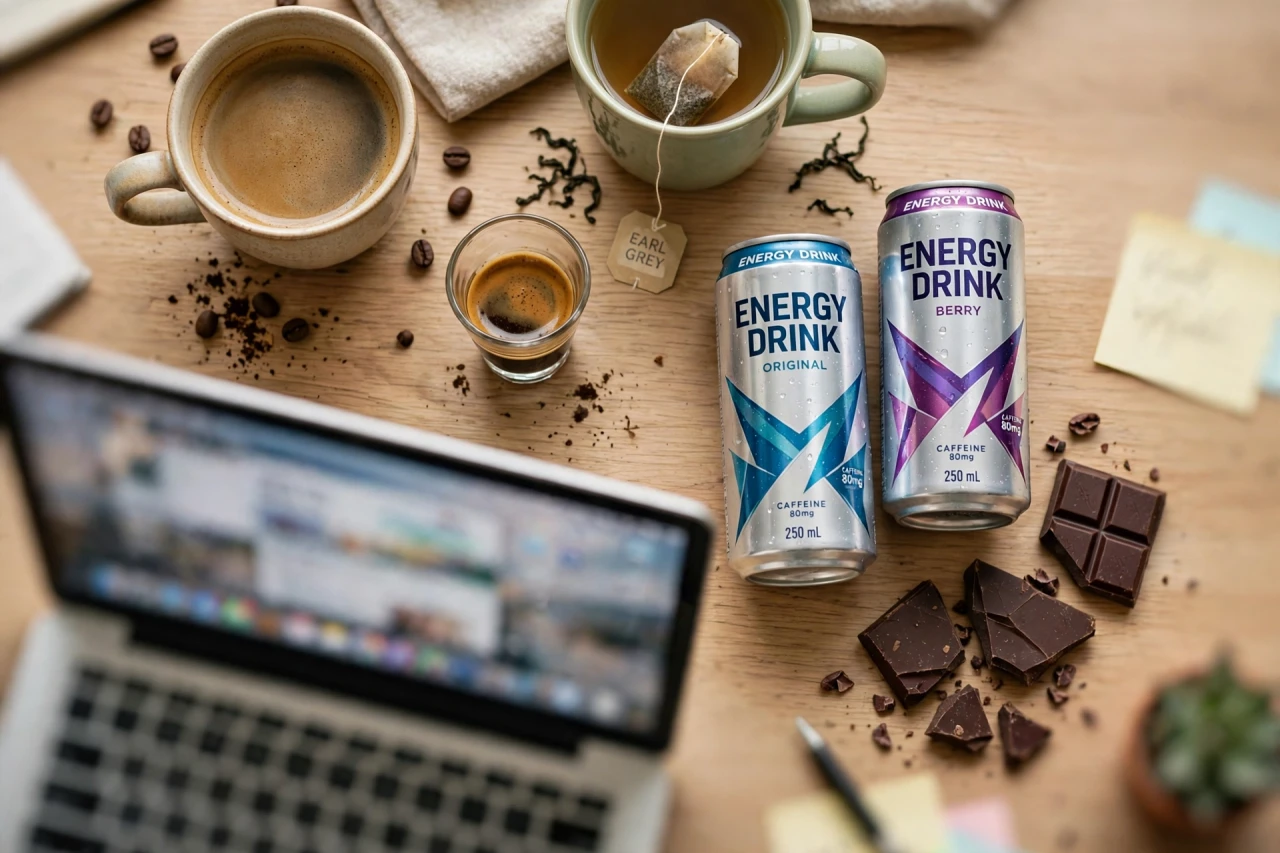
Coffee, tea, energy drinks, and chocolate all add up — most people underestimate their total daily caffeine intake.
4. Caffeine and Sleep: The Afternoon Trap
Sleep is where caffeine most often causes trouble, and the culprit is usually timing rather than the morning cup. Caffeine's half-life — the time it takes your body to clear half of it — is roughly 3 to 7 hours in most adults, and it can stretch longer for people who are sensitive, older, pregnant, or taking certain medications. That means a coffee at 3 p.m. may still leave a meaningful amount of caffeine circulating at 10 p.m., quietly reducing your total sleep time and fragmenting the deep sleep your brain uses to recover.
Studies suggest that caffeine consumed even six hours before bed can measurably reduce sleep duration, and many sleep specialists recommend setting a personal cutoff — for example, no caffeine after noon or early afternoon. If you find yourself tossing and turning, or waking up unrefreshed despite a full night in bed, your late-day caffeine habit is one of the first suspects worth investigating. A useful experiment: keep your morning coffee exactly as is, move your cutoff earlier for a week, and see what happens to your sleep quality. Many people are surprised at how much lighter and calmer their nights feel.
5. Heart, Blood Pressure, and That Racing Feeling
For most healthy adults, moderate caffeine intake is not considered harmful to the heart, and some large observational studies have linked moderate coffee consumption to neutral or even slightly favorable cardiovascular patterns. But caffeine does stimulate the nervous system, and a sudden large dose — especially in someone unaccustomed to it — can cause a temporary rise in blood pressure and a faster or more forceful heartbeat. For people whose blood pressure is already elevated or who live with certain heart rhythm conditions, that jolt may be something to discuss with a doctor.
The practical distinction is between your daily coffee habit and the big hits. A steady, moderate routine tends to be well tolerated. The problematic patterns are the ones that spike intake suddenly: a large energy drink on an empty stomach, three espressos in an hour before a workout, or mixing caffeine with intense exercise or other stimulants. If you notice your heart pounding, your chest feeling tight, or a fluttery, uneven rhythm after caffeine, treat that as information from your body — cut back and talk to a healthcare professional, especially if the symptoms recur or come with dizziness.
6. Anxiety, Jitters, and Mood
Caffeine doesn't create anxiety out of thin air, but it can amplify it. By stimulating the release of adrenaline-like signaling and increasing alertness, caffeine can produce the physical sensations that mimic anxiety: jittery hands, a racing mind, restlessness, a tight chest. For people who already tend toward anxious feelings, or who are going through a stressful period, a heavy caffeine dose can push a manageable day into an uncomfortable one.
Research suggests that people who are sensitive to caffeine — or who consume large amounts — may report more jitteriness, nervousness, and difficulty concentrating, the very outcomes they were trying to fix. If you find that your second or third cup makes you less productive rather than more — scattered, irritable, unable to sit still — that's a strong hint you've passed your personal sweet spot. Notice the pattern for a few days: does calm, steady focus belong to one-cup days, while edgy restlessness belongs to three-cup days? Your body is keeping better records than you think.
7. Who Should Be More Careful
The 400 mg guidance is for healthy adults. Several groups are advised to keep intake lower or to get personalized advice from a healthcare professional:
- Pregnancy and breastfeeding. Health authorities including the NHS generally advise limiting caffeine during pregnancy — commonly to around 200 mg per day or less — because high intakes have been linked in some studies to concerns such as low birth weight. Caffeine also passes into breast milk, so nursing parents are often advised to keep intake modest and watch for fussiness or sleep changes in the baby.
- Children and teenagers. Young bodies are smaller and often more sensitive to caffeine's effects. Health organizations have generally discouraged routine caffeine consumption in children, and energy drinks are a particular concern because of their high doses and added stimulants.
- People who are caffeine-sensitive. If a single small coffee leaves you wired, anxious, or sleepless, your comfortable limit is simply lower than average — genetics plays a real role here. Honor it rather than trying to "build tolerance."
- People with certain heart conditions or uncontrolled high blood pressure. Because caffeine can temporarily raise blood pressure and heart rate, those managing cardiovascular conditions should discuss their intake with their doctor rather than relying on the general guideline.
- People taking certain medications. Caffeine can interact with some prescription and over-the-counter medicines — check with your pharmacist or doctor, especially if you've noticed new side effects since changing your caffeine habits.
- People with anxiety disorders, panic attacks, or ongoing sleep problems. Cutting back is often one of the simplest, lowest-cost experiments worth trying, in conversation with a healthcare professional.
Being in one of these groups doesn't mean caffeine is forbidden — it means the general rules may not apply to you, and a short conversation with a professional can set a limit that fits your situation.
8. Signs You May Be Having Too Much
Your body usually announces excess caffeine before you connect the dots. Watch for these signals, especially if several appear together on days your intake is higher:
- Trouble falling asleep, lighter sleep, or waking up feeling unrefreshed despite enough hours in bed.
- Jitters, shaky hands, restlessness, or a jittery stomach after your usual drinks.
- A racing or pounding heartbeat, or a fluttery feeling in the chest.
- Headaches that appear on days you have less caffeine than usual — a classic sign of dependence.
- Frequent urination or a sense of dehydration, since caffeine has a mild diuretic effect.
- Afternoon energy crashes that send you reaching for yet another coffee or energy drink.
- Irritability, difficulty concentrating, or a scattered feeling that your caffeine was supposed to fix.
- An upset stomach, acid reflux, or nausea — coffee's acidity bothers some people more than others.
Any one of these occasionally is probably nothing to worry about. A recurring pattern is your cue to tally your intake honestly and consider stepping down.
9. A Practical Step-Down Plan (Without the Headaches)
The biggest mistake people make when cutting back is going from four cups to zero on a Monday. Cold turkey is what causes the withdrawal headaches, fatigue, and irritability that send most people running back to the coffee pot by Wednesday. A gentler approach works far better:
- Step 1 — Measure. For three days, write down every caffeinated drink and food with its approximate caffeine content. You can't fix what you haven't counted.
- Step 2 — Set a target. Decide where you want to land — perhaps under 200 mg per day, or under the 400 mg ceiling with a comfortable margin. Make the goal concrete.
- Step 3 — Trim 25 to 50 mg at a time. Swap one regular coffee for half-caf (half regular, half decaf — it tastes nearly identical), or replace your smallest serving with decaf. Hold each new level for a few days before trimming again.
- Step 4 — Move your cutoff earlier. Keep whatever caffeine you have in the morning and stop by early afternoon. This one change alone resolves many sleep complaints.
- Step 5 — Build caffeine-free rituals. Much of the habit is the ritual, not the drug: the warm mug, the break, the cafe visit. Herbal tea, decaf coffee, or sparkling water can fill the same slot.
- Step 6 — Stay hydrated and rested. Drink water through the day and protect your sleep during the transition week — both soften withdrawal symptoms noticeably.
- Step 7 — Give it two weeks. Most people find the fog lifts within a week or two, and many are surprised that their steady-state energy without heavy caffeine is actually calmer and more consistent.
If a headache does break through, a small amount of caffeine — a single cup of tea — usually eases it, and you can continue stepping down from there. The goal is progress, not perfection: even trimming your intake by a third often brings noticeable improvements in sleep and calm.
10. Smart Timing Rules for Daily Life
Even if you keep a moderate intake, a few timing habits help you get the benefits of caffeine with fewer downsides. First, front-load your caffeine: have it in the first half of your day and give your body the hours it needs to clear it before bedtime. A personal rule like "no caffeine after 2 p.m." works well for many people.
Second, don't use caffeine to patch a sleep debt you can actually fix. Caffeine masks tiredness; it doesn't replace sleep. If you need caffeine just to function every afternoon, that's useful information — your sleep schedule, screen habits, or stress load may need attention more than your coffee order does. Third, avoid stacking: one source at a time is easier to track than coffee plus tea plus an energy drink. And finally, listen to how your last dose lands. If the final coffee of the day regularly leaves you wired, edgy, or wide-eyed at midnight, that dose is the first one to cut — no matter what the clock says.

Switching to herbal tea in the afternoon and evening is one of the easiest ways to cut back without headaches.
Caffeine: Myths vs Facts
- Myth: Caffeine gives you energy.
Fact: Caffeine doesn't supply energy the way food does — it blocks the brain's drowsiness signals from adenosine, masking fatigue. Real energy comes from sleep, food, hydration, and movement. - Myth: Coffee dehydrates you, so it doesn't count toward fluid intake.
Fact: The mild diuretic effect of moderate coffee drinking is generally offset by the water in the drink itself, and regular coffee drinkers develop tolerance to it. Coffee isn't a substitute for water, but moderate amounts don't dehydrate healthy adults. - Myth: Decaf coffee has no caffeine at all.
Fact: Decaffeinated coffee typically retains a small amount of caffeine — roughly 2 to 7 mg per cup. That's tiny compared with regular coffee, but sensitive people may still notice it. - Myth: Dark roast coffee has more caffeine than light roast.
Fact: Caffeine content is very similar between roasts when measured by weight, and can even be slightly lower in very dark roasts. What matters far more is the serving size and how the coffee was brewed. - Myth: You need to quit caffeine completely to be healthy.
Fact: For most healthy adults, moderate caffeine intake is considered acceptable by major health authorities. The goal is a sensible amount with sensible timing — not necessarily zero.
When to See a Doctor
Caffeine is an everyday substance, but there are times when a conversation with a healthcare professional is the right move. Reach out if you:
- Experience chest pain, pressure, a persistently fast or irregular heartbeat, dizziness, or fainting after caffeine.
- Have a heart condition, uncontrolled high blood pressure, or an anxiety or panic disorder and aren't sure how much caffeine is safe for you.
- Are pregnant, planning a pregnancy, or breastfeeding and want guidance on a personal limit.
- Take prescription medications and want to check for interactions with caffeine.
- Feel you can't get through the day without caffeine, or that cutting back feels unmanageable — this may indicate a dependence worth discussing.
- Notice that reducing caffeine hasn't improved persistent sleep problems, jitters, or digestive issues — there may be another cause worth investigating.
A short appointment can give you a clear, personalized answer — and peace of mind is worth more than any energy boost.
Sponsored: check today's offers on recommended wellness products
Frequently Asked Questions
How much caffeine per day is considered safe?
For most healthy adults, up to about 400 mg per day is the amount cited as generally safe by the FDA, EFSA, and the Mayo Clinic — roughly four small cups of brewed coffee. Individual tolerance varies, and people who are pregnant, under 18, caffeine-sensitive, or managing certain health conditions should aim lower and check with a healthcare professional.
Can caffeine affect my sleep even if I drink it in the afternoon?
Yes. Caffeine's half-life is roughly 3 to 7 hours, so an afternoon coffee can still be active in your system at bedtime, reducing total sleep and sleep quality. If sleep is an issue, many sleep specialists suggest stopping caffeine by early afternoon or sooner.
Why do I get headaches when I skip coffee?
That's caffeine withdrawal. When regular caffeine intake blocks adenosine receptors day after day, your brain adapts — and skipping your usual dose lets the backlog of drowsiness signals flood in, often as a headache plus fatigue and irritability. Stepping down gradually over one to two weeks usually avoids most of this.
Is it better to quit caffeine completely or just cut back?
For most people, cutting back to a moderate, well-timed amount is enough — there's no general requirement to quit entirely. Complete avoidance makes sense mainly if you're in a group advised to be cautious (such as pregnancy) or if even small amounts cause you problems. The best target is the amount that leaves you sleeping well and feeling steady.
Are energy drinks worse than coffee?
They can be, mainly because of dose and context: energy drink servings often contain much more caffeine than a cup of coffee, sometimes alongside other stimulants and a lot of sugar, and they're easy to drink quickly. If you use them, check the label for total caffeine per can — not per serving — and treat them with the same daily-limit math as coffee.
Disclaimer: This article is for general information only and is not medical advice. Caffeine guidance varies by individual health, pregnancy, medications, and sensitivity — consult a qualified healthcare professional before making significant changes to your caffeine intake, especially if you have a heart condition, high blood pressure, an anxiety disorder, or are pregnant or breastfeeding. Never use this article to diagnose or treat a medical condition.
What's your caffeine situation — steady and moderate, or overdue for a step-down? Share your experience (and your favorite caffeine-free swap) in the comments.


Comments
Post a Comment