Daikon radish is one of the most versatile vegetables in East Asian cooking, yet in many Western kitchens it remains a mystery. Long, white, and mild, daikon looks like an oversized white carrot, but its flavour is gentler and its texture more watery and crisp. In Japan, Korea, and China it appears everywhere: grated beside grilled fish, simmered in soups, pickled in bright yellow takuan, and shredded into fresh salads. It is a staple precisely because it is so adaptable — it can be crunchy or silky, peppery or mellow, depending on how you prepare it.
If you have ever walked past daikon in the supermarket and wondered what to do with it, this guide is for you. Daikon is easy to peel, needs no special equipment, and fits comfortably into a balanced diet: it is light, hydrating, and a source of vitamin C, fibre, and potassium. Below you will find what daikon is, what it may offer for general health, and the simplest ways to enjoy it raw, pickled, and cooked — plus the myths worth setting aside and when to seek medical advice about digestive symptoms.
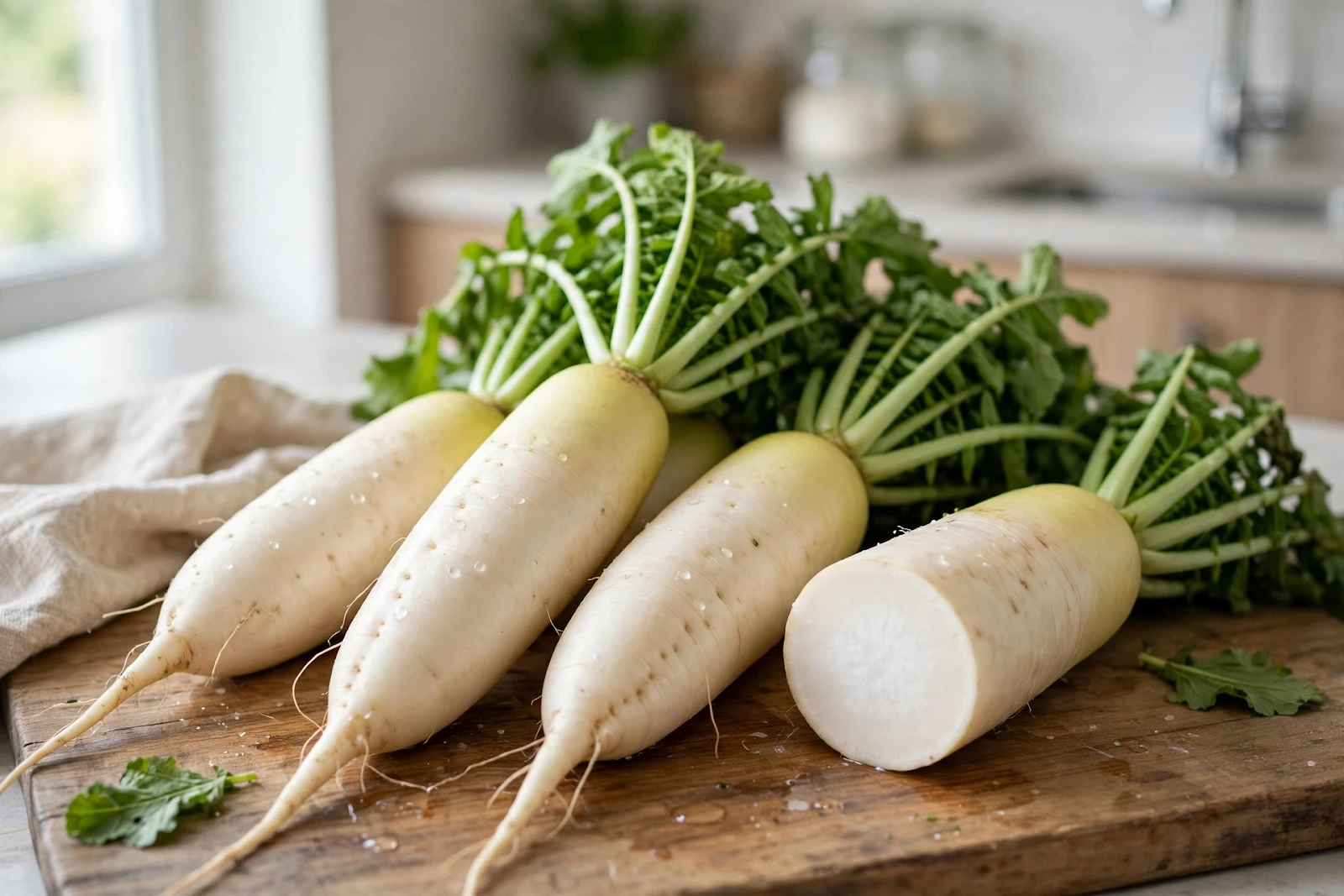
Choose firm, heavy daikon roots with smooth skin and fresh-looking tops.
Key Takeaways
- Daikon is a mild, white winter radish, widely used in Japanese, Korean, and Chinese cooking.
- It is naturally light and hydrating, and provides vitamin C, fibre, potassium, and folate.
- Daikon can be eaten raw, grated, pickled, roasted, or simmered until tender in soups and stews.
- Its flavour changes with cooking: crisp and gently peppery raw, mellow and slightly sweet when simmered.
- Choose firm, heavy roots, store them wrapped in the fridge, and peel before eating.
1. What Is Daikon Radish?
Daikon (Raphanus sativus var. longipinnus) is a type of radish grown for its long, white root. Unlike the small, round red radishes sold in bunches, daikon can grow to the length of a forearm or more, with smooth white skin and crisp, juicy white flesh. It is sometimes labelled white radish, Japanese radish, or Oriental radish, and it is a member of the brassica family, which also includes cabbage, broccoli, and cauliflower.
Daikon has been cultivated in East Asia for centuries and is an everyday ingredient there, not an exotic novelty. In Japan it is grated as oroshi, simmered in oden hot pot, and pickled as takuan. In Korea it appears in kimchi and in soups, and in China it is added to braises and dumpling fillings. That long history matters for home cooks: daikon has been tested in countless everyday dishes, so there is no shortage of simple, forgiving ways to use it.
2. Daikon Nutrition at a Glance
Daikon is a light vegetable: mostly water, low in fat, and modest in calories, which makes it an easy addition to meals without making them heavy. A typical serving provides fibre, which supports normal digestion and helps meals feel satisfying, along with vitamin C, which contributes to normal immune function and collagen formation, and potassium, which helps maintain normal blood pressure as part of a varied diet. It also contains small amounts of folate and magnesium.
It is worth keeping expectations realistic. No single vegetable transforms health on its own, and daikon is best understood as one useful part of a varied, plant-rich diet. What makes it attractive is the combination: crunch, hydration, fibre, and micronutrients in a food that is inexpensive, keeps well, and works in both raw and cooked dishes. General nutrition guidance from sources such as the NHS and Harvard Health consistently points in the same direction: eating a variety of vegetables regularly is associated with better overall health outcomes than chasing any one superfood.
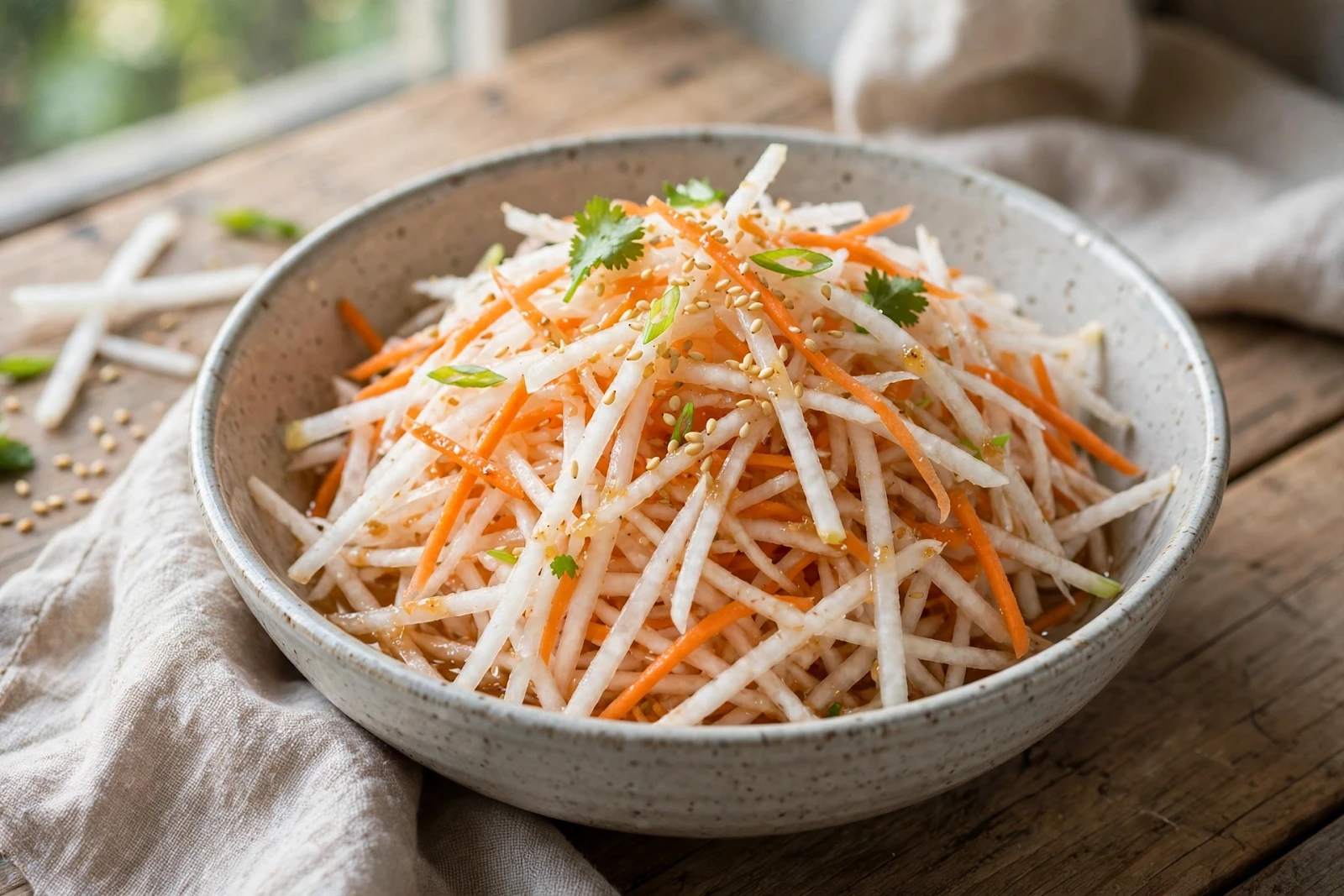
Julienned daikon adds crunch to salads and works beautifully with sesame and citrus dressings.
3. Daikon and Digestion
Daikon's fibre and high water content may help support comfortable digestion as part of a balanced diet. Fibre adds bulk to meals and supports regular bowel movements, while water-rich foods contribute to overall fluid intake. Raw daikon also contains natural enzymes that have traditionally been credited with aiding digestion — in Japan, grated daikon is often served with richer foods for exactly this reason — though the effect is modest and best seen as part of a varied diet rather than a remedy.
That said, daikon is a brassica, and like cabbage and broccoli it can cause gas or bloating in some people, especially when eaten raw in large amounts. If you are new to daikon, start with a small portion, chew well, and see how you feel. Cooking daikon until tender usually makes it gentler on digestion, and pairing it with other foods rather than eating a large amount on its own can help too.
4. Daikon, Hydration, and Weight-Friendly Eating
Because daikon is mostly water, it adds volume and crunch to meals for very few calories. That can be genuinely helpful if you are trying to eat more vegetables or to make meals more satisfying without relying on heavier ingredients. A handful of grated daikon in a salad, or daikon sticks alongside a dip, gives you something to chew and enjoy while keeping the meal light.
Daikon also pairs well with protein and whole grains, which helps round out a meal. Try shredded daikon in a rice bowl with tofu or chicken, or simmered daikon in a soup with noodles and greens. The goal is not to eat daikon instead of other foods, but to let it do what it does best: add freshness, texture, and bulk to dishes you already enjoy.
5. Daikon and Heart Health
Diets rich in vegetables are associated with better heart health, and daikon fits that pattern: it is low in sodium and fat, provides potassium, and contributes fibre, all of which align with general heart-healthy eating patterns recommended by organisations such as the WHO and the CDC. Potassium, in particular, helps balance the effects of sodium in the diet, although the amount in any single serving is modest.
As always, the overall pattern matters more than one ingredient. Daikon is most helpful when it replaces or complements saltier, more processed foods — for example, a fresh daikon salad instead of a salty snack, or simmered daikon in a homemade soup instead of a highly processed ready meal. Used that way, it supports the kind of everyday eating that heart-health guidance encourages.
6. Daikon and Blood Sugar
Daikon is low in sugars and contains fibre, so it has a gentle effect on blood sugar compared with starchy foods. That makes it a useful ingredient for people who want to add bulk and flavour to meals without adding a large carbohydrate load. Raw daikon in salads, or cooked daikon in soups, can help fill a plate while keeping the meal balanced.
This is general information, not medical advice for diabetes management. If you live with diabetes or another condition that affects blood sugar, talk with your clinician or dietitian about how starchy and non-starchy vegetables fit into your own eating plan, and use daikon as one part of that plan rather than as a treatment.
7. Simple Ways to Enjoy Daikon Every Day
Start with the raw route, which needs nothing more than a peeler and a knife. Peel the daikon, then grate it, julienne it, or slice it into thin rounds. Toss grated daikon with rice vinegar, a little soy sauce, sesame oil, and a pinch of sugar for a quick salad; add julienned daikon to slaws, tacos, or grain bowls for crunch; or cut it into sticks and serve with hummus or a yoghurt dip.
For cooked daikon, peel and cut it into thick rounds or chunks, then simmer in soup or stew until tender — usually 15 to 25 minutes, depending on thickness. It turns translucent, mild, and slightly sweet, and it soaks up the flavour of the broth beautifully. Daikon also roasts well: toss chunks with a little oil and roast until golden at the edges. Pickling is another classic option: thin daikon slices in rice vinegar with a little sugar and salt keep in the fridge for a week or more and make a bright, tangy condiment.
Simmered until tender, daikon turns mild and silky — perfect for light soups and stews.
8. How to Choose and Store Daikon
Look for roots that feel firm and heavy for their size, with smooth, unblemished skin. Avoid daikon that feels soft, spongy, or wrinkled, or that has large cracks or dark spots. If the green tops are still attached, they should look fresh rather than wilted; you can remove them at home and store the root separately. Smaller and medium roots tend to be milder and less woody than very large, old ones.
Store unwashed daikon in a plastic bag or wrapped in the crisper drawer of the fridge, where it usually keeps for one to two weeks. Once cut, wrap the cut end tightly and use within a few days. Peeled, grated daikon is best used the same day, as it dries out and loses its crispness quickly. If you buy more than you need, cooked daikon freezes reasonably well in soups, though raw daikon does not freeze well.
Myths vs Facts
Myth: Daikon is just a big, bland radish with nothing to offer.
Fact: Daikon is milder than red radishes, but it is far from flavourless — raw it is crisp and gently peppery, and cooked it becomes sweet and silky. It also contributes fibre, vitamin C, and potassium.
Myth: Daikon must be cooked before eating.
Fact: Daikon is commonly eaten raw in salads, slaws, and as grated oroshi. Peeling is recommended, but cooking is optional.
Myth: Daikon cures digestive problems.
Fact: Daikon may support comfortable digestion as part of a balanced diet, but it does not cure digestive conditions. Persistent symptoms deserve medical attention, not a single food.
Myth: Only the root is usable; the tops are waste.
Fact: Young daikon greens are edible and can be cooked like other leafy greens, though the root is the part most commonly sold and used. Wash greens well and discard any that look spoiled.
Myth: Daikon is hard to find and hard to cook.
Fact: Daikon is sold in many supermarkets and Asian grocery stores, and the simplest preparations — peeling, grating, simmering — need no special skills or equipment.
When to See a Doctor
Daikon is a safe, everyday food for most people, but seek medical advice if you notice persistent digestive symptoms after eating it or other brassicas, such as ongoing bloating, pain, or changes in bowel habits that do not settle. The same applies if you have a known allergy to radish or other brassica vegetables, or if you take thyroid medication and eat very large amounts of raw brassicas regularly — your clinician can advise on what is appropriate for you.
Also seek care promptly for worrying symptoms unrelated to daikon, such as unintentional weight loss, blood in the stool, severe abdominal pain, or difficulty swallowing. These symptoms always deserve prompt medical assessment, whatever you have been eating.
Sponsored: check today's offers on recommended wellness products
Frequently Asked Questions
Do you need to peel daikon?
Yes, peeling is recommended. The skin can be tough and slightly bitter, and peeling gives a cleaner flavour and smoother texture, whether you eat daikon raw or cooked.
Can you eat daikon raw?
Absolutely. Raw daikon is crisp, mild, and refreshing in salads, slaws, and grated preparations. Start with a small portion if you are new to it.
What does daikon taste like?
Raw daikon tastes mild, crisp, and gently peppery, a little like a milder radish. Cooked daikon becomes soft, translucent, and slightly sweet, and takes on the flavour of the dish it is cooked in.
How long does daikon last in the fridge?
A whole, unwashed daikon usually keeps for one to two weeks in the crisper drawer. Once cut, wrap it well and use within a few days.
Can daikon replace potatoes in soup?
It can, partly. Simmered daikon becomes tender and mild, but it is lighter and less starchy than potato, so soups will be thinner and less filling unless you add other ingredients such as noodles, beans, or grains.
Have you cooked with daikon before, or is it new to you? Share your favourite way to use it — raw in salads, pickled, or simmered in soup — in the comments below.
Disclaimer: This article provides general health information only and is not medical advice. It is not a substitute for professional medical advice, diagnosis, or treatment. If you have a health condition, take medication, or have concerns about your diet, please consult a qualified healthcare professional.




Comments
Post a Comment