Most of us sit far longer than our bodies were designed for. Hours of desk work tend to produce the same familiar complaints: a stiff neck, achy shoulders, a sore lower back, and legs that feel heavy by late afternoon. Health authorities including the WHO advise breaking up long periods of sitting with regular movement, and sources like the Mayo Clinic note that even brief activity breaks can help ease musculoskeletal stiffness from desk work.
The good news: you don't need a gym, special equipment, or even to leave your chair to start. These ten exercises are discreet enough for an open office, take one to three minutes each, and target the exact areas desk work punishes most. None of this replaces medical care for persistent pain — but for everyday stiffness, small frequent movement is one of the simplest things you can do. Aim to pick two or three every hour.
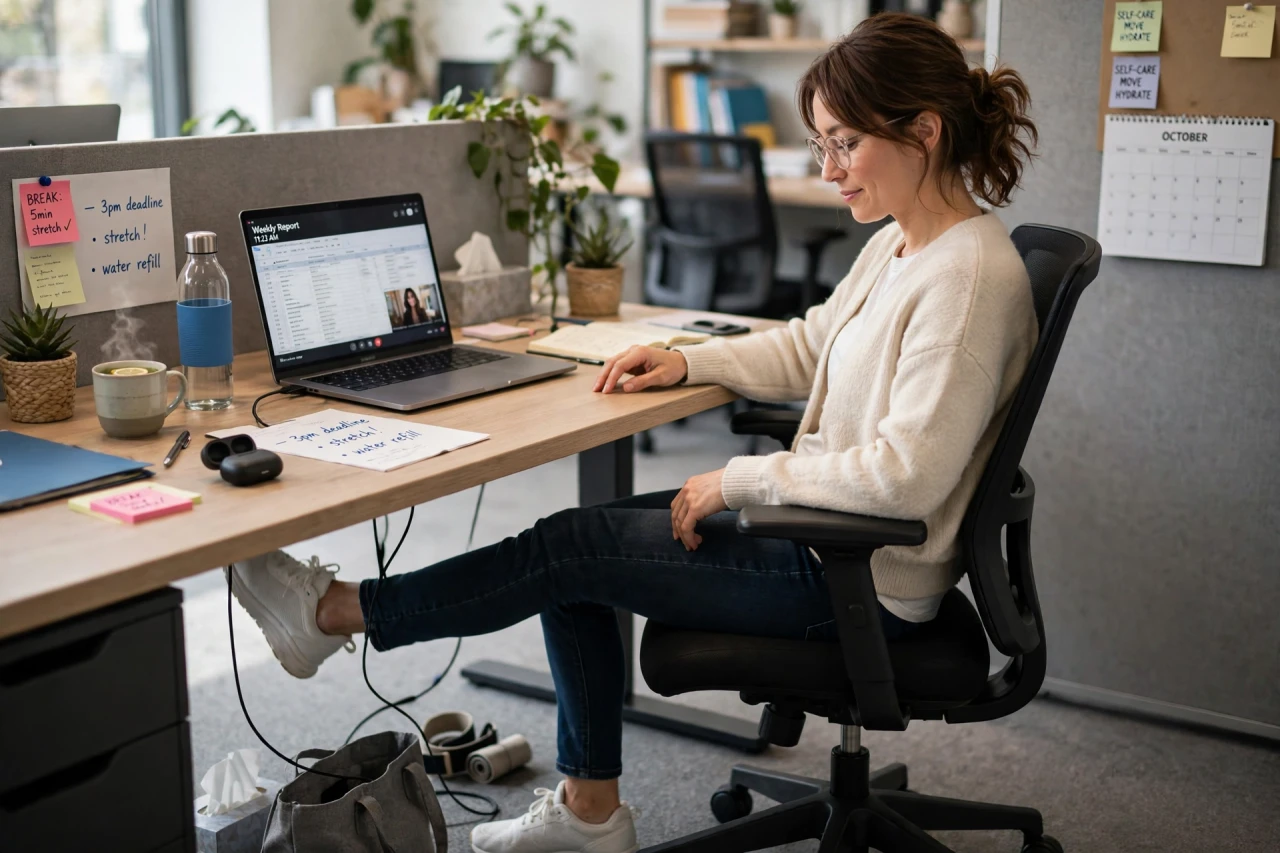
Seated leg lifts and ankle circles keep blood flowing during long hours at the desk.
Key Takeaways
- Brief movement breaks every 30–60 minutes help counteract the stiffness and sluggish circulation of long sitting.
- Seated exercises can target the neck, shoulders, back, hips, and legs — the areas desk work stresses most.
- Gentle stretches should never cause sharp pain; ease into each movement and breathe normally.
- Small, frequent efforts beat one long session: two minutes hourly adds up to real relief across a workday.
- These exercises support comfort and mobility but don't replace regular exercise or medical care for persistent pain.
1. Seated Leg Lifts
Sit tall with your feet flat on the floor. Slowly straighten one leg until it's parallel to the floor, hold for 3–5 seconds, feeling your thigh muscle engage, then lower it without letting your foot slam down. Alternate legs for 8–10 reps each. This quiet exercise strengthens the quadriceps and keeps blood moving through legs that have been still too long — and nobody at the next desk will notice.
2. Ankle Circles and Heel Raises
Lift one foot slightly off the floor and draw slow circles with your toes — 10 in each direction — then switch feet. Follow with heel raises: feet flat, lift both heels as high as you can, hold two seconds, lower. Repeat 12–15 times. These small movements work the calf muscles, which act as pumps helping blood return from the lower legs — useful for anyone whose ankles swell by evening.
3. Seated Torso Twists
Sit upright, feet flat, arms crossed over your chest. Slowly rotate your upper body to the right, hold for 5 seconds, return to center, then rotate left. Repeat 6–8 times per side, moving only as far as feels comfortable. This gently mobilizes the mid-back, which tends to stiffen into a rounded desk posture, and gives your spine the rotation it misses during hours of facing forward.
4. Chin Tucks for the Neck
The forward-head posture of screen work strains the neck. Sit tall, look straight ahead, and gently draw your chin straight back — as if making a double chin — without tilting your head up or down. Hold 5 seconds, release, repeat 8–10 times. You should feel a light stretch at the base of your skull. This simple move strengthens the deep neck muscles that hold your head in better alignment.

A few minutes of neck and shoulder stretches can undo hours of desk posture.
5. Shoulder Shrugs and Rolls
Stress and typing creep the shoulders toward the ears. Inhale and lift both shoulders up toward your ears, hold for 3 seconds, then exhale and drop them heavily. Repeat 5 times. Then roll the shoulders: 10 slow circles forward, 10 backward, making the circles as large as comfortable. This releases the trapezius tension behind most desk-related shoulder aches.
6. The Chest Opener
Hunched posture shortens the chest muscles. Sit on the front half of your chair, clasp your hands behind your back, and gently straighten your arms while lifting your chest and squeezing your shoulder blades together. Hold for 15–20 seconds, breathing deeply. You'll feel a stretch across the front of the shoulders and chest — the antidote to eight hours of curling inward.
7. Seated Figure-Four Hip Stretch
Tight hips are a classic desk-work complaint. Sit tall, place your right ankle on your left knee, flex the right foot to protect the knee, and gently lean forward from the hips until you feel a stretch in the right buttock and hip. Hold 20–30 seconds, then switch sides. Keep your back straight rather than rounding — the stretch should come from the hip hinge, not from collapsing forward.
8. Glute Squeezes
The simplest exercise on this list: sit tall and squeeze your glute muscles as firmly as you can, hold for 5 seconds, release completely. Repeat 10–12 times. Strong, periodically activated glutes support the lower back and counteract the "dead butt" effect of all-day sitting. It's invisible, takes one minute, and you can do it during a meeting without anyone knowing.
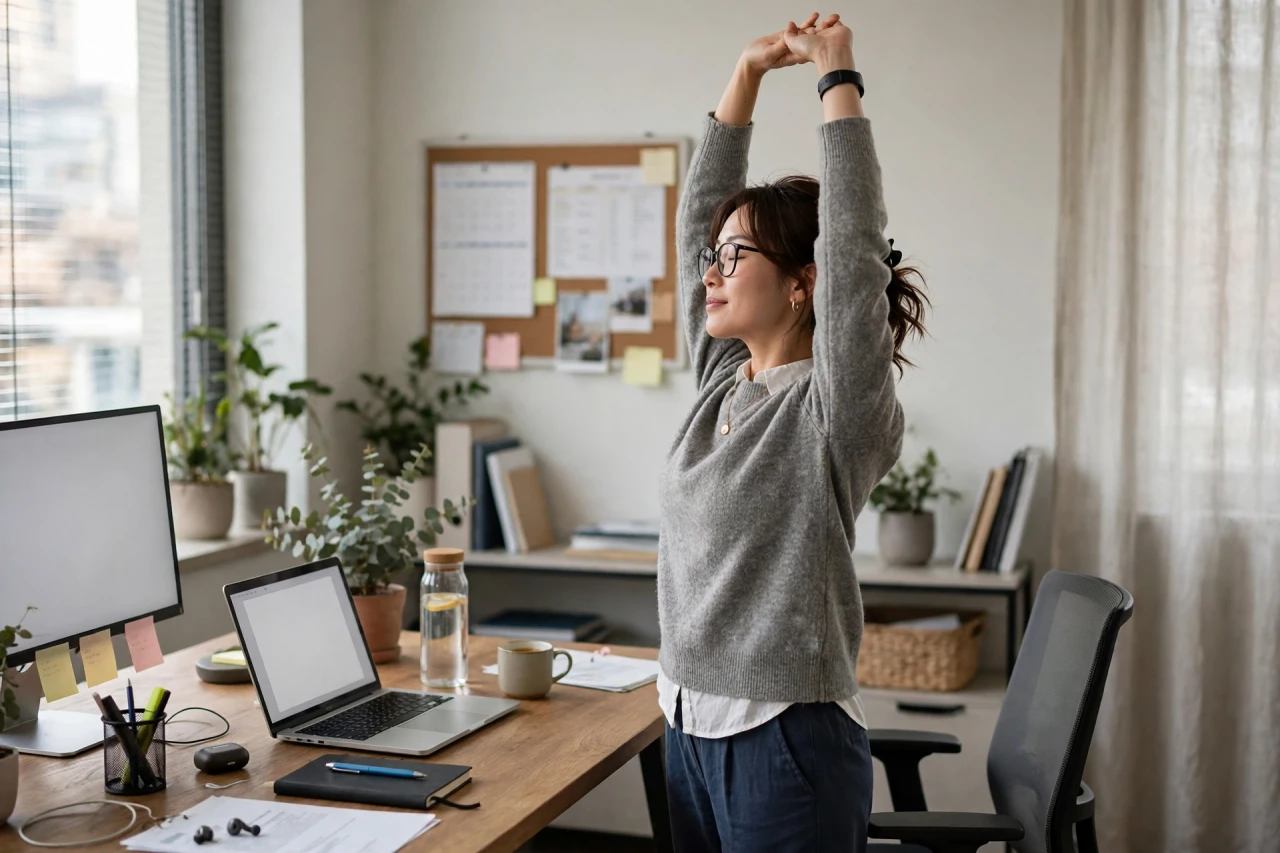
Stand up and move for a few minutes every hour — your spine will thank you.
9. Wrist and Forearm Stretches
Typing and mouse work load the wrists. Extend one arm forward, palm up, and with the other hand gently pull the fingers downward to stretch the forearm. Hold 15 seconds, then flip the palm down and pull the back of the hand toward you for another 15 seconds. Repeat on the other hand. Then make 10 slow fists, opening the fingers wide each time, to restore circulation through the hands.
10. The Standing Reset
Once an hour, stand up — this one requires leaving the chair briefly, and it's worth it. Stand beside your desk, interlace your fingers overhead and stretch tall, then do 10 gentle side bends each way and march in place for 30 seconds. Even two minutes of standing and moving resets your posture, wakes up your circulation, and gives your eyes a break from the screen. Set a quiet hourly reminder until it becomes habit.
Desk Exercises: Myths vs Facts
- Myth: Desk exercises are too easy to do anything.
Fact: Brief, frequent movement breaks have real value for stiffness and circulation — the goal here is counteracting sitting, not building athletic fitness. Small efforts repeated all day add up to meaningful relief.
- Myth: You need to break a sweat for movement to count.
Fact: Gentle mobility work serves a different purpose than cardio: it keeps joints moving, muscles from seizing up, and blood flowing. Both have their place, and one doesn't replace the other.
- Myth: A standing desk fixes everything, so exercises aren't needed.
Fact: Standing still all day brings its own problems — sore feet, stiff legs, back fatigue. Health experts emphasize varying posture and moving regularly, whatever your desk setup.
- Myth: Cracking your neck or back aggressively is a good stretch.
Fact: Forceful self-cracking can strain joints and irritate nerves. Gentle, controlled stretches like chin tucks and torso twists achieve the relief more safely.
- Myth: If your posture is perfect, you don't need movement breaks.
Fact: Even textbook posture becomes a problem when held for hours. The issue isn't just how you sit — it's that you sit in one position so long. Variety and movement matter more than any single "correct" pose.
When to See a Doctor
Desk exercises suit everyday stiffness, not medical problems. Seek professional advice if:
- Neck, back, or shoulder pain is severe, worsening, or lasts more than a couple of weeks despite movement and rest.
- You have numbness, tingling, or weakness in your hands, arms, or legs.
- You experience dizziness, headaches, or vision changes alongside neck pain.
- You have signs of repetitive strain — persistent wrist or elbow pain, or fingers that go numb during typing.
- You've had a recent injury, surgery, or have a spinal condition and are unsure which movements are safe.
Don't try to stretch through sharp or radiating pain — that's information, not an obstacle to push past.
Sponsored: check today's offers on recommended wellness products
Frequently Asked Questions
How often should I do desk exercises?
Aim for brief movement every 30–60 minutes — even two minutes helps. Many people pair exercises with natural breaks: a few leg lifts while reading email, shoulder rolls between meetings, a standing reset every hour. Consistency matters far more than duration.
Will people notice me exercising at my desk?
Most of these are nearly invisible: glute squeezes, ankle circles, chin tucks, and seated leg lifts happen below desk level or with barely any visible movement. Save the standing stretches for a moment alone or a quick trip to the pantry.
Can desk exercises replace my workouts?
No — they serve different purposes. Desk exercises counteract the specific harms of prolonged sitting, while regular cardio and strength training build fitness. Think of them as complementary: movement breaks during the day plus real exercise a few times a week.
Is a standing desk better than doing exercises?
Neither alone is the full answer. Alternating between sitting and standing, plus regular movement breaks and stretches, is the combination most experts recommend. If you have a sit-stand desk, change position every 30–60 minutes rather than standing all day.
My lower back aches every afternoon — will these help?
They may ease the muscular stiffness that builds up from sitting, especially the torso twists, hip stretch, and standing resets. But persistent or severe back pain should be evaluated by a clinician, since it can have causes that exercises alone can't address.
Which of these will you try at your desk today — the invisible glute squeeze or the hourly standing reset? Tell us in the comments, and share this with a coworker whose neck is permanently craned toward a screen.
Disclaimer: This article is for general information only and is not medical advice. These exercises are intended for general comfort and mobility during desk work, not for diagnosing or treating pain, injuries, or medical conditions. If you have persistent pain, numbness, or a known musculoskeletal condition, consult a qualified healthcare professional before starting.


Comments
Post a Comment