Foam rolling has moved from the physio clinic to living rooms everywhere — and for good reason. This simple self-massage technique, sometimes called self-myofascial release, uses your own body weight on a foam cylinder to apply pressure to tight muscles. Athletes swear by it, physical therapists recommend it, and health sources including the Mayo Clinic and Harvard Health describe it as a low-cost way to care for muscles between workouts. Many people find it eases post-exercise soreness and helps stiff areas feel looser.
But there's a right way and a wrong way to roll, and beginners often make the same mistakes: rolling too fast, pressing too hard, or rolling over joints and bones that should be left alone. This guide walks you through everything a beginner needs — choosing your first roller, the basic technique, which muscles to target, the areas to avoid, and when to check with a professional. This is general wellness information, not medical advice for treating injuries or chronic pain.
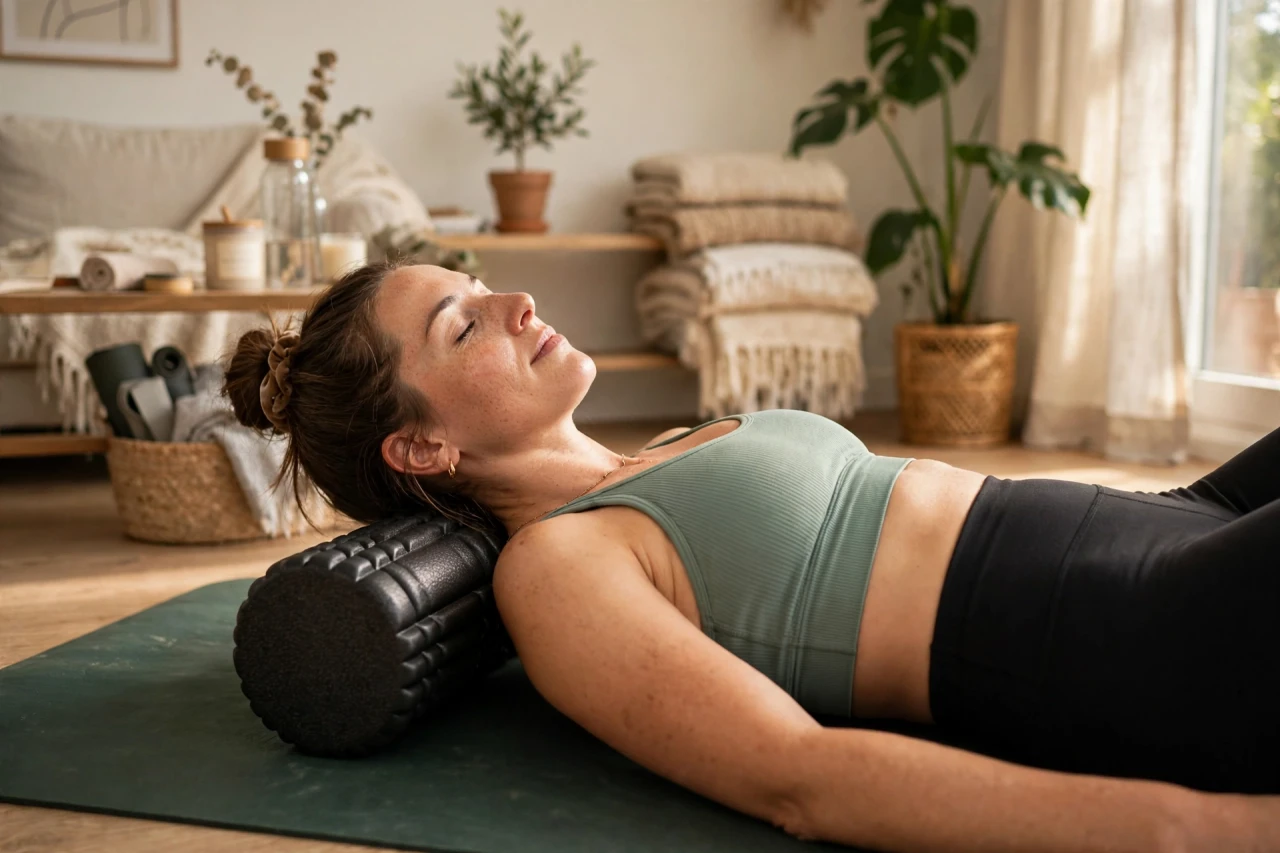
Foam rolling major muscle groups for a few minutes a day can ease soreness and improve mobility.
Key Takeaways
- Foam rolling is self-massage using your body weight on a foam cylinder — it may help ease muscle tightness and short-term soreness after exercise.
- Slow, sustained pressure beats fast rolling: pause on tender spots for 20–30 seconds and breathe.
- Beginners should start with a smooth, medium-density roller and keep sessions short (5–10 minutes).
- Roll muscles, not joints: avoid the neck, lower back, knees, elbows, and any bony areas.
- Mild discomfort is normal, but sharp or shooting pain is a signal to stop and reassess.
1. Pick the Right Roller to Start
Foam rollers come in a confusing range of sizes, densities, and textures. For beginners, simpler is better: choose a smooth (not knobby or ridged), medium-density roller, about 45 cm (18 inches) long. Soft white rollers compress easily and feel gentler; very firm black rollers deliver intense pressure that most beginners find too aggressive. A medium-density roller gives you enough pressure to be useful without punishing you for it.
You don't need an expensive model. A basic roller and a little floor space are enough to begin. Some people like shorter travel rollers, but a standard-length roller is more stable for your first attempts at upper-back rolling, where balance matters. Avoid vibrating or heated rollers until you understand the basics — they're tools for later, not learning.
2. Warm Up Before You Roll
Foam rolling works best on warm muscles. Rolling cold, stiff tissue tends to feel unpleasant and may be less effective, because warm muscle is more pliable. If you're rolling after a workout, you're already set. If it's a rest day or a morning session, spend 3–5 minutes on light movement first — a brisk walk around the room, some marching in place, or a few bodyweight squats.
Think of rolling as part of a recovery sequence, not a standalone fix. The general pattern physical therapists often suggest: light warm-up, foam roll the target areas, then gentle stretching. Each step prepares the body for the next, and the whole routine takes about 15 minutes.
3. Master the Basic Technique: Slow Beats Fast
The most common beginner mistake is rolling back and forth rapidly, like kneading dough at high speed. Effective foam rolling is almost the opposite: move slowly — about one inch per second — and when you find a tender spot, stop and hold. Rest your body weight on that spot for 20–30 seconds, breathing deeply, until the tenderness eases a little. Then continue along the muscle.
Use your hands and feet to control how much weight goes onto the roller. On your first sessions, keep most of your weight supported and only gradually let more of it sink onto the roller as you learn what your body tolerates. Rolling should feel like a firm, satisfying pressure — sometimes described as a "good hurt" — never like something is being crushed. If you're wincing or holding your breath, ease off.
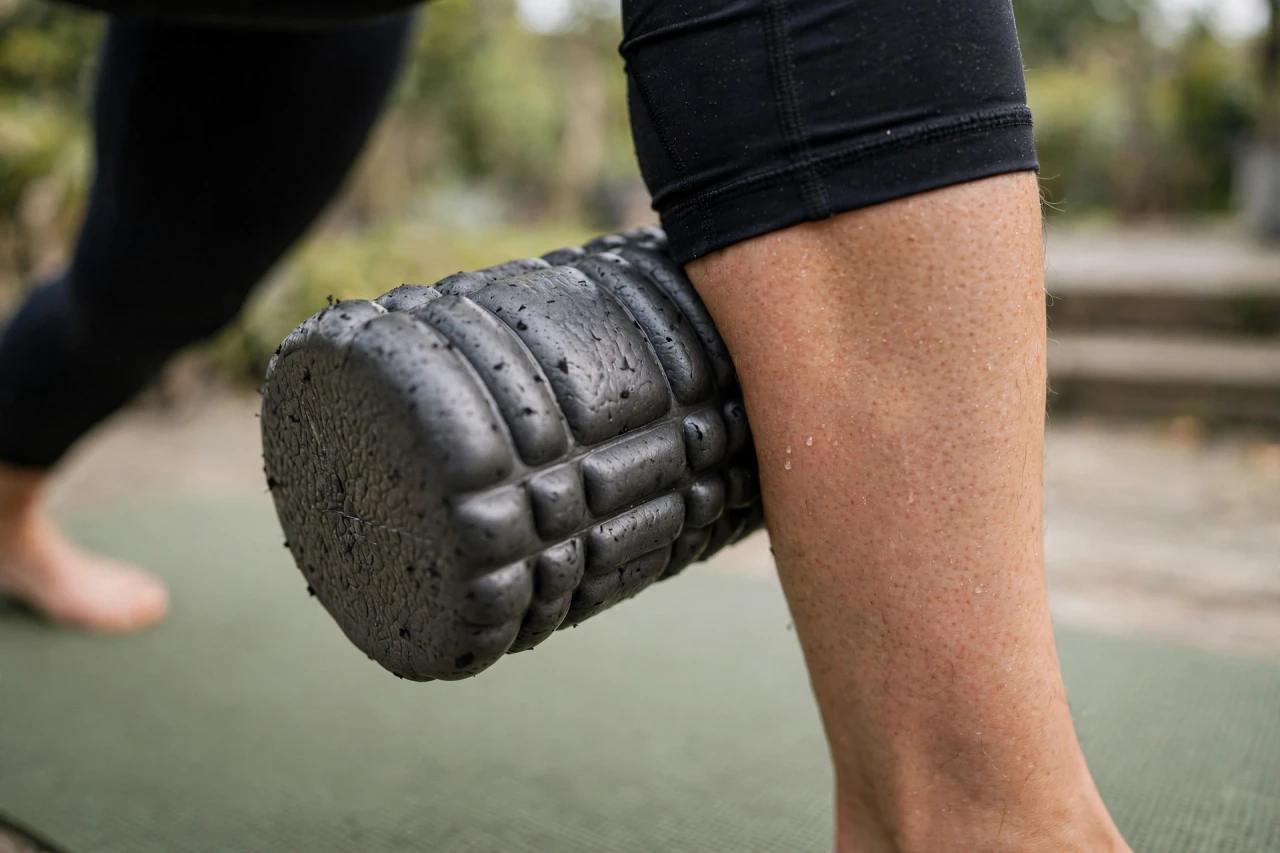
Slow, steady pressure — not speed — is what makes foam rolling effective for tight muscles.
4. Target the Big Muscle Groups
Beginners get the most value from the large, commonly tight muscles. Work through these, spending 30–60 seconds on each:
- Upper back (thoracic spine): Lie with the roller under your shoulder blades, hands behind your head, and gently roll between the shoulder blades. Keep your ribs down and don't arch into your lower back.
- Glutes: Sit on the roller, cross one ankle over the opposite knee, lean toward that side, and roll slowly over the buttock.
- Quadriceps: Face down with the roller under your thighs, supporting yourself on your forearms, and roll from just above the knee to the hip.
- Hamstrings: Sit with the roller under the back of your thighs and roll from just above the knee toward the glutes.
- Calves: Sit with the roller under one calf, the other leg resting on top for extra pressure, and roll slowly up and down.
- IT band (outer thigh): Approach with caution — this area is often very tender. Start with short, light passes and stop if it's sharply painful.
One to two passes per muscle group is plenty when you're starting out. More isn't better; consistency over weeks matters more than marathon sessions.
5. Respect the No-Go Zones
Foam rollers belong on muscle bellies, not on joints, bones, or delicate areas. Avoid rolling directly on:
- The neck and the front of the throat
- The lower back (lumbar spine) — the muscles here are thin and the spine is vulnerable; the upper back is fine, the lower back is not
- Knees, elbows, and other joints
- Shins and other bony surfaces
- Any area with an injury, fracture, open wound, varicose veins, or unexplained swelling
This rule alone prevents most foam-rolling mishaps. When in doubt about an area, skip it — or ask a physical therapist to show you safe positioning in person.
6. Breathe and Let the Muscle Release
Tension and breath-holding go together, and they work against you on the roller. When you settle onto a tender spot, take slow, deep breaths — in through the nose, out through the mouth — and consciously let the muscle soften around the roller. Many people notice the tenderness fades after a few breaths; that's your cue to move on.
This mind-muscle patience is the real skill of foam rolling. The roller doesn't force anything; sustained, relaxed pressure lets the nervous system dial down its guard around a tight area. Rushing the process with gritted teeth tends to make muscles guard harder, which defeats the purpose.
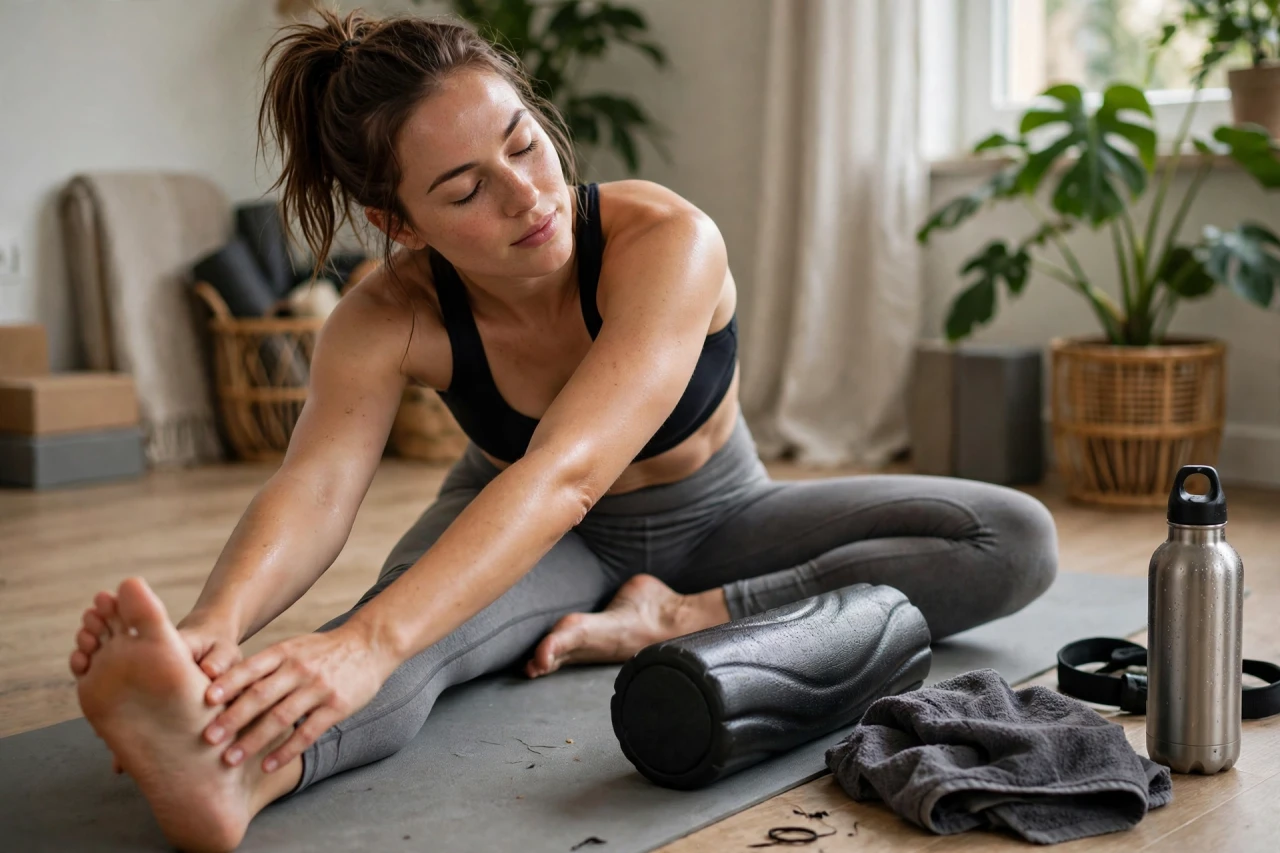
Use the roller after workouts, then follow with gentle stretching for the best recovery results.
7. Finish With Gentle Stretching
Rolling and stretching complement each other well: rolling addresses the muscle's tension and trigger-point tenderness, while gentle static stretching then works on length. After rolling a muscle group, follow with 20–30 seconds of a comfortable stretch for that same area — a standing quad stretch after rolling quads, a seated figure-four after rolling glutes, a calf stretch against a wall after rolling calves.
Keep stretches gentle, especially after rolling, since the area may feel temporarily more sensitive. Never force a stretch into pain. Over time, this roll-then-stretch pairing is what many people credit for gradual improvements in how freely they move.
Foam Rolling: Myths vs Facts
- Myth: Foam rolling breaks up scar tissue and realigns muscle fibers.
Fact: The current understanding is more modest: foam rolling appears to work mainly through the nervous system — temporarily reducing the sensation of tightness and improving short-term flexibility — rather than physically restructuring tissue.
- Myth: The more it hurts, the better it's working.
Fact: Mild discomfort is normal, but intense pain can cause muscles to tense up defensively and may bruise tissue. Effective pressure is firm but tolerable — around a 6 or 7 out of 10 on your personal discomfort scale.
- Myth: You should roll directly over sore joints to fix them.
Fact: Rollers are for muscles. Rolling over joints, the neck, or the lower back risks irritation without benefit. Joint pain deserves assessment, not pressure.
- Myth: Foam rolling replaces warming up and stretching.
Fact: It's a complement, not a substitute. It fits between a light warm-up and stretching in a recovery routine, and it doesn't replace regular strength or cardio exercise.
- Myth: Foam rolling is safe for everyone in every situation.
Fact: People with blood clot disorders, healing fractures, severe osteoporosis, advanced diabetes with circulation problems, or who are pregnant should check with a clinician first — pressure on the wrong area can cause real harm.
When to See a Doctor
Foam rolling is a self-care tool, not a treatment. Talk to a clinician or physical therapist if:
- You feel sharp, shooting, or worsening pain while rolling, or pain that persists after you stop.
- You experience numbness, tingling, weakness, or swelling in a limb.
- You have a history of blood clots, deep vein thrombosis, or circulation problems.
- You're recovering from a fracture, sprain, surgery, or any recent injury.
- You have osteoporosis, a bleeding disorder, are on blood thinners, or are pregnant.
And if an area stays painful for more than a week or two despite rest and gentle care, get it assessed rather than rolling harder.
Sponsored: check today's offers on recommended wellness products
Frequently Asked Questions
How often should a beginner foam roll?
Two to three times per week for 5–10 minutes is a sensible starting point. Many people roll on workout days as part of their cool-down. Daily rolling is fine for most healthy adults once you're accustomed to it, as long as sessions stay short and pressure stays moderate.
Is it normal for foam rolling to hurt?
Some discomfort — especially on areas like the IT band or quads — is common at first and usually lessens as the muscles adapt over a couple of weeks. Sharp, shooting, or joint pain is not normal; stop, reposition, and if it persists, consult a professional.
Can foam rolling help with back pain?
It may help ease muscular tightness in the upper back, which some people experience as relief. But back pain has many causes, and foam rolling is not a treatment for spinal conditions, disc problems, or nerve pain. Persistent back pain warrants a medical evaluation.
Should I get a smooth or textured roller?
Start smooth. Textured rollers with knobs and ridges deliver more intense, targeted pressure — useful for experienced users, but unnecessarily painful for beginners who are still learning to control their body weight on the roller.
How long before I notice a difference?
Many people feel looser immediately after a session, though that short-term effect typically fades within hours. Longer-lasting changes in how you move tend to come from consistent practice over weeks, combined with regular exercise and stretching — not from any single session.
Disclaimer: This article is for general information only and is not medical advice. Foam rolling is a self-care practice, not a treatment for injuries, chronic pain, or medical conditions. If you have a health condition, are pregnant, take blood thinners, or have persistent pain, consult a qualified healthcare professional before starting.
Have you tried foam rolling yet — and which muscle group surprised you most? Share your experience in the comments, and pass this guide to a friend who's been curious about that strange foam cylinder at the gym.


Comments
Post a Comment