Gardening rarely shows up on lists of recommended workouts, yet an afternoon in the garden can leave your muscles pleasantly tired, your heart rate elevated, and your mind clearer than it was at breakfast. Digging, lifting, raking, squatting, carrying, and stretching reach across the whole body in a way few gym routines manage — and you end up with tomatoes as a bonus. Public health sources, including the CDC, have long recognized gardening as physical activity that can contribute meaningfully to weekly movement goals.
This isn't a claim that weeding replaces medical exercise prescriptions or that gardening cures anything. It's a look at what the activity actually demands of your body, what research suggests about its physical and mental health links, and how to garden in a way that builds fitness rather than back pain. If a gym membership has never stuck, the garden gate might be your most reliable workout partner.
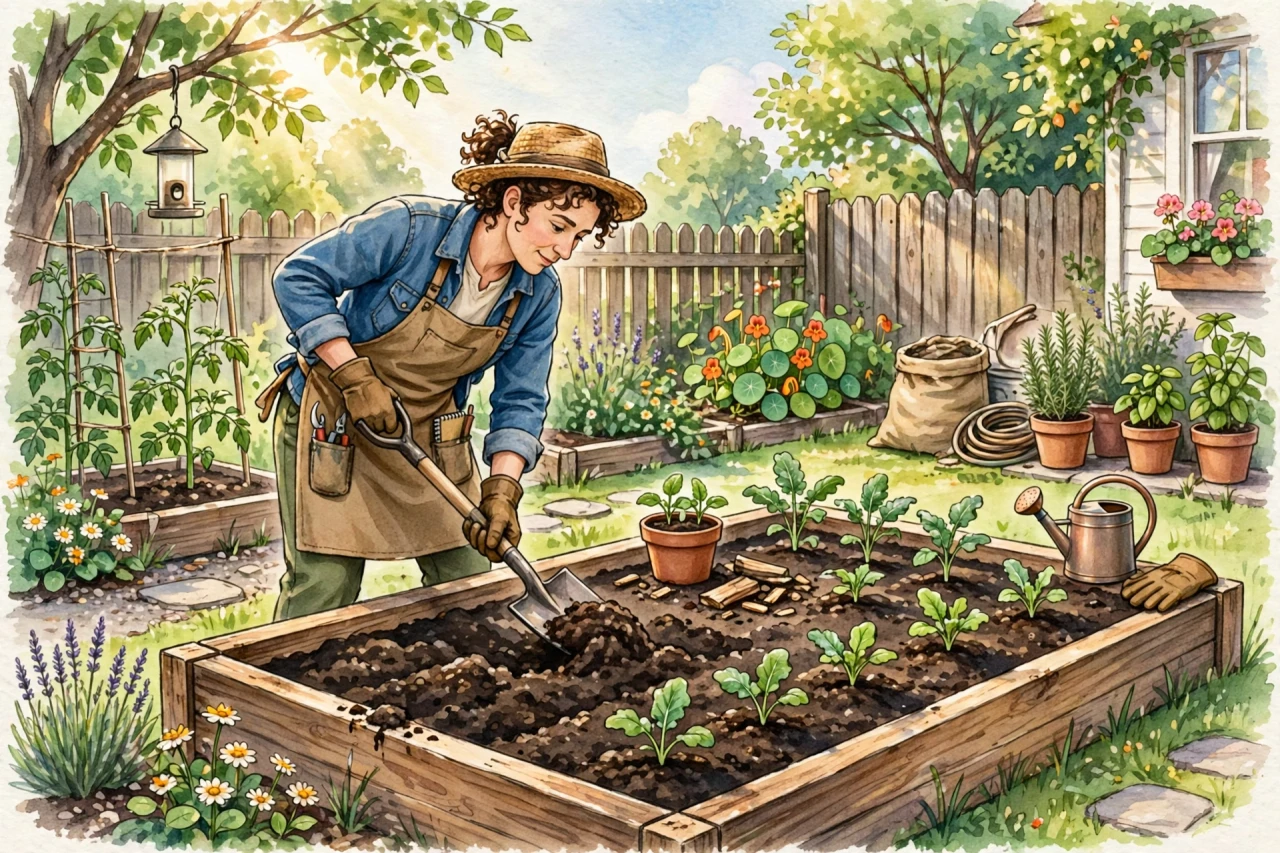
Digging, lifting, and turning soil work the legs, back, shoulders, and core all at once.
Key Takeaways
- Gardening tasks like digging, raking, mowing, and hauling qualify as moderate-intensity physical activity — comparable in effort to brisk walking — and count toward weekly activity goals.
- A single session can engage the legs, glutes, back, shoulders, arms, and core, plus balance, flexibility, and grip strength.
- Studies suggest gardening is linked with lower stress, better mood, and improved well-being, partly through gentle activity, daylight, and time in nature.
- Start gradually, warm up, lift with your legs, switch tasks every 20–30 minutes, and protect yourself from sun, heat, and dehydration.
- People with heart conditions, joint problems, or other health concerns should check with a clinician before taking on strenuous garden work.
1. The Cardio Hiding in Your Chores
Moderate-intensity activity is defined by health authorities like the CDC and WHO as movement that raises your heart rate and makes you breathe a little harder while still being able to talk. Many common gardening tasks land squarely in that zone: raking leaves, pushing a mower, digging, hoeing, sweeping paths, and hauling a loaded wheelbarrow. A sustained hour of such work can burn a meaningful number of calories — estimates vary with body size and intensity, but it is generally in the same range as a brisk walk or easy cycling.
Adults are widely advised to aim for around 150 minutes of moderate activity per week. Two or three unhurried weekend gardening sessions can cover a large share of that — and because the work is varied and outdoors, many people sustain it for years, which matters more than any single heroic workout. Consistency beats intensity, and gardening is consistency-friendly by design: the weeds keep coming back, so you keep showing up.
2. Strength, From the Ground Up
Gardening is sneaky resistance training. Consider what a typical session demands:
- Legs and glutes: squatting to plant, lunging to reach, pushing a wheelbarrow uphill, stepping on a shovel to break ground.
- Back and shoulders: digging, lifting bags of soil or compost, raking, and pruning overhead branches.
- Arms and grip: squeezing pruners, pulling weeds, carrying watering cans — grip strength gets constant low-level work.
- Core: twisting to empty a barrow, bending and rising, stabilizing while carrying uneven loads.
No single task is heavy enough to replace structured strength training for someone chasing maximum muscle, but for general functional strength — the kind that makes carrying groceries and climbing stairs easier — gardening delivers a broad, practical dose. Older adults may benefit most: the varied movements challenge the exact muscles that support independence in daily life.
3. Balance, Flexibility, and Functional Movement
Beyond cardio and strength, gardening trains qualities that gyms often neglect. Stepping over beds, kneeling and rising, reaching across plants, and working on uneven ground all challenge balance and coordination — capacities strongly linked with fall prevention in older adults. The constant bending, squatting, reaching, and twisting maintain joint mobility through full ranges of motion that desk work never touches.
This is functional fitness in its purest form: movements that mirror real life. A body that kneels to plant seedlings, rises with a basket of produce, and twists to compost is a body practicing the movements it needs every day. Studies of community and allotment gardeners have reported associations with better physical function and self-rated health compared with non-gardening peers — associations, not proof of causation, but consistent with what the movement demands suggest.
4. The Mental Health Side: Mood, Stress, and Daylight
The psychological side of gardening may be its best-documented benefit. A widely cited meta-analysis of gardening and health research found associations between gardening and reductions in depression and anxiety symptoms, as well as increases in life satisfaction. Researchers suggest several overlapping mechanisms:
- Gentle, absorbing activity that interrupts rumination — the mind focuses on the task instead of looping worries.
- Daylight exposure, which supports healthy sleep-wake rhythms and vitamin D production.
- Time in green space, which studies link with lower perceived stress and better mood.
- A sense of competence and nurture — watching something grow because of your care is quietly powerful.
- Social connection in community gardens, where shared plots build routine contact with neighbors.
None of this makes gardening a treatment for depression or anxiety disorders, which deserve professional care. But as a regular mood-supporting habit layered into an active life, the evidence is encouraging — and the side effects are fresh vegetables.
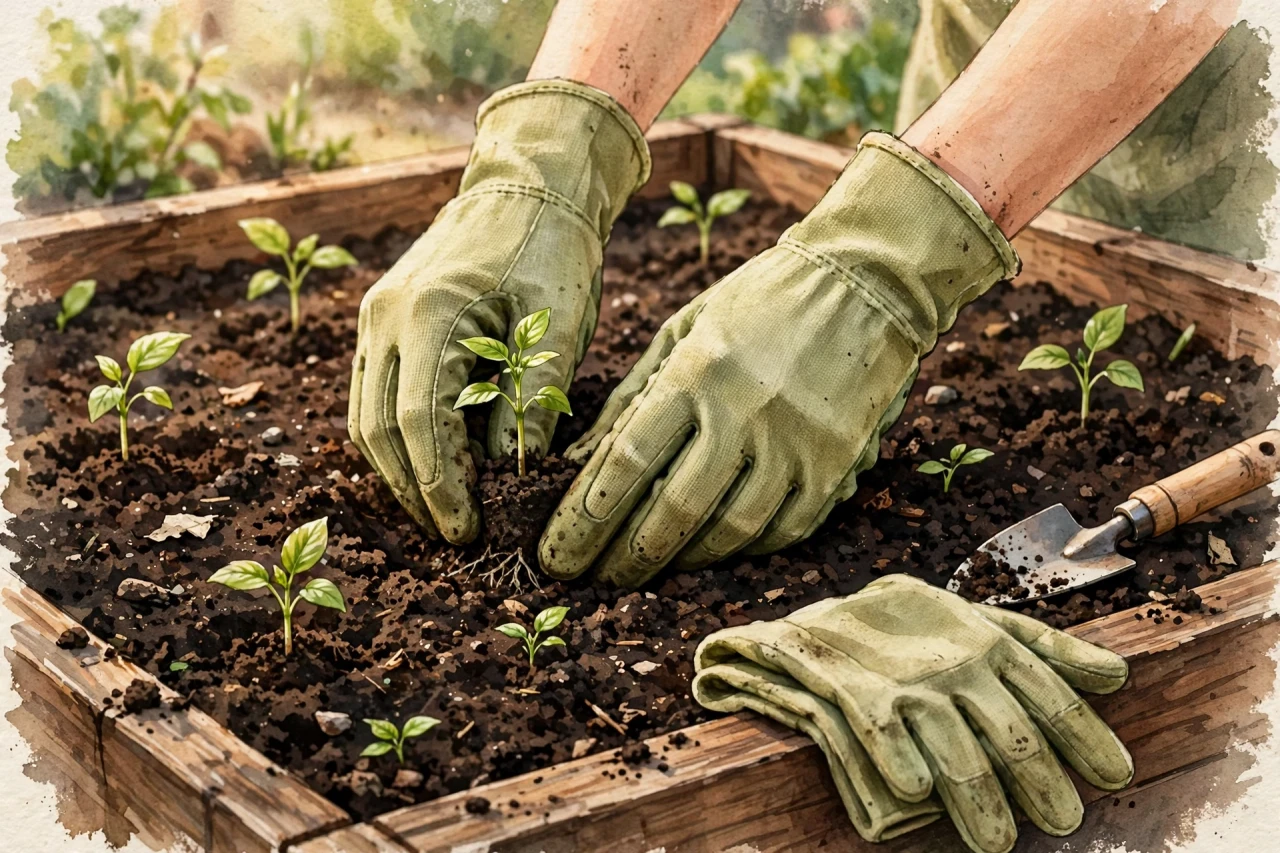
Planting and tending seedlings combine gentle strength work with balance and coordination.
5. How to Garden for Fitness (Without the Back Pain)
Gardening only counts as a healthy workout if it doesn't injure you. These practical habits keep it safe:
- Warm up for five minutes. A short walk and some arm circles and leg swings before digging — muscles work better warm, whatever the activity.
- Lift with your legs, not your back. Bend at the knees to lift bags of soil or a full watering can; keep loads close to your body; split heavy bags into two trips.
- Switch tasks every 20–30 minutes. Rotate between kneeling work, standing work, and carrying to avoid overloading one posture — this is the single best anti-soreness trick.
- Kneel smart. Use a foam kneeling pad and alternate knees; get up and walk around between kneeling bouts.
- Use long-handled tools for raking and hoeing to reduce bending, and keep pruners sharp so cuts need less force.
- Respect sun and heat. Garden in the cooler morning or late afternoon, wear a hat and sunscreen, and drink water before you feel thirsty — heat illness is a real risk in warm climates.
- Build up gradually. If you've been inactive, start with 20–30 minute sessions and add time over weeks, just like any exercise program.
6. Small Space? You Can Still Get the Workout
No backyard is no excuse. Container gardening on a balcony still involves lifting pots and bags of soil, squatting, reaching, and carrying water — a genuine, if smaller, dose of activity. Community gardens and allotments offer larger plots plus the social dimension. Even indoor plant care, while lighter exercise, keeps hands busy and routines anchored. The principle scales: whatever space you have, working with living plants adds movement, daylight, and purpose to the week.
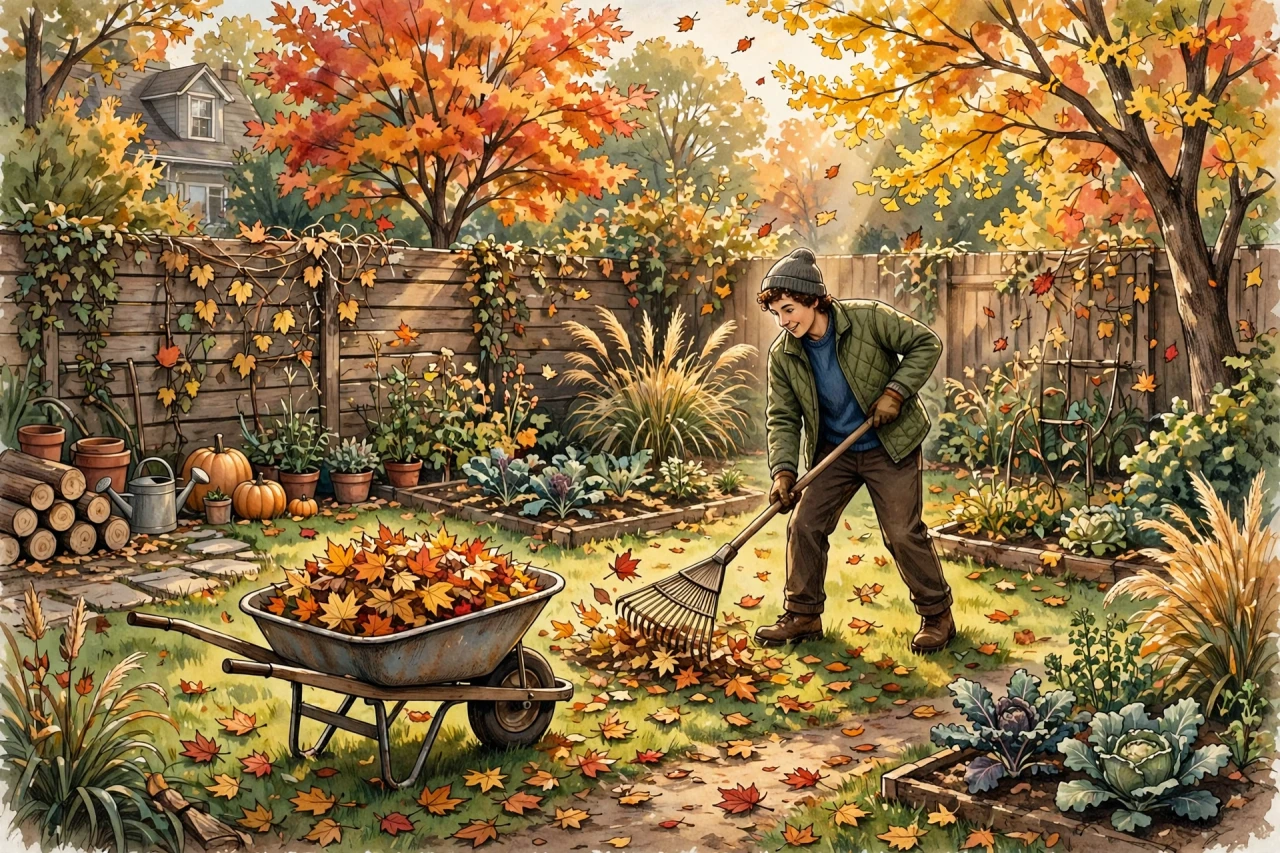
Raking, sweeping, and hauling get the heart rate up — steady moderate activity that adds up fast.
Gardening for Health: Myths vs Facts
- Myth: Gardening is too gentle to count as real exercise.
Fact: Light tasks like watering are gentle, but digging, raking, mowing, and hauling qualify as moderate-intensity activity — the same category as brisk walking — and count toward weekly activity targets.
- Myth: You need a big garden to get any benefit.
Fact: Containers, raised beds, and community plots all provide meaningful movement. Studies have found well-being benefits even from small-scale and indoor gardening.
- Myth: Gardening is only for older people.
Fact: It's popular with older adults because it's joint-friendly and social, but the strength, cardio, and mood benefits apply at any age — including for kids, who also learn where food comes from.
- Myth: An hour of weeding replaces a workout program.
Fact: Gardening is excellent general activity, but it doesn't systematically build maximum strength or vigorous cardio the way targeted training does. Think of it as a superb foundation — and a reason to move on days you'd otherwise sit.
- Myth: Gardening is always safe and natural, so precautions don't matter.
Fact: Sunburn, heat illness, dehydration, back strain, insect stings, and pesticide exposure are real risks. Sensible precautions — sun protection, hydration, good lifting form, reading product labels — are part of healthy gardening.
When to See a Doctor
Gardening is safe for most people, but check with a clinician first if any of these apply:
- You have a heart condition, uncontrolled high blood pressure, or get chest pain, unusual shortness of breath, or dizziness with exertion.
- You have significant arthritis, a herniated disc, or recent joint surgery — a doctor or physical therapist can advise which tasks to modify.
- You take medications that increase sun sensitivity or affect balance, heat tolerance, or bleeding.
- You develop a rash, breathing difficulty, or swelling after insect stings or plant contact.
- You are pregnant and planning heavy lifting or work in extreme heat — get personalized guidance.
Stop and seek care for chest pain, fainting, or severe shortness of breath during any physical activity, gardening included.
Sponsored: check today's offers on recommended wellness products
Frequently Asked Questions
How many calories does gardening burn?
It depends on body size, task, and intensity, but general estimates put moderate gardening tasks like digging and raking in the same range as brisk walking — often cited around 200–400 calories per hour for an average adult. Heavier tasks like hauling soil burn more; light watering burns less. Treat estimates as rough guides, not precise figures.
Does gardening count toward the 150 minutes of weekly activity?
Yes — the moderate-intensity tasks do. Health authorities count any activity that raises your heart rate to a moderate level, and digging, raking, mowing, and hauling qualify. Gentle tasks like deadheading flowers are light activity: pleasant, but they don't count toward the moderate-intensity target.
Is gardening good exercise for seniors?
It can be excellent: low-impact, weight-bearing, rich in balance and flexibility challenges, and socially engaging. Older adults should start gradually, favor raised beds to reduce bending, use kneeling pads, avoid the hottest hours, and check with a doctor if they have heart, joint, or balance concerns.
Can gardening really improve mental health?
Research suggests associations between gardening and lower stress, better mood, and greater life satisfaction — likely through gentle activity, daylight, nature contact, and the satisfaction of nurturing growth. It's a supportive habit, not a substitute for professional treatment of depression or anxiety.
What's the best way to start if I've never gardened?
Start small: a few containers of herbs or a single raised bed. Choose easy plants suited to your climate, invest in gloves and a kneeling pad, and commit to short regular sessions rather than occasional marathons. Local nurseries and community gardens are great sources of beginner advice.
Disclaimer: This article is for general information only and is not medical advice. Gardening is physical activity with real benefits and real risks. If you have a heart condition, joint problems, or other health concerns, consult a qualified healthcare professional before starting strenuous garden work. Stop any activity and seek care for chest pain, fainting, or severe shortness of breath.
What's growing in your garden right now — and has it ever left you sore in muscles you forgot you had? Tell us in the comments, and share this with someone who says they "don't exercise."


Comments
Post a Comment