"Eating healthy is too expensive." It is one of the most common beliefs in nutrition — and one of the most overstated. Specialty superfoods and premium grocery stores are expensive, but the backbone of a healthy diet — beans, lentils, rice, oats, seasonal vegetables, eggs — is among the cheapest food on earth. The real problem is rarely cost; it is strategy.
Healthy eating on a budget is a skill, and like any skill it has techniques: planning meals, stocking a cheap pantry, buying produce in season, cooking in batches, and wasting almost nothing. These 12 practical tips show how to eat well for less — with no expensive ingredients, no fancy equipment, and no guilt.
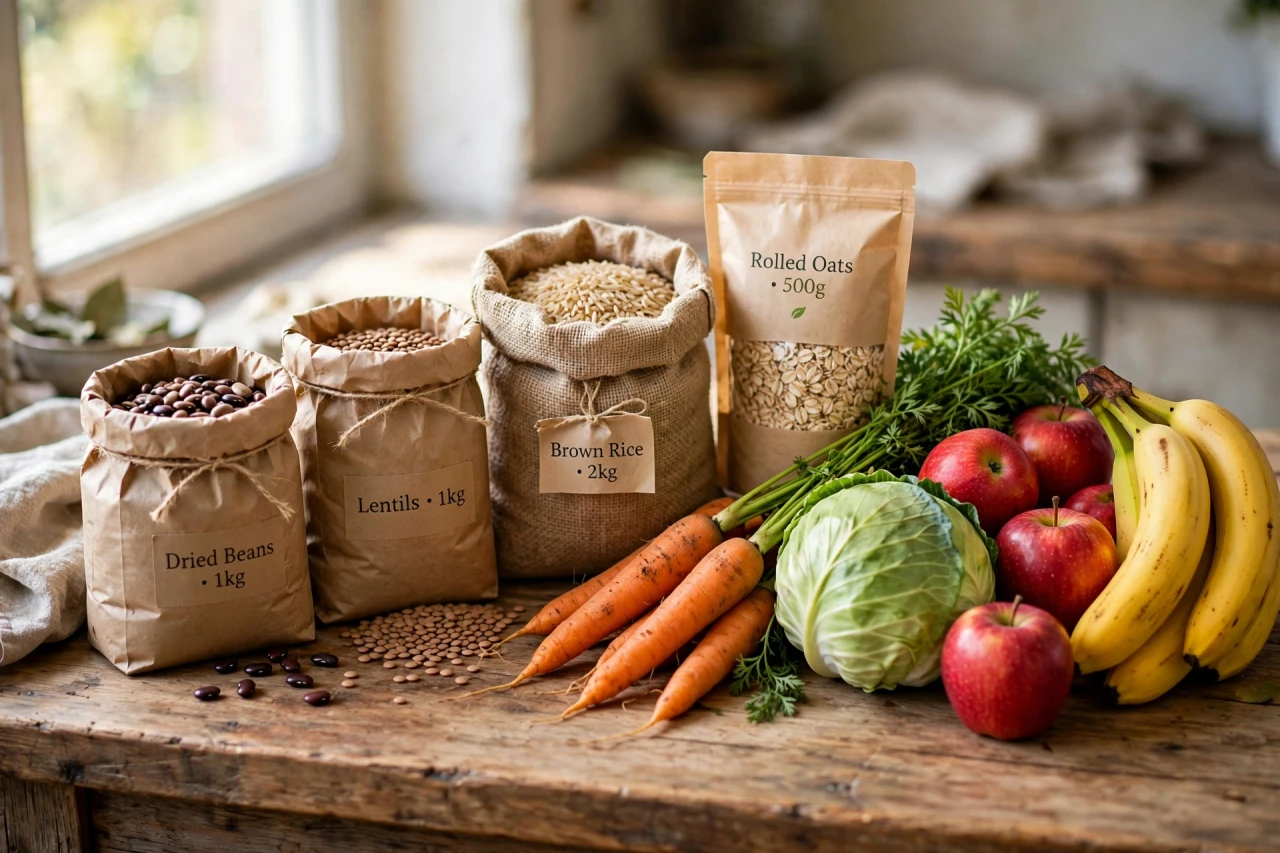
Beans, lentils, rice, and oats are among the cheapest nutritious foods you can buy.
Key Takeaways
- The cheapest healthy foods are humble ones: dried beans, lentils, rice, oats, eggs, and seasonal produce.
- Meal planning and a shopping list are the two highest-impact budget habits — most wasted grocery money is unplanned.
- Frozen fruits and vegetables are nutritionally comparable to fresh and often much cheaper, especially out of season.
- Batch cooking, repurposing leftovers, and storing food properly can cut household food waste dramatically.
- A healthy budget diet is built on whole, simple foods — not expensive "superfoods" or supplements.
12 Practical Tips for Eating Healthy on a Budget
1. Plan Meals Before You Shop
Sitting down once a week to plan 5–7 dinners may feel like extra work, but it is the single most powerful budget move. A plan tells you exactly what to buy, which eliminates impulse purchases and duplicate buying — the two biggest budget leaks. Start simple: pick one breakfast you will repeat (oatmeal, for example), 4–5 dinners built from similar ingredients, and a couple of flexible lunches.
2. Shop With a List — and Stick to It
The meal plan becomes a shopping list, and the shopping list becomes a boundary. People who shop from a list consistently spend less and waste less food. A practical habit: take a quick photo of your fridge and pantry before leaving, so you don't buy a third bottle of something you already own. And avoid grocery shopping when very hungry — it reliably inflates the bill.
3. Build a Pantry of Cheap Staples
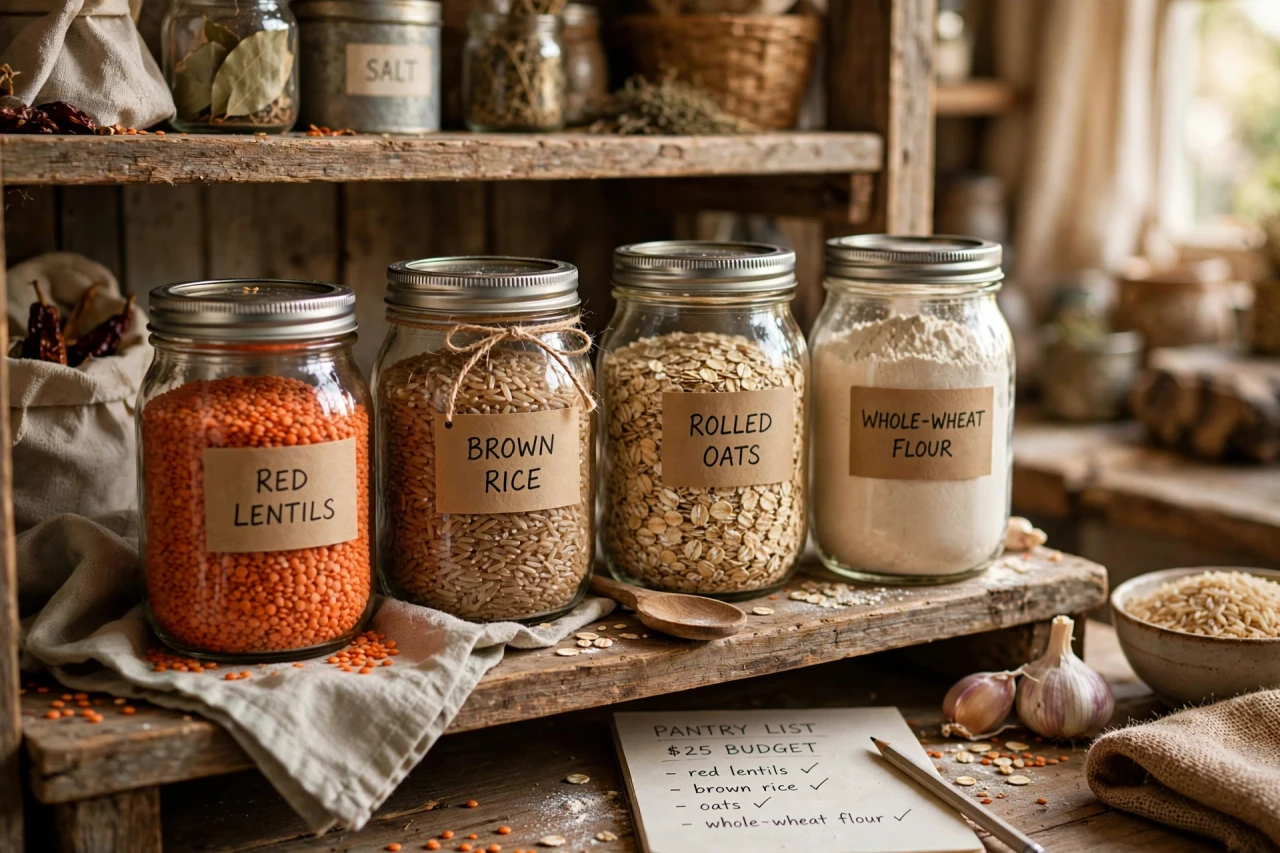
A stocked pantry is the foundation of budget eating. The most cost-effective staples are dried beans and lentils, rice, oats, whole-wheat flour, pasta, canned tomatoes, cooking oil, and basic spices. Bought in bulk or larger bags, these cost very little per serving and last for months. With just these ingredients plus a few vegetables, you can assemble dozens of genuinely nutritious meals.
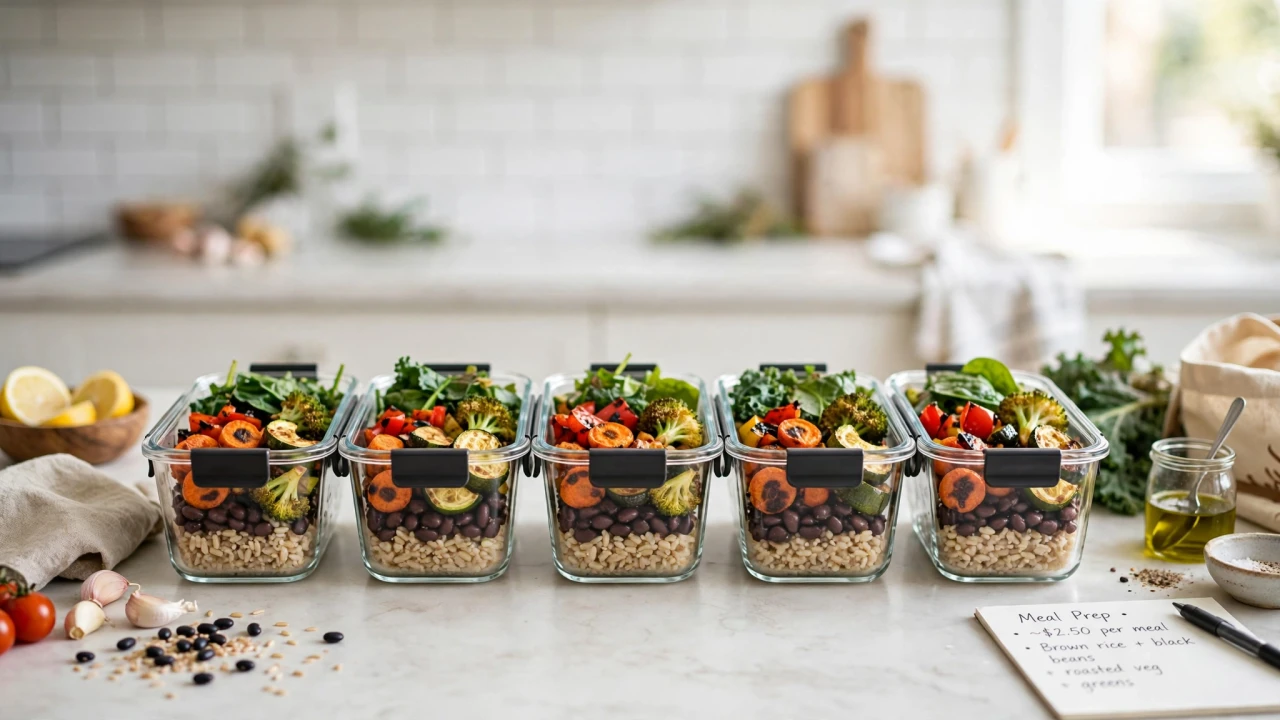
Batch cooking a few cheap bases each week turns staples into easy meals.
4. Buy Produce in Season
Seasonal produce is cheaper, fresher, and usually tastes better. A cabbage, carrots, bananas, and apples are reliably among the most affordable fruits and vegetables year-round in most regions; beyond that, learn what is in season where you live and build meals around it. Farmers' markets near closing time and "imperfect produce" programs can be excellent value.
5. Embrace Frozen Fruits and Vegetables
Frozen produce is picked and frozen at peak ripeness, and nutrition analyses consistently find it comparable to fresh. It is often significantly cheaper — especially for berries, peas, spinach, and mixed vegetables — and it never goes bad in the drawer. Keep a few bags on hand and you always have vegetables for a soup, stir-fry, or smoothie base.
6. Get Protein From Affordable Sources
Protein does not have to mean expensive meat. Eggs, dried beans and lentils, tofu, canned fish, peanut butter, and dairy like yogurt or cottage cheese are all affordable protein sources. When you do buy meat, cheaper cuts and whole chickens stretch further, and using meat as a flavoring in bean or vegetable dishes — rather than the centerpiece — feeds more people for less.
7. Cook in Batches
Cooking once and eating twice (or four times) is a budget superpower. A big pot of lentil soup, a tray of roasted vegetables, or a large batch of brown rice becomes several days of lunches and dinners — and it makes the cheap staples genuinely convenient. Dedicate one or two hours on a weekend to batch-cook two or three bases, and weekday eating takes care of itself.
8. Waste Almost Nothing
Households throw away a remarkable share of the food they buy — which means cutting waste is effectively a pay raise. Store produce properly (herbs in water, greens with a dry towel), label leftovers with dates, and freeze anything you won't eat in a couple of days. Vegetable scraps become stock; stale bread becomes croutons or breadcrumbs; overripe bananas become smoothies or baking.
A well-stocked pantry means a healthy meal is always one recipe away.
9. Learn a Few Flexible Recipes
Instead of collecting dozens of recipes that each need special ingredients, master a handful of flexible templates: a bean-and-vegetable soup, a grain bowl, a stir-fry, a frittata, and a simple curry. Each one absorbs whatever is cheap, seasonal, or about to go bad. Five templates you know by heart beat fifty saved recipes you never cook.
10. Compare Unit Prices, Not Package Prices
The bigger bag is not always the better deal. Check the unit price (per kilogram or per liter) on the shelf label — store brands and bulk bins frequently win. This takes seconds once you build the habit, and it compounds across every shopping trip. Be skeptical of "value packs" of things you won't finish before they spoil.
11. Cook More From Scratch (Selectively)
You don't need to make everything from scratch — just the items where homemade is dramatically cheaper and easy: rice and grains, dried beans (a pot of beans costs a fraction of canned per serving), oatmeal versus instant packets, and simple sauces like tomato sauce or vinaigrette. Skip the from-scratch projects that cost more in time and ingredients than they save.
12. Grow Something Small
A pot of herbs on a windowsill — basil, mint, scallions — costs almost nothing and replaces some of the priciest small grocery items. Fresh herbs make cheap meals taste far better, and even a small container garden of leafy greens can supplement your salads. It won't feed a family, but it reliably trims the bill and improves the food.
Healthy Eating on a Budget Myths vs Facts
- Myth: Healthy food is inherently expensive.
Fact: The healthiest dietary patterns in research — rich in legumes, whole grains, vegetables, and fruit — are built on some of the cheapest foods available. What is expensive is convenience packaging, dining out, and specialty "health" products. - Myth: You need superfoods like quinoa, kale, and chia to eat well.
Fact: Ordinary foods — brown rice, cabbage, carrots, oats, beans, bananas — deliver excellent nutrition at a fraction of the price. "Superfood" is a marketing term, not a nutritional category. - Myth: Frozen and canned produce are inferior.
Fact: Frozen produce is nutritionally comparable to fresh; canned beans, tomatoes, and fish are convenient and affordable. Choose low-sodium options and rinse canned beans when you can. - Myth: Eating on a budget means eating boring food.
Fact: Spices, herbs, garlic, onions, and a few flexible recipes make cheap staples genuinely delicious. Budget cooking rewards creativity more than expensive ingredients ever will.
When to See a Doctor
Eating on a tight budget is a practical challenge — but some situations need professional support:
- Unintentional weight loss, persistent fatigue, hair loss, or frequent illness — possible signs of undernourishment that deserve medical evaluation.
- If budget constraints are forcing you to skip meals regularly or rely on a very narrow diet — a doctor or dietitian can help you get the most nutrition from limited resources.
- A diagnosed condition (diabetes, kidney disease, food allergies, digestive disorders) that makes "cheap staples" complicated — get personalized guidance rather than improvising.
- Signs of disordered eating patterns around food scarcity — these deserve compassionate professional help.
General tips cannot replace individual assessment. If food access itself is the problem, local food banks, community programs, and social services exist precisely for that — using them is sensible, not shameful.
Sponsored: check today's offers on recommended wellness products
Frequently Asked Questions
What are the absolute cheapest healthy foods?
Dried beans and lentils, rice, oats, potatoes, cabbage, carrots, bananas, eggs, and peanut butter are consistently among the lowest-cost nutritious foods. Build meals around these and your grocery bill drops fast.
Is meal planning really worth the time?
Yes — it is the highest-return habit in budget eating. Even a rough weekly plan with a matching list typically saves more money in one trip than the planning session costs in time.
Should I buy organic on a budget?
Organic is optional, not required for a healthy diet. If the budget is tight, conventional produce eaten regularly is far better than skipping fruits and vegetables. Washing produce well addresses the main practical concern.
How do I stop wasting fresh produce?
Buy less perishable produce than you think you need, store it properly, plan "use it up" meals (soups, stir-fries, frittatas) for the end of the week, and freeze anything at risk. Frozen backup vegetables remove the pressure entirely.
Can eating cheap still be enjoyable?
Absolutely — enjoyment comes from flavor, and flavor comes from seasoning and technique, not price. A well-spiced lentil curry over rice is one of the great cheap meals on earth.
Disclaimer: This article is for general information only and is not medical advice. Nutritional needs vary by individual, and tight budgets can create real nutritional risks — consult a qualified healthcare professional or dietitian for personal guidance, especially with a medical condition.
What is your best budget healthy-eating trick? Share it in the comments — someone else's grocery bill will thank you.




Comments
Post a Comment