Evenings are a bridge between a busy day and a restful night. When that bridge is rushed, noisy, and brightly lit right up to bedtime, sleep can feel hard to reach. When it is slow, dim, and predictable, the body often has an easier time letting go of the day. A healthy evening routine is not about perfection. It is about giving yourself the same gentle signals, night after night, so that rest starts to feel expected rather than forced.
This guide offers seven steps you can adapt to your own home, schedule, and energy. You do not need to do all seven at once. Start with one or two that feel doable, keep them regular for a couple of weeks, and add another step only when the first ones feel natural.
A calm bedroom with soft light tells your body the day is winding down.
Key Takeaways
- A regular wind-down may help you fall asleep more easily and feel more rested in the morning.
- Dim light, less screen time, and a cooler, quieter bedroom support the body's natural sleep cues.
- Keeping similar sleep and wake times, even at weekends, may help your body clock stay steady.
- Gentle movement, a calm activity, and a little preparation for tomorrow can quiet a busy mind.
- Daylight in the morning matters too: a good night often starts with how you begin the day.
1. Set a Regular Wind-Down Window
Pick a window of about 30 to 60 minutes before bed when work stops and rest begins. It helps to treat this window as a boundary, not a suggestion: close the laptop, put work messages aside, and let others in the house know you are winding down. If your bedtime shifts from day to day, anchor the routine to a steady cue instead, such as after dinner or after the evening dishes.
Short and steady beats long and rare. A 20-minute routine you follow most nights may serve you better than an hour-long ritual that lasts only a few days. Choose steps you genuinely enjoy, so winding down feels like a small reward at the end of the day rather than another task to complete.
2. Dim the Lights and Quiet the House
Light is one of the strongest cues for the body's internal clock. In the last hour before bed, turn off bright overhead lights, use warm lamps instead, and lower the brightness on any device you still need. Sound matters as well: a quieter home, softer voices, and a slightly cooler bedroom may all help the body recognise that sleep is near.
Health organisations such as the NHS and CDC describe regular sleep times and a calm sleep environment as basic foundations of healthy sleep. You do not need a perfect bedroom, only a space that feels a little calmer than the rest of your day: a made bed, fresh air if the weather allows, and a room that is dark enough to rest in.
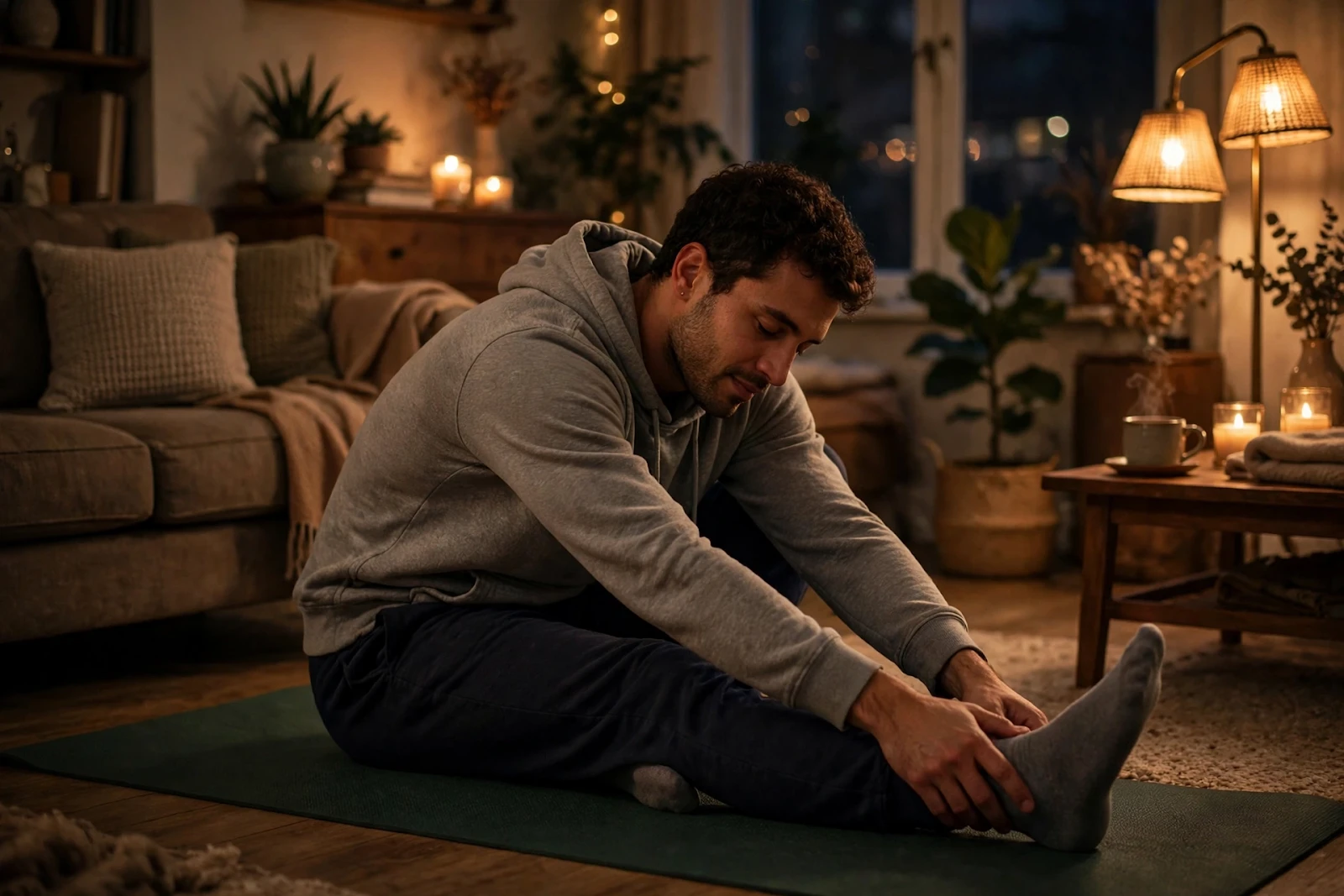
Slow, gentle stretches may help release the tension of the day.
3. Put Screens to Bed First
Many people find that phones are the hardest evening habit to change, because the phone is also the alarm, the book, and the connection to friends. A practical first step is to charge the phone outside the bedroom, or at least across the room, and to use a simple alarm clock instead. If that feels too strict, try a smaller rule first: no screens in the final 30 minutes before bed, or one screen-free evening each week.
The reason is not only light. Messages, videos, and games can keep the mind alert even after the screen goes dark. Replacing the scroll with a paper book, a magazine, music, or quiet conversation gives the mind something restful to settle on, and many people find the urge to check the phone fades once a calmer habit takes its place.
4. Move Gently, Not Vigorously
A hard workout late in the evening can leave some people feeling wide awake, but gentle movement may have the opposite effect. A short walk after dinner, a few slow stretches, or some easy yoga poses can loosen stiff muscles and ease the physical tension of sitting all day. Keep the pace slow, breathe naturally, and stop any movement that hurts.
Notice what suits you. Some people sleep well after an evening walk, while others prefer stillness and stretching indoors. There is no single right choice here: the best evening movement is the one you will actually do, in a way that leaves you calmer than when you started.
5. Choose a Warm Drink and a Calm Activity
A small ritual can become a reliable sleep signal: a cup of caffeine-free herbal tea, a warm shower, a few pages of a book, or some slow breathing. Warm water may help in a simple way, because the body cools down afterwards, and that cooling is similar to the natural drop in temperature that accompanies sleepiness.
Keep the ritual short and in the same order each night. Over time, the sequence itself may start to feel sleepy, because the brain learns to link those steps with rest. If tea is not your habit, any quiet, pleasant activity will do, as long as it is not stimulating and it happens at roughly the same time each evening.
6. Get Tomorrow Ready Tonight
A racing mind is a common reason for lying awake. A short evening habit can reduce it: write down the top three tasks for tomorrow, lay out clothes, prepare a bag, or make a simple lunch plan. Moving small decisions out of your head and onto paper may make it easier to let the day go.
Some people also keep a short notebook by the bed. A few lines about the day, or three small things that went well, can give the mind a gentle stopping point instead of an open worry loop. If a worry returns once the lights are out, noting it briefly for the morning may help you set it aside until then.
Morning light helps set your body clock for the night ahead.
7. Keep Wake Time Steady and Welcome Morning Light
The last step happens in the morning, and it shapes the next evening. Waking at a similar time each day, even at weekends, may help the body clock stay predictable, so sleepiness arrives on schedule. Opening the curtains, stepping outside briefly, or sitting near a bright window in the morning gives the clock a clear daytime signal.
Daytime habits support the evening too: regular activity, daylight, and avoiding caffeine late in the day may all make the wind-down easier. Think of the routine as a full circle, where a calm morning supports a calm evening, and a calm evening supports a restful night.
Evening Routine Myths vs Facts
- Myth: A good routine must be long and elaborate to work.
Fact: A short routine done regularly may help more than a long one that is rarely followed.
- Myth: A drink in the evening always improves sleep.
Fact: Alcohol may bring drowsiness at first, but it can break up sleep later in the night and leave you less rested.
- Myth: Sleeping in for hours at the weekend makes up for a poor week.
Fact: Extra weekend sleep may ease tiredness, but very irregular wake times can make the next nights harder.
- Myth: If you cannot sleep, you should stay in bed until sleep comes.
Fact: Getting up for a quiet, dim activity until you feel sleepy again may break a cycle of tossing and turning.
- Myth: A screen filter alone makes late-night screen use harmless.
Fact: Filters may lower light exposure, but exciting or stressful content can still keep the mind alert.
When to Seek Advice
An evening routine helps many people, but talk with a healthcare professional if you:
- Regularly take a long time to fall asleep for several weeks.
- Wake often during the night and struggle to fall back asleep.
- Snore loudly, gasp, or pause in breathing during sleep, or a partner notices this.
- Feel very sleepy during the day despite spending enough time in bed.
- Have ongoing worry or low mood that keeps you awake at night.
Sponsored: check today's offers on recommended wellness products
Frequently Asked Questions
How long should my evening routine be?
About 30 to 60 minutes works well for many people, but even 15 to 20 minutes of calm, screen-free time may help. Regularity matters more than length.
When should I stop using screens before bed?
Try to finish screen use at least 30 minutes before bed, and keep stimulating news or messages out of that final window if you can.
Is gentle stretching before bed safe for most people?
Gentle stretching is usually fine, but keep movements slow and comfortable, and stop if anything hurts. If you have a health condition or injury, check with a healthcare professional first.
Does caffeine in the evening affect sleep?
It may affect some people more than others. As a general guide, avoid caffeine in the late afternoon and evening if you notice it delays your sleep.
What should I do if my routine stops helping?
Refresh one step at a time, check daytime habits such as light, activity, and caffeine, and seek advice if sleep problems persist for weeks.
What is one small evening habit that helps you unwind? Share your wind-down step in the comments, and tell us which step from this guide you will try first.
Disclaimer: This article is for general information only and is not medical advice. It does not diagnose, treat, or cure any condition, and it is not a substitute for professional care. If you have a sleep problem or symptoms that worry you, consult a qualified healthcare professional before changing your sleep habits.





Comments
Post a Comment