High cholesterol rarely makes itself felt — there are no symptoms — yet over time it quietly raises the risk of heart disease and stroke. The good news is that cholesterol responds remarkably well to everyday habits. For many people, lifestyle changes alone can meaningfully improve cholesterol numbers, and for those who also need medication, the same habits make treatment work better.
Cholesterol itself is not the enemy: your body needs it to build cells and hormones. The concern is the balance — too much LDL ("bad") cholesterol and too little HDL ("good") cholesterol is linked to fatty deposits in artery walls. Here are twelve practical, evidence-based lifestyle changes that may help lower cholesterol naturally, drawn from guidance by the WHO, the CDC, and the American Heart Association.
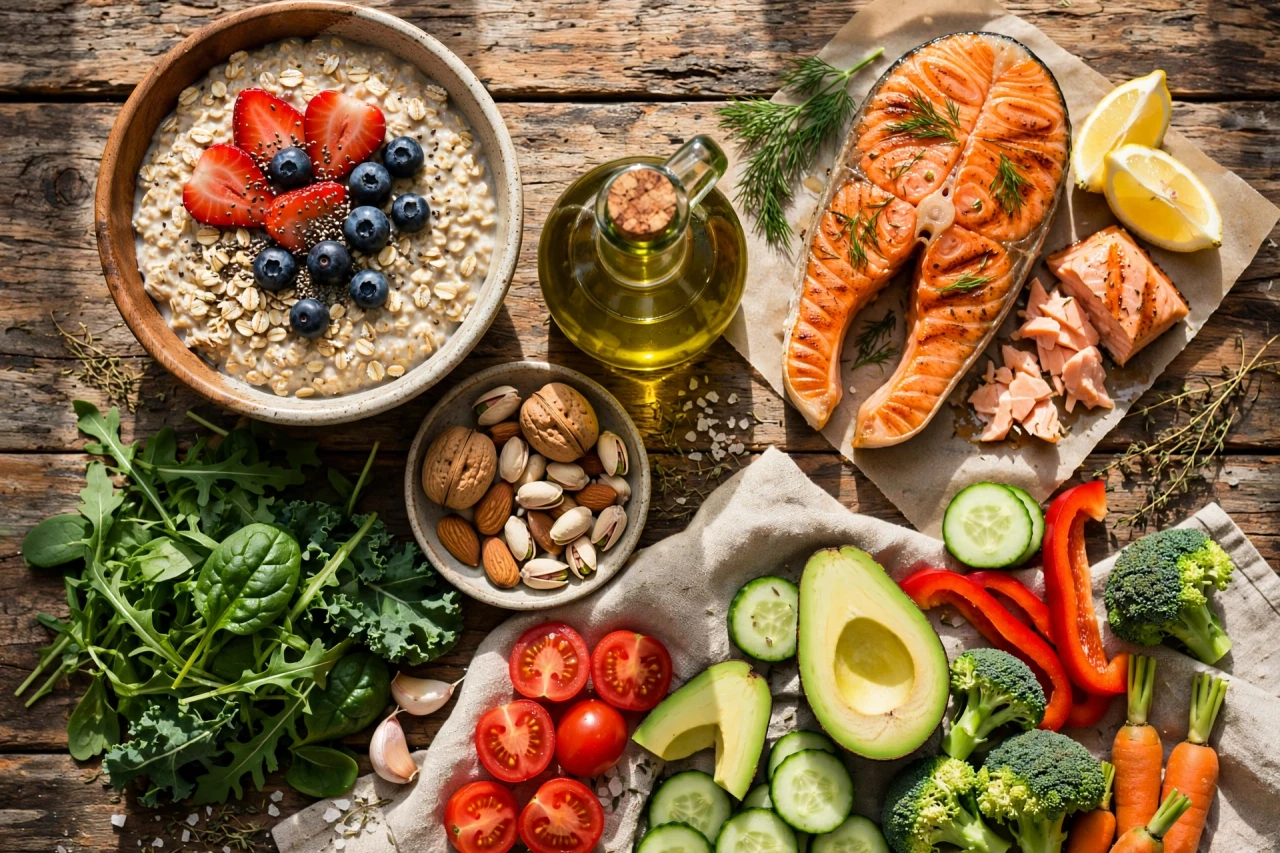
Oats, fatty fish, olive oil, nuts, and vegetables form the foundation of a heart-healthy eating pattern.
Key Takeaways
- Soluble fiber (oats, beans, fruit) and unsaturated fats (olive oil, nuts, fatty fish) are among the most effective dietary tools for healthier cholesterol levels.
- Regular aerobic exercise and losing even a modest amount of excess weight may improve the balance between LDL and HDL cholesterol.
- Quitting smoking and limiting alcohol support healthier cholesterol and overall heart health.
- Small, consistent swaps — olive oil for butter, whole grains for refined, walking for sitting — add up over months.
- Lifestyle changes complement, not replace, prescribed cholesterol medication; never stop medication without your doctor.
1. Eat More Soluble Fiber
Soluble fiber dissolves in the gut and helps the body excrete cholesterol rather than absorbing it. Foods rich in soluble fiber include oats and oatmeal, beans, lentils, chickpeas, apples, pears, citrus fruits, and Brussels sprouts. Starting the day with a bowl of oatmeal is one of the simplest cholesterol-friendly habits there is. Most adults fall well short of recommended fiber intake, so increasing fiber gradually — with plenty of water — helps avoid digestive discomfort.
2. Choose Unsaturated Fats Over Saturated Fats
Not all fats act the same. Replacing saturated fats — found in butter, lard, fatty and processed meats, full-fat dairy, and many pastries — with unsaturated fats is one of the most reliable dietary strategies for lowering LDL cholesterol. Practical swaps: cook with olive oil or canola oil instead of butter, choose fish or beans over fatty red meat a few nights a week, snack on nuts instead of chips, and pick lower-fat dairy options.
Read labels on packaged foods for trans fats (partially hydrogenated oils), which raise LDL and lower HDL — the worst of both worlds. Many countries have restricted them, but they can still appear in some fried and baked goods.
3. Eat Fatty Fish Twice a Week
Salmon, sardines, mackerel, trout, and herring are rich in omega-3 fatty acids, which are linked to healthier triglycerides and overall heart health. The American Heart Association suggests eating fish — particularly fatty fish — at least twice a week. Canned sardines and salmon are affordable, shelf-stable options with the same benefits. If you don't eat fish, walnuts, flaxseeds, and chia seeds supply plant-based omega-3s (ALA), though they are converted less efficiently by the body.
4. Add Nuts, Legumes, and Soy
A small handful of almonds, walnuts, or peanuts a day is associated with modest improvements in cholesterol profiles — just watch portions, since nuts are calorie-dense. Beans and lentils combine soluble fiber with plant protein, making them a double win: use them to replace some meat in soups, stews, and salads. Soy foods such as tofu, tempeh, and edamame have been linked to small but meaningful LDL reductions when they replace animal protein regularly.
5. Fill Half Your Plate with Vegetables and Fruit
Vegetables and fruits are naturally low in saturated fat and high in fiber, vitamins, and plant compounds called phytosterols that may help block cholesterol absorption. Aim for color and variety — leafy greens, cruciferous vegetables, berries, citrus, and tomatoes all contribute. A practical rule: make vegetables the largest portion on your plate, with whole grains and a lean protein source alongside. Whole fruit is preferable to juice, which concentrates sugar without the fiber.

Regular brisk walking is a simple way to support healthy cholesterol levels.
6. Get Moving: Aim for Regular Aerobic Exercise
Regular aerobic activity — brisk walking, cycling, swimming, dancing — is linked to higher HDL ("good") cholesterol and lower triglycerides, and it supports healthy weight and blood pressure too. Health authorities generally recommend at least 150 minutes of moderate-intensity activity per week, which breaks down to about 30 minutes, five days a week. Brisk walking counts: if you can talk but not sing, you're in the right zone.
Consistency beats intensity. A daily 30-minute walk you actually do is far more valuable than an ambitious gym plan you abandon. If you have heart disease, chest pain, or other conditions, check with your doctor before ramping up exercise.
7. Lose Excess Weight Gradually
Carrying extra weight — especially around the waist — tends to raise LDL and triglycerides while lowering HDL. The encouraging part: even modest weight loss of 5 to 10 percent of body weight is associated with meaningful improvements in cholesterol and other heart risk factors. Crash diets backfire; steady habits — slightly smaller portions, fewer sugary drinks, more vegetables, daily walking — produce sustainable results.
8. Quit Smoking
Smoking damages blood vessel walls, lowers HDL cholesterol, and makes LDL more likely to form artery-clogging deposits. The benefits of quitting start quickly: within weeks, circulation and HDL levels begin to improve. If you smoke, quitting is one of the most powerful single steps you can take for your cholesterol and your heart. Free quitlines and support programs exist in many countries — ask your doctor or pharmacist for local resources.
9. Limit Alcohol
While moderate drinking has been debated, the overall picture is clear: excessive alcohol raises triglycerides, blood pressure, and calorie intake, and any heart "benefits" do not outweigh the risks. If you drink, keep it moderate or less — and if you don't drink, there is no health reason to start. People with high triglycerides are often advised to avoid alcohol entirely; follow your doctor's guidance.
10. Manage Stress and Sleep Well
Chronic stress can drive unhealthy coping habits — overeating, drinking, skipping exercise — that worsen cholesterol indirectly, and some research links prolonged stress itself to less favorable lipid profiles. Stress-management practices such as regular exercise, adequate sleep, time outdoors, and relaxation techniques (deep breathing, meditation, yoga) support the whole cardiovascular picture. Aim for 7 to 9 hours of sleep; consistently poor sleep is associated with worse metabolic and heart health.
11. Consider Plant Sterols and Stanols
Some fortified foods — certain margarines, yogurts, and juices — contain plant sterols or stanols, which can modestly reduce LDL cholesterol by blocking its absorption in the gut. They are not a substitute for a healthy diet, and they are most useful for people actively trying to lower LDL. If you use them, follow the product's serving guidance, since more is not better.
12. Know Your Numbers and Work With Your Doctor
You cannot feel high cholesterol, so regular blood tests are the only way to know where you stand. Adults are generally advised to have cholesterol checked every 4 to 6 years, more often if levels are high or other risk factors exist. Bring your results to your doctor, who can interpret the full picture — LDL, HDL, triglycerides, blood pressure, family history — and advise whether lifestyle changes alone are enough or whether medication is also appropriate.
A crucial point: never stop prescribed cholesterol medication because you have adopted healthier habits. Statins and other medicines work through different pathways than lifestyle, and stopping them suddenly can raise risk. Any change to medication must be decided with your doctor.
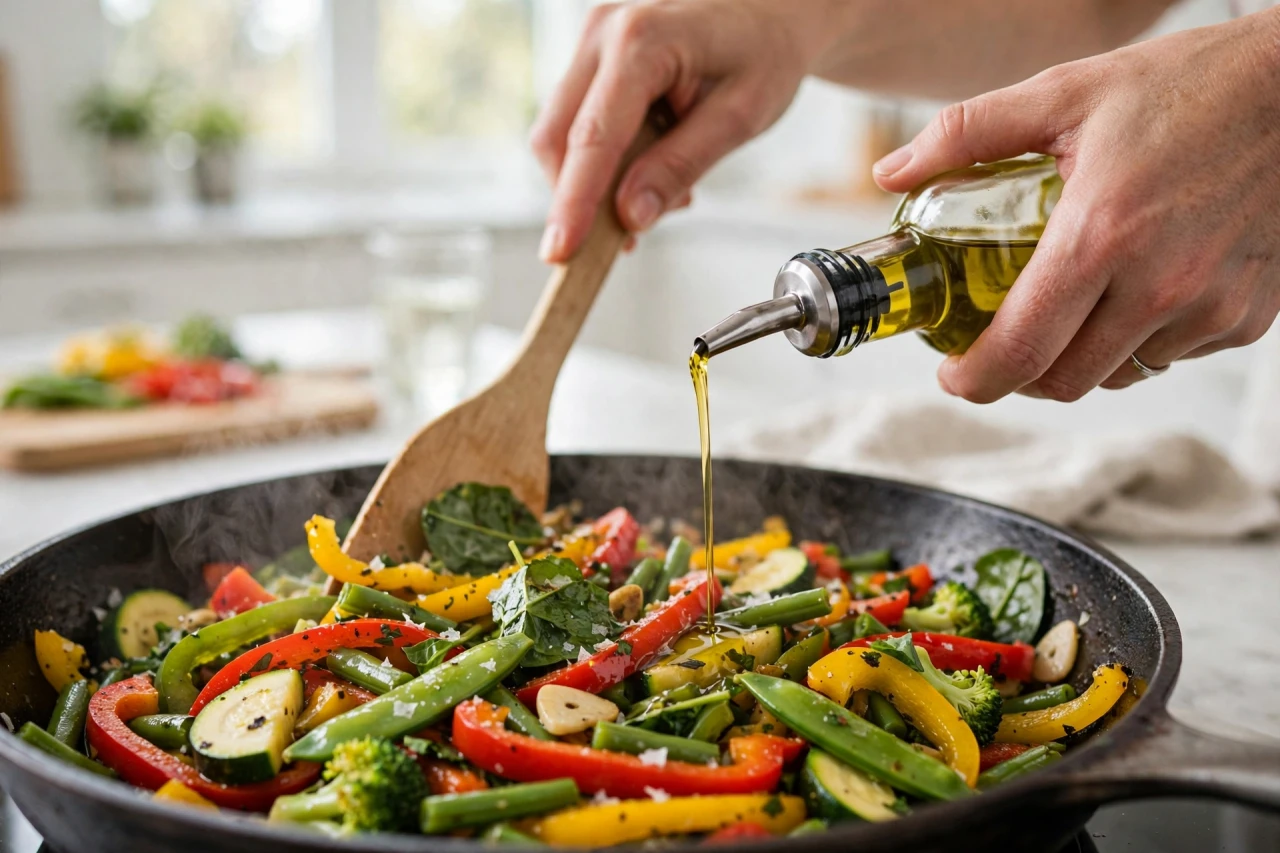
Cooking with olive oil instead of butter or lard is an easy swap that supports heart health.
Cholesterol Myths vs Facts
- Myth: All cholesterol is bad and should be eliminated.
Fact: Your body needs cholesterol for cells and hormones. The goal is a healthy balance — lower LDL, adequate HDL — not zero cholesterol. - Myth: Thin people don't need to worry about cholesterol.
Fact: Diet, genetics, and other factors affect cholesterol regardless of body weight. Slim people can have high cholesterol too — only a blood test tells. - Myth: Eggs must be avoided to lower cholesterol.
Fact: Dietary cholesterol has a smaller effect on blood cholesterol than saturated and trans fats do. For most people, eggs in moderation fit fine within a heart-healthy diet. - Myth: If I take cholesterol medication, diet doesn't matter.
Fact: Medication and lifestyle work better together. Healthy habits improve results and support blood pressure, weight, and blood sugar as well.
When to See a Doctor
Lifestyle changes are powerful — but professional guidance matters when:
- You have never had your cholesterol checked, or it has been more than a few years.
- Your LDL is very high, or you have a family history of early heart disease (familial high cholesterol may need medication regardless of lifestyle).
- You have chest pain, shortness of breath, or other possible heart symptoms — seek prompt care, not lifestyle tweaks.
- You take cholesterol medication and want to discuss whether lifestyle changes could adjust your treatment plan.
- You have diabetes, high blood pressure, or smoke — your overall heart risk assessment should be done with a clinician.
Your doctor can also refer you to a dietitian for a personalized eating plan.
Sponsored: check today's offers on recommended wellness products
Frequently Asked Questions
How long does it take to lower cholesterol naturally?
With consistent lifestyle changes, many people see measurable improvements in 3 to 6 months. Cholesterol responds to sustained habits, not quick fixes — think months of steady eating and activity, not weeks of a crash diet.
What foods lower cholesterol the fastest?
No single food works "fast," but oats, beans, fatty fish, nuts, olive oil, and plenty of vegetables are among the most consistently effective choices in research. The overall eating pattern matters more than any one superfood.
Can exercise alone lower cholesterol?
Exercise helps — particularly by raising HDL and lowering triglycerides — but it works best combined with dietary changes. The two together produce larger improvements than either alone.
Is high cholesterol always caused by diet?
No. Genetics play a major role for many people, and some inherit conditions that cause very high cholesterol regardless of diet. That is why testing matters: lifestyle helps everyone, but some people also need medication.
Should I stop my statin if my cholesterol improves?
No — never stop or adjust cholesterol medication without your doctor. Improved numbers often mean the treatment is working, and stopping can quickly reverse the gains. Discuss any changes with your clinician.
Disclaimer: This article is for general information only and is not medical advice. Cholesterol management depends on your individual risk factors, family history, and current medications. Consult a qualified healthcare professional before making major dietary changes or adjusting any medication.
Which cholesterol-lowering swap will you try first — oatmeal for breakfast, olive oil in the pan, or a daily walk? Tell us in the comments.


Comments
Post a Comment