Hydration Beyond Water: Do You Really Need Electrolyte Drinks?
- Get link
- X
- Other Apps
Walk down any supermarket drinks aisle and you'd think plain water is hopelessly outdated. Neon sports drinks, electrolyte powders, "hydration multipliers," and coconut water all promise superior hydration — and the marketing implies that without them, you're basically running on empty. It's a confusing message, because the truth is much simpler: for most people, most of the time, water does the job perfectly well.
So when do you actually need electrolytes beyond water? This article explains what electrolytes are and what they do, when plain water is enough, the specific situations where electrolyte drinks genuinely help, what's wrong with most commercial sports drinks, and the healthiest (and cheapest) ways to stay hydrated — including the foods that quietly top up your electrolytes every day.

Plain water covers most people's hydration needs; electrolyte drinks are useful in specific situations.
- Electrolytes — mainly sodium, potassium, magnesium, and calcium — are minerals that help regulate fluid balance, muscle function, and nerve signals.
- For most people doing everyday activities, plain water plus a normal diet supplies all the hydration and electrolytes needed.
- Electrolyte drinks are genuinely useful in specific situations: prolonged sweaty exercise (typically over 60–90 minutes), significant heat exposure, and fluid loss from vomiting or diarrhea.
- Many commercial sports drinks are high in sugar and marketed far beyond their actual use case — water or a homemade alternative is often the better choice.
- Whole foods — fruit, vegetables, dairy, nuts, and coconut water — provide electrolytes naturally, and simple habits like drinking to thirst and checking urine color work well for most people.
1. What Electrolytes Actually Are
Electrolytes are minerals that carry an electric charge when dissolved in body fluids. The main ones are sodium, potassium, magnesium, and calcium. They play essential roles: sodium and potassium help regulate fluid balance inside and outside cells, all of them contribute to normal muscle function (including the heartbeat), and they help transmit nerve signals. Your body keeps their levels within tight ranges, and a regular diet normally supplies them without any special effort.
You lose electrolytes mainly through sweat and urine. Sweat contains mostly sodium, with smaller amounts of potassium — which is why "replacing electrolytes" marketing focuses so heavily on salty sweat. But here's the key context: everyday sweating from normal activity and a normal diet replaces those losses automatically at the next meal. Significant depletion generally requires prolonged, heavy sweating or illness — not a 30-minute gym session.
2. Plain Water Covers Most People, Most of the Time
For desk work, walking, light workouts under an hour, and ordinary daily life in moderate temperatures, water is the ideal hydration choice: zero calories, zero sugar, free or nearly free, and exactly what the body's thirst mechanism evolved to expect. Health authorities including the CDC emphasize water as the best everyday beverage choice.
How much? Rather than chasing a rigid number, most experts suggest practical guides: drink to thirst, aim for pale-yellow urine, and drink a glass of water with meals and when you feel like it. The old "8 glasses a day" rule was never based on strong evidence — needs vary with body size, diet (fruits and vegetables contribute significant water), climate, and activity. People who eat lots of watery foods like fruit, soups, and salads may need less plain water than the rule suggests, while people in hot climates or doing physical labor need more.
3. When Electrolyte Drinks Actually Make Sense
There are legitimate situations where water plus food may not keep up, and an electrolyte drink is genuinely useful:
- Prolonged, sweaty exercise. The classic use case: continuous vigorous exercise lasting longer than about 60–90 minutes, especially in heat — think long runs, cycling, soccer, or manual labor in summer. Here you're losing meaningful amounts of sodium and fluid faster than water alone comfortably replaces.
- Significant heat exposure. Working or spending long hours in hot environments with heavy sweating.
- Illness with fluid loss. Vomiting or diarrhea can deplete fluids and electrolytes quickly. Oral rehydration solutions (the medical-grade versions, not sugary sports drinks) are the standard recommendation here — health authorities like the WHO have long endorsed oral rehydration salts for this purpose.
- Certain medical situations. Some conditions and medications affect fluid and electrolyte balance; in those cases, follow your clinician's guidance rather than sports-drink marketing.
Notice what's not on the list: a normal workday, a 30-minute jog, yoga class, or drinking one "just in case." If your activity doesn't leave your clothes soaked with sweat, water is almost certainly enough.

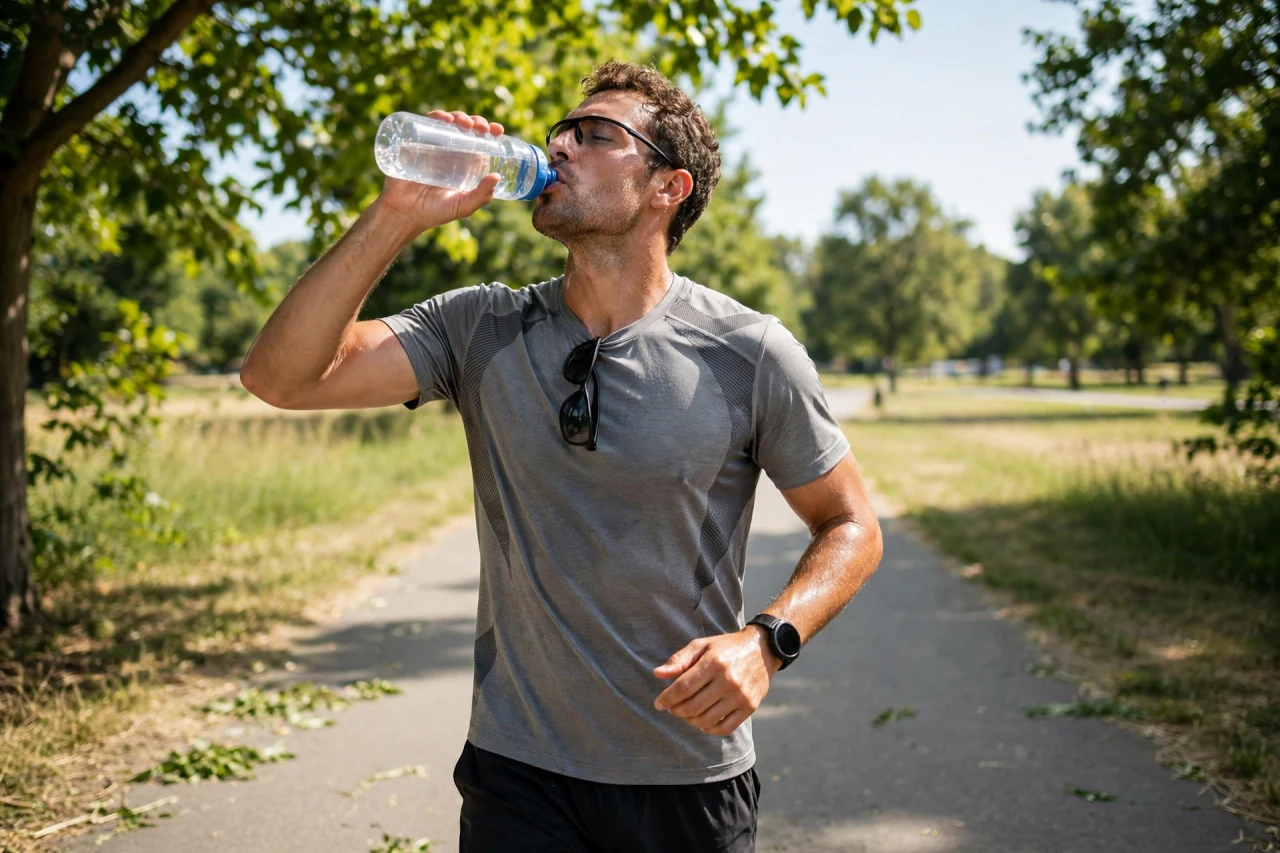
Long, sweaty workouts are one of the few situations where replacing electrolytes makes sense.
4. The Problem With Most Commercial Sports Drinks
The biggest sports-drink brands were formulated for serious athletes — then marketed to everyone. The result is that millions of people drink them in situations where they add nothing but sugar and calories. A typical bottle can contain 30+ grams of sugar — comparable to a soft drink — along with artificial colors and flavors.
The marketing language deserves skepticism too. Phrases like "superior hydration" and "replenish what sweat takes out" are technically true in a narrow sense and misleading in context: yes, sweat takes out electrolytes, but your next meal puts them back at a fraction of the cost and without the sugar load. For the average person, a sports drink after light exercise is best understood as a sugary beverage with good branding, not a health product.
If you do need electrolytes for a long workout or hot day, look for options lower in sugar, or consider the homemade route below. And for illness-related dehydration, proper oral rehydration salts (available at pharmacies) outperform sports drinks — they're formulated to the ratios health authorities recommend.
5. Smarter Ways to Get Electrolytes
You don't need a neon bottle to replace electrolytes. These everyday options do it naturally:
- Fruit. Bananas and oranges are well known for potassium; dried apricots and melons contribute too.
- Vegetables and legumes. Leafy greens, potatoes, sweet potatoes, and beans supply potassium and magnesium.
- Dairy and alternatives. Milk and yogurt provide calcium, potassium, and sodium — chocolate milk is even a popular low-cost recovery drink among endurance athletes.
- Nuts and seeds. Almonds, pumpkin seeds, and peanuts add magnesium and potassium.
- Coconut water. A reasonable natural source of potassium with less sugar than most sports drinks — though it's not the miracle hydrator marketing suggests, and plain water plus a banana does much the same job.
- A pinch of salt in water. For long, sweaty efforts, lightly salted water (or water with a squeeze of citrus and a small pinch of salt) is the simplest DIY electrolyte drink — pennies per serving.
The broader point: a diet with plenty of whole plant foods and adequate salt makes "electrolyte deficiency" from normal life essentially a non-issue. Electrolyte products solve a problem most people don't have.
6. Signs You're Under-Hydrated (and Over-Hydrated)
Mild dehydration is common and usually easy to fix. Typical signs include thirst, dry mouth, darker yellow urine, headache, fatigue, and reduced concentration. These generally resolve quickly with water and rest — they rarely require anything fancier.
Less well known is that overhydration is also possible. Drinking excessive water in a short time — sometimes seen in endurance events — can dilute blood sodium to dangerous levels, a condition called hyponatremia. Symptoms include nausea, headache, confusion, and in severe cases seizures. The practical lesson: drink to thirst and don't force huge volumes of water "just to be safe," especially during long exercise. More is not always better.

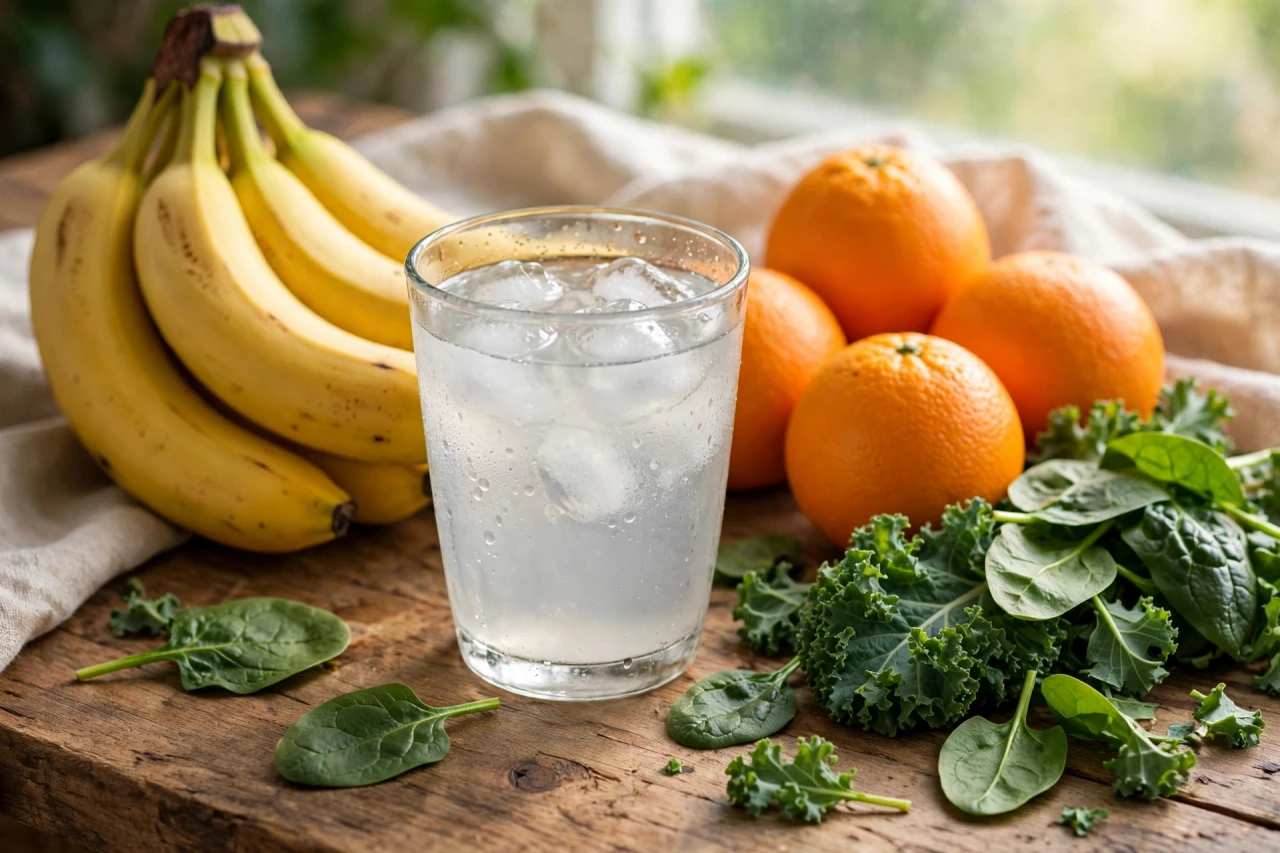
Whole foods like fruit and vegetables quietly supply potassium, magnesium, and sodium every day.
Hydration: Myths vs Facts
- Myth: Everyone who exercises needs a sports drink.
Fact: For workouts under about an hour, water is enough. Sports drinks earn their place mainly in prolonged, sweaty efforts over 60–90 minutes — not after a casual gym session. - Myth: More water is always better.
Fact: Overhydration can dangerously dilute blood sodium (hyponatremia). Drink to thirst, watch urine color, and don't force excessive volumes. - Myth: Coconut water is vastly superior to water for hydration.
Fact: Coconut water provides some potassium with moderate sugar, but for everyday hydration it's not meaningfully better than water — and water plus fruit covers the same ground. - Myth: Caffeine in coffee and tea dehydrates you.
Fact: Caffeinated drinks do have a mild diuretic effect, but research shows moderate coffee and tea consumption still contributes positively to daily fluid intake. They're not dehydrating in any practical sense. - Myth: If you feel thirsty, you're already dangerously dehydrated.
Fact: Thirst is an early, well-calibrated signal — not an emergency alarm. Feeling thirsty simply means it's a good time to drink some water.
When to See a Doctor
Most hydration questions are simple, but get medical advice if you:
- Experience persistent dizziness, fainting, confusion, or a rapid heartbeat that may relate to fluid or electrolyte imbalance.
- Have vomiting or diarrhea lasting more than a day or two, or can't keep fluids down — dehydration can become serious, especially for children and older adults.
- Have a kidney condition, heart failure, or take diuretics or other medications affecting fluid balance — your fluid needs may differ from general guidance.
- Notice very dark urine, very infrequent urination, or swelling alongside hydration concerns.
Sponsored: check today's offers on recommended wellness products
Frequently Asked Questions
Are zero-sugar electrolyte powders a good daily habit?
They're better than sugary sports drinks, but for most people they're still an unnecessary expense. If you eat a normal diet with fruits, vegetables, and adequate salt, you're already replacing daily electrolyte losses. Save them for genuinely long, sweaty efforts or hot days — not your desk.
How can I tell if I'm drinking enough water?
Two simple checks work well: drink when you're thirsty, and aim for pale-yellow urine. Dark yellow urine or infrequent urination suggests drinking more; completely clear urine all day may mean you're overdoing it. These practical signs beat any fixed daily target.
Is coconut water a good electrolyte drink for workouts?
It's a reasonable natural option — it contains potassium and some sodium with less sugar than typical sports drinks. But it's relatively low in sodium, the main electrolyte lost in sweat, so for very long efforts a pinch of salt (or a proper sports drink) replaces losses more completely. For everyday hydration, plain water is just as good.
What should I drink when I have a stomach bug?
Small, frequent sips of an oral rehydration solution are the standard recommendation — they're formulated with the right balance of water, salts, and a little sugar to maximize absorption. Sugary sports drinks and sodas are less ideal. If you can't keep fluids down or symptoms persist beyond a day or two, seek medical care.
Do I need to drink water before I feel thirsty during exercise?
For most recreational exercise under an hour, drinking to thirst is fine. For longer efforts in heat, a planned drinking strategy helps — sip regularly rather than waiting until you're very thirsty, and include electrolytes for sessions beyond 60–90 minutes. Avoid the opposite extreme of forcing large volumes, which risks hyponatremia.
Disclaimer: This article is for general information only and is not medical advice. Hydration needs vary with health conditions, medications, climate, and activity level. If you have a kidney condition, heart failure, or take medications affecting fluid balance, follow your healthcare professional's guidance. Never use this article to diagnose or treat a medical condition.
Team water, team sports drink, or team coconut water — where do you stand? Tell us your go-to hydration habit in the comments, and share this article with the friend who drinks a sports drink at their desk.
- Get link
- X
- Other Apps
Comments
Post a Comment