It's Wednesday evening. You're tired, the fridge holds a lonely jar of pickles and some questionable leftovers, and the delivery app is one tap away — again. Now imagine the alternative: you open the fridge to find neatly stacked containers of colorful, ready-to-eat meals. Dinner is three minutes in the microwave. Lunch tomorrow is already packed. This isn't a fantasy reserved for fitness influencers — it's meal prep, and it's one of the simplest ways to eat healthier, spend less, and stop making food decisions when you're exhausted.
Meal prep just means preparing some or all of your meals ahead of time. It doesn't require cooking seven days of identical chicken-and-rice, spending your whole Sunday in the kitchen, or owning fancy equipment. This beginner's guide covers the simplest version that actually works: plan a little, shop smart, cook in one batch session, and store everything safely. By the end, you'll have a realistic system for healthy eating all week — even on your busiest days.
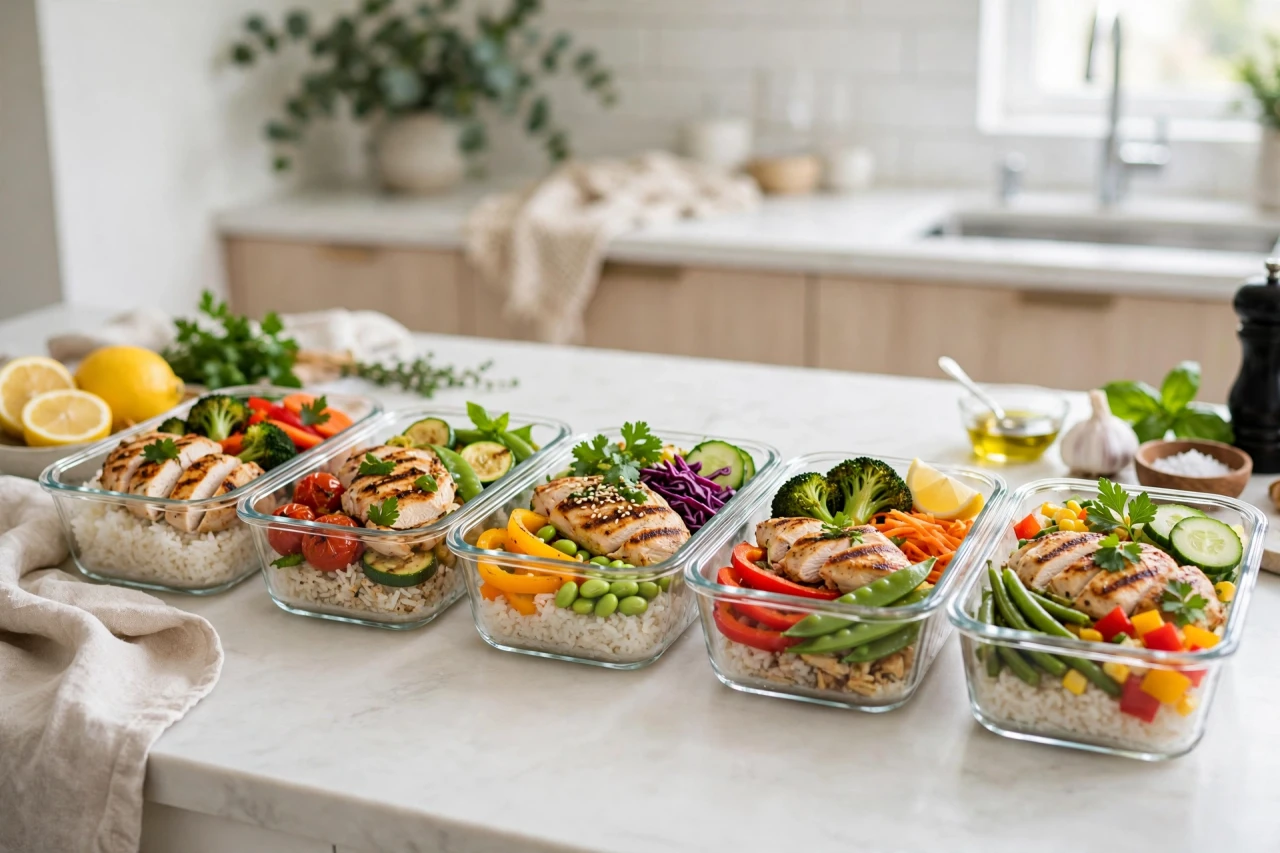
A couple of hours on Sunday can stock your fridge with ready-to-eat balanced meals for the week.
Key Takeaways
- Meal prep means cooking components or full meals ahead of time so healthy eating becomes the easy default during busy days.
- Beginners should start small: prep 2–3 lunches or a few versatile ingredients, not a full week of identical meals.
- A simple weekly rhythm — plan (15 min), shop (30 min), cook (1–2 hours) — covers most of the work in one session.
- Food safety matters: cool cooked food within 2 hours, refrigerate for 3–4 days, freeze the rest, and reheat until steaming hot.
- Good containers (glass, airtight, portion-sized) and labels with dates keep prepped food fresh, organized, and appetizing.
What Meal Prep Actually Means (and Doesn't)
Forget the intimidating photos of 21 identical containers. Real-world meal prep comes in several beginner-friendly forms, and you can mix and match:
- Full meals: complete lunches or dinners, portioned into containers, ready to reheat. Best for work lunches.
- Ingredient prep: cooking versatile components — a pot of rice, roasted vegetables, grilled protein, washed greens, a simple sauce — that you mix and match through the week. This is the most flexible option and great for beginners.
- Batch cooking: making a big pot of soup, stew, curry, or chili and portioning it out. One cooking session, many meals.
- Grab-and-go assembly: portioning snacks and breakfasts — overnight oats jars, cut fruit, boiled eggs, nut portions — so mornings and snack times run themselves.
What meal prep doesn't mean: eating the same thing every day until you hate food, spending your entire weekend cooking, or needing professional skills. Start with whichever form appeals to you — most beginners do best with ingredient prep plus a couple of full lunches.
Why it works: nutrition research consistently shows that planning and availability shape what we eat more than willpower does. When healthy food is ready and visible, you eat it; when the alternative is cooking from scratch at 8 p.m., the delivery app wins. Meal prep also tends to reduce food waste and grocery spending, since you buy with a plan instead of improvising.
Your First Meal Prep: 7 Simple Steps
Here's the complete beginner workflow. Your first session might take two hours; it gets faster every week:
1. Plan 3–4 Days, Not 7
Beginners who try to prep a full week often end up with food fatigue by Thursday and wasted food by Sunday. Start with 3–4 days of lunches (or dinners) — enough to feel the benefit, short enough to stay fresh and interesting. Pick recipes you already like and that reheat well: grain bowls, soups, stews, curries, pasta bakes, and stir-fries are all forgiving. Write the plan down, even roughly — "Mon–Thu lunches: rice + chicken + roasted veg" is a complete plan.
2. Make a Focused Shopping List
Turn your plan into a list organized by store section (produce, protein, grains, pantry). This one habit cuts both spending and forgotten-ingredient return trips. Stick to the list — impulse buys are where budgets and meal plans quietly die. Buy versatile ingredients that appear in multiple meals: if chicken, rice, and broccoli cover three lunches, you're shopping efficiently. Frozen vegetables and fruits are budget-friendly, nutritious, and reduce spoilage risk for beginners.
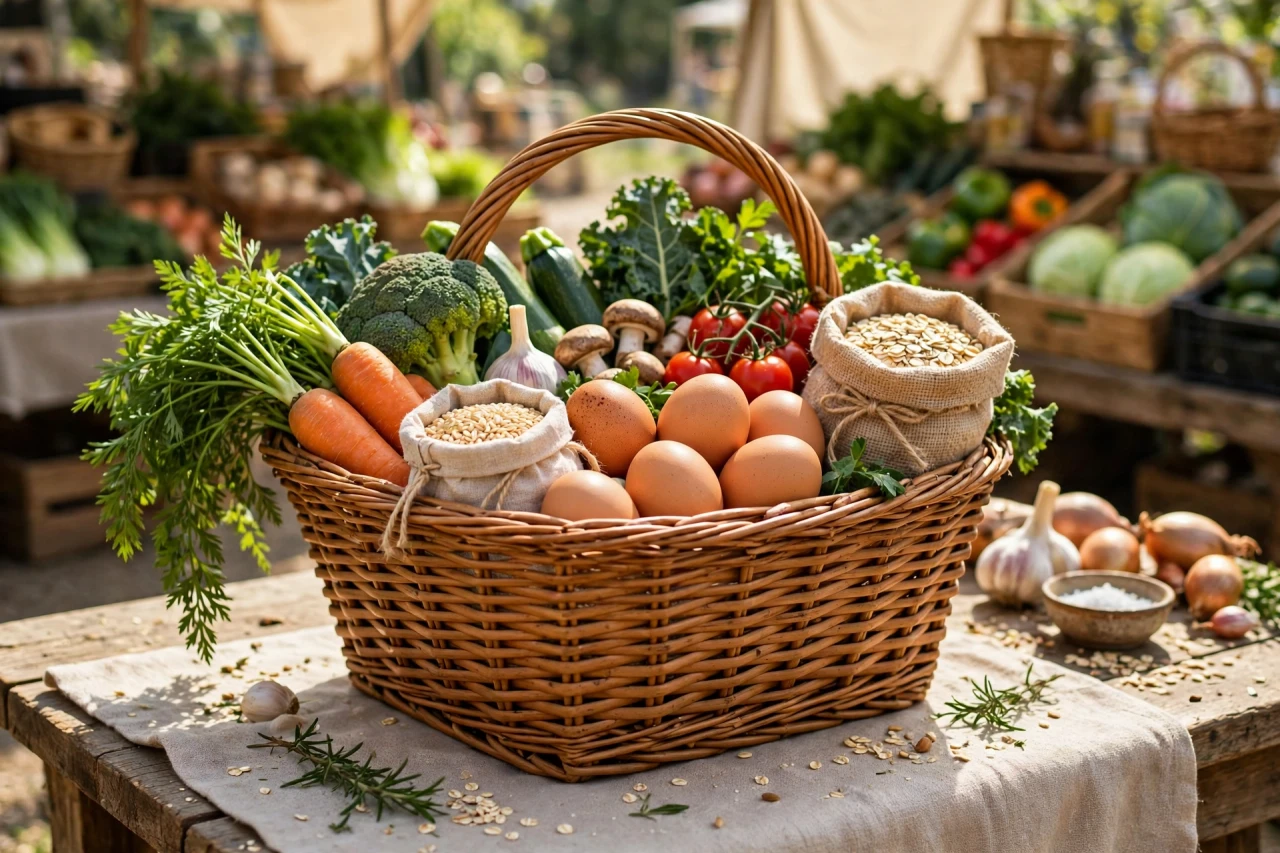
A short shopping list built around a weekly plan keeps meal prep simple and budget-friendly.
3. Schedule One Cooking Session
Block 1–2 hours on a day that suits you — Sunday is classic, but any day works. Treat it like an appointment. Before you start, read through your recipes, clear the counter, and set out your containers. Multitask smartly: start the longest-cooking item first (grains, roasted vegetables, or a simmering pot), then prep proteins and chop vegetables while things cook. Put on music or a podcast — the session should feel pleasant, not punishing.
4. Cook Components, Not Just Meals
The ingredient-prep approach gives you the most variety for the least boredom. In one session, cook: one grain (rice, quinoa, or pasta), one or two proteins (baked chicken thighs, lentils, boiled eggs, or tofu), a tray of roasted mixed vegetables, and one sauce or dressing (a simple vinaigrette, peanut sauce, or yogurt-herb dressing transforms everything). Store each separately. Through the week, combine them differently — Monday's bowl becomes Wednesday's wrap filling.
5. Portion and Pack While Food Is Fresh
Divide food into individual containers soon after cooking (once cooled slightly — see food safety below). Portioning now means grab-and-go later, and it prevents the "I'll just eat from the big pot" habit that makes tracking portions impossible. Aim for balanced portions: roughly half vegetables, a quarter protein, a quarter whole grains — the familiar plate model works in a container too. Leave a little headspace for expansion if freezing.
6. Label Everything With Dates
A strip of masking tape and a marker is all you need: contents + date cooked. Future-you will thank present-you when staring into the fridge on Thursday. Labels also make the food-safety math effortless — no sniffing, guessing, or "I think this is from… Tuesday?" Rotate stock: new containers go behind older ones, so you naturally eat the oldest first.
7. Do a 10-Minute Midweek Refresh
If you prepped for 3–4 days, Wednesday evening is a good moment for a tiny second session: wash greens, cut fruit, boil eggs, or assemble overnight oats for the rest of the week. Ten minutes keeps the system running without another big cook. This is also when you notice what worked — too much rice? Not enough protein? — and adjust next week's plan. Meal prep is a skill; every week teaches you something.
Food Safety Basics Every Beginner Must Know
Prepping food ahead only works if it stays safe to eat. These are standard food-safety guidelines worth following every time:
- The 2-hour rule: get cooked food into the fridge within 2 hours of cooking (1 hour if your kitchen is very hot). Don't leave a big pot cooling on the counter all afternoon — divide it into shallow containers to cool faster.
- Fridge life is 3–4 days: most cooked meals, grains, and proteins keep 3–4 days refrigerated at or below 4°C (40°F). When in doubt, freeze on day 2 or 3 rather than gambling on day 5.
- Freeze for longer storage: soups, stews, cooked grains, and many proteins freeze well for 2–3 months. Thaw overnight in the fridge — never on the counter — and eat within a day of thawing.
- Reheat thoroughly: bring leftovers to steaming hot all the way through (around 75°C/165°F). Reheat sauces, soups, and gravies to a rolling boil. Only reheat once.
- Trust dates, not just your nose: some spoilage is invisible and odorless. If it's past the safe window or you're unsure, throw it out — food poisoning isn't worth the savings.
- Keep it clean: wash hands, produce, and surfaces; use separate boards for raw meat and ready-to-eat foods; and keep your fridge at the right temperature with an inexpensive thermometer if you're unsure.
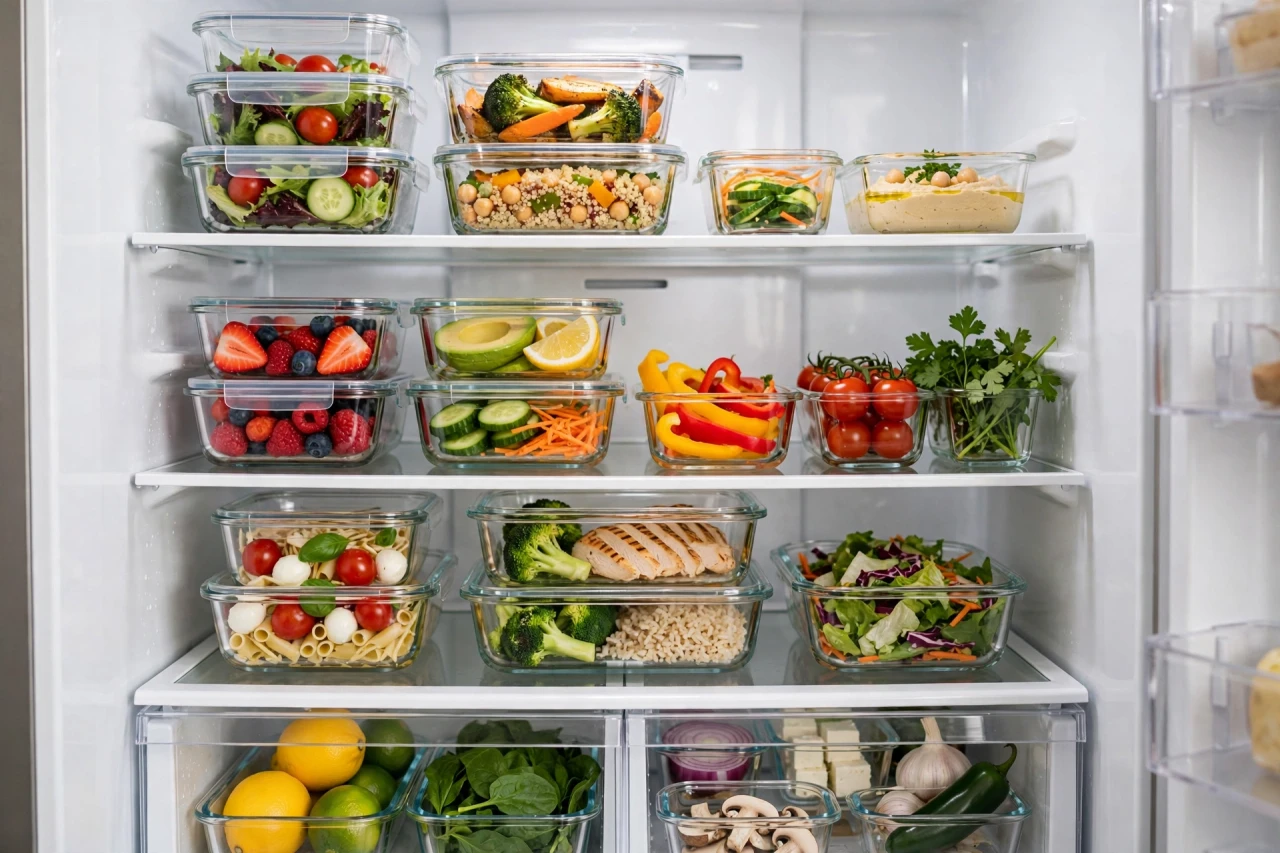
Labeled, portioned containers make healthy choices the easiest choice all week.
A Sample Beginner Week
Here's what a realistic first week looks like — 3 days of lunches plus flexible components:
- Sunday session (about 90 minutes): cook brown rice; roast a tray of broccoli, carrots, and bell peppers with olive oil; bake seasoned chicken thighs; whisk a simple lemon-tahini dressing; boil 4 eggs; wash and portion salad greens.
- Mon–Wed lunches: grain bowls — rice + chicken + roasted veg + dressing. Wednesday: swap the bowl into a wrap with greens for variety.
- Breakfasts: overnight oats jars (oats + milk + chia + frozen berries), assembled Sunday in 10 minutes.
- Snacks: boiled eggs, cut carrots, apple slices, a handful of nuts — portioned Sunday.
- Dinners: keep flexible this week. Once lunches feel easy, add dinners next week.
Total extra effort: one focused Sunday session plus a Wednesday 10-minute refresh. Total payoff: a week where healthy eating is the default, not a daily negotiation.
Meal Prep Myths vs Facts
- Myth: Meal prep means eating the same boring food every day.
Fact: Ingredient prep — cooking versatile components you combine differently — gives you variety all week. Different sauces, wraps versus bowls, and fresh toppings keep things interesting.
- Myth: You need expensive containers and equipment to start.
Fact: Any clean, airtight containers work. Glass is nice (microwave- and oven-safe, doesn't stain), but the set you already own is fine. A pot, a sheet pan, and a knife cover most beginner prep.
- Myth: Prepped food loses all its nutrients.
Fact: Some nutrient loss happens with any cooking and storage, but a prepped balanced meal is far more nutritious than the fast food it replaces. Gentle reheating and eating within a few days keeps losses modest.
- Myth: It's only for fitness people or strict dieters.
Fact: Meal prep is for anyone who wants easier weeknight eating: busy parents, students, shift workers, anyone on a budget. The meals can be anything you enjoy eating.
When to See a Doctor
Meal prepping is a lifestyle habit, not a medical intervention — but check with a professional if:
- You have diabetes, kidney disease, heart disease, food allergies, or another condition where diet directly affects your health — a dietitian can help you prep safely within your needs.
- You're planning major dietary changes (such as a new restrictive eating pattern) alongside your prep routine.
- You experience repeated digestive upset, unintentional weight changes, or signs of disordered eating around food planning and portioning.
- You're pregnant, breastfeeding, or preparing food for infants or elderly family members, where food-safety margins matter even more.
Sponsored: check today's offers on recommended wellness products
Frequently Asked Questions
How long does meal-prepped food last in the fridge?
Most cooked meals keep safely for 3–4 days refrigerated at or below 4°C (40°F). Label containers with the cooking date, eat oldest first, and freeze anything you won't eat within that window. When in doubt, throw it out.
What are the best containers for meal prep?
Airtight containers with secure lids — glass is ideal because it's microwave- and oven-safe and doesn't absorb stains or odors, but any food-safe airtight containers work. Portion-sized containers (around 700–1000 ml) make grab-and-go easiest.
What foods should beginners avoid prepping?
Foods that go soggy or don't reheat well: dressed salads (store dressing separately), crispy fried foods, and delicate fresh herbs (add fresh). Start with forgiving foods — grains, roasted vegetables, soups, stews, and sturdy proteins.
Is meal prep actually cheaper than eating out?
Usually, yes — often substantially. Home-cooked meals from planned grocery lists typically cost a fraction of restaurant or delivery prices per serving, and planning reduces impulse buys and food waste. Track one week of each and compare; most people are surprised.
Can I meal prep if I get bored eating the same thing?
Absolutely — prep ingredients instead of finished meals. Cook grains, proteins, vegetables, and a couple of sauces separately, then combine them differently each day: bowls, wraps, salads, and stir-fries from the same batch. Variety comes from combinations, not from cooking daily.
Disclaimer: This article is for general information only and is not medical advice. Everyone's nutritional needs differ based on age, activity level, health conditions, and medications. If you have a medical condition or are making significant dietary changes, consult your doctor or a registered dietitian.
What's the first thing you'll prep — work lunches, grab-and-go breakfasts, or a big batch of soup? Tell us in the comments.


Comments
Post a Comment