Almost everyone snores now and then — after a late night, a heavy meal, or a cold. Occasional light snoring is usually harmless. But when snoring is loud, nightly, and disruptive, it can be a signal of something more significant: sleep apnea, a condition in which breathing repeatedly pauses or becomes shallow during sleep. Health organizations such as the Mayo Clinic and the NHS note that sleep apnea is common and often undiagnosed, partly because it happens while people are asleep and they never witness it themselves.
The key point is this: snoring alone doesn't equal sleep apnea, and no article can diagnose you. But certain patterns — especially when they cluster together — are well-known warning signs that health authorities recommend taking seriously. This guide walks through those signs, who tends to be at higher risk, what a medical evaluation usually involves, and when to pick up the phone and talk to a doctor.
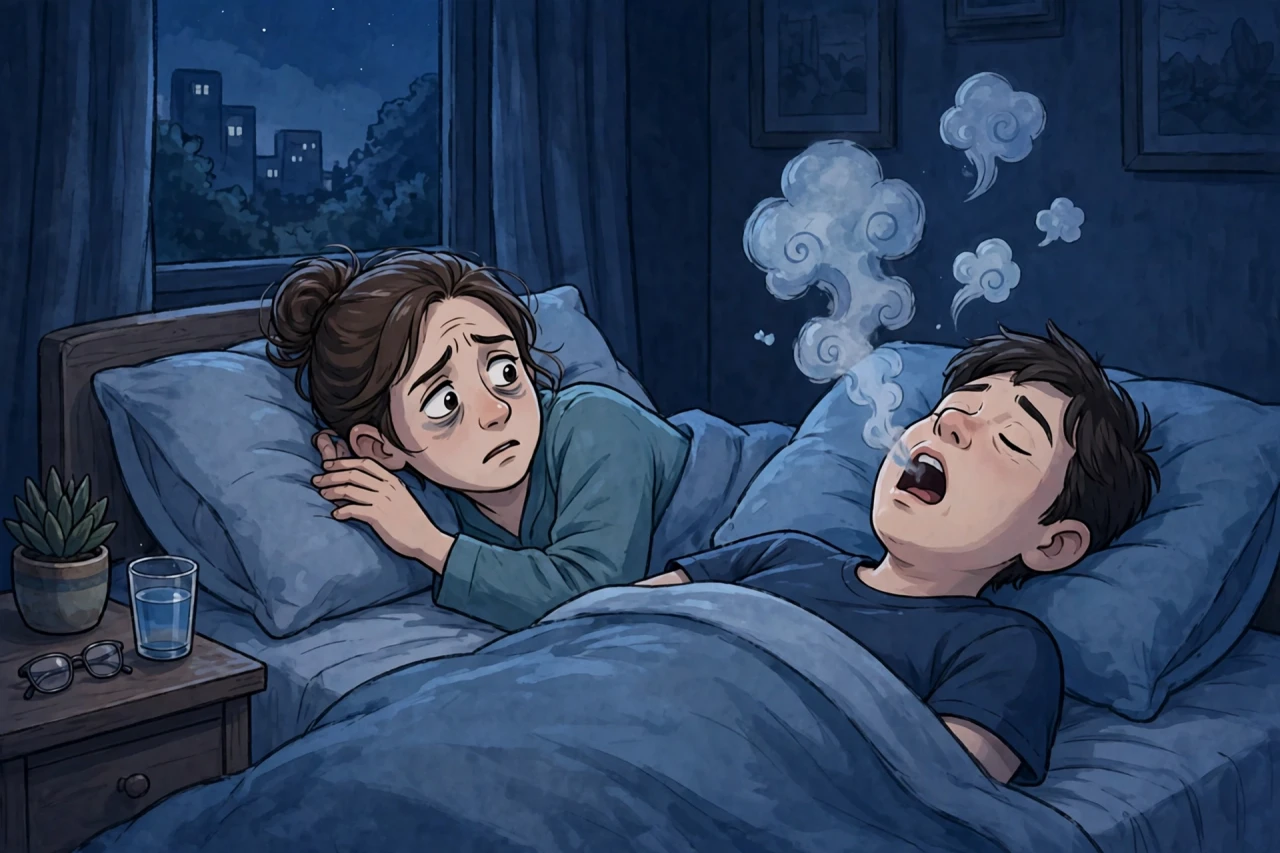
Loud, nightly snoring that a partner notices is one of the most common signs people seek help for.
Key Takeaways
- Loud, habitual snoring — especially when a partner reports gasping, choking, or breathing pauses — is one of the most recognized warning signs of possible sleep apnea.
- Daytime clues matter too: persistent daytime sleepiness, morning headaches, dry mouth, and trouble concentrating can reflect sleep that is repeatedly disrupted.
- Risk is higher with excess weight, larger neck circumference, older age, male sex, smoking, alcohol use before bed, and certain anatomical features — but sleep apnea can occur in anyone.
- Sleep apnea cannot be diagnosed at home; evaluation typically involves a clinician's assessment and possibly an overnight sleep study.
- If you or a partner notice repeated breathing pauses, gasping, or severe daytime sleepiness, talk to a doctor rather than self-diagnosing or waiting it out.
1. Snoring That Isn't Ordinary
Snoring happens when airflow through a relaxed throat makes surrounding tissues vibrate. In sleep apnea — most commonly obstructive sleep apnea — the airway narrows or closes repeatedly during the night, and breathing can stop for seconds at a time before the brain briefly wakes the body to restart it. These mini-awakenings can occur dozens of times per hour without the sleeper remembering any of them.
What separates "ordinary" snoring from a possible warning sign is the pattern. Occasional soft snoring that shifts when you change position is common and usually benign. Snoring that is very loud (a partner can hear it through walls or with the door closed), nightly, and present in all sleeping positions is more concerning — particularly if a partner has ever nudged you to breathe or noticed you go quiet and then gasp. That observed gasping or choking is one of the signs sleep clinicians ask about first, according to sources like the NHS and Mayo Clinic.
2. Gasping, Choking, or Witnessed Breathing Pauses
Because sleepers can't observe themselves, the partner's report is often what brings people to a clinic. If someone who shares your bed has noticed you stop breathing for a few seconds — sometimes with a snort or gasp as breathing restarts — take that seriously. These pauses are the hallmark event of sleep apnea: the airway collapses, oxygen dips slightly, the brain senses it, and arousal restarts breathing.
Even without a bed partner, some people notice clues: waking with a choking or gasping sensation, waking frequently to use the bathroom at night, or restless sleep with tangled sheets. None of these alone confirms anything — many have other causes — but a cluster of them, combined with heavy snoring, is exactly the combination health authorities describe as worth evaluating.
3. Mornings That Don't Feel Like Mornings
People with untreated sleep apnea often spend eight hours in bed and wake feeling like they slept two. Repeated breathing interruptions fragment sleep architecture, so the body may miss out on the deeper, restorative stages. Common morning complaints described by health sources include:
- Morning headaches that fade as the day goes on — linked to overnight oxygen fluctuations.
- Dry mouth or sore throat on waking, from breathing through the mouth all night.
- Feeling unrested despite a full night's sleep, or needing an unusually long time to "wake up."
- A partner's exhaustion too — disrupted sleep affects both sides of the bed.
One groggy morning means nothing. Months of mornings that never feel restorative, despite adequate time in bed, is a pattern worth mentioning to a clinician.
4. Daytime Signs People Often Miss
The nighttime events are invisible to the sleeper, so daytime symptoms are often what finally prompt action:
- Excessive daytime sleepiness — dozing during quiet activities like reading, watching TV, or sitting in meetings. The Epworth-style question clinicians ask: do you fall asleep when you don't intend to?
- Trouble concentrating and memory lapses — fragmented sleep affects attention, short-term memory, and decision-making.
- Mood changes — irritability, low mood, or a shorter fuse than usual can accompany chronic poor sleep quality.
- Microsleeps while driving — nodding off at red lights or on the highway is a red flag for any cause and a safety risk that should be raised with a doctor promptly.
- Decreased libido or general low energy — commonly reported alongside chronic sleep disruption.
Again, each of these has many possible causes — stress, depression, medications, other sleep disorders. The pattern that raises suspicion for sleep apnea is daytime impairment plus loud snoring or witnessed breathing pauses.
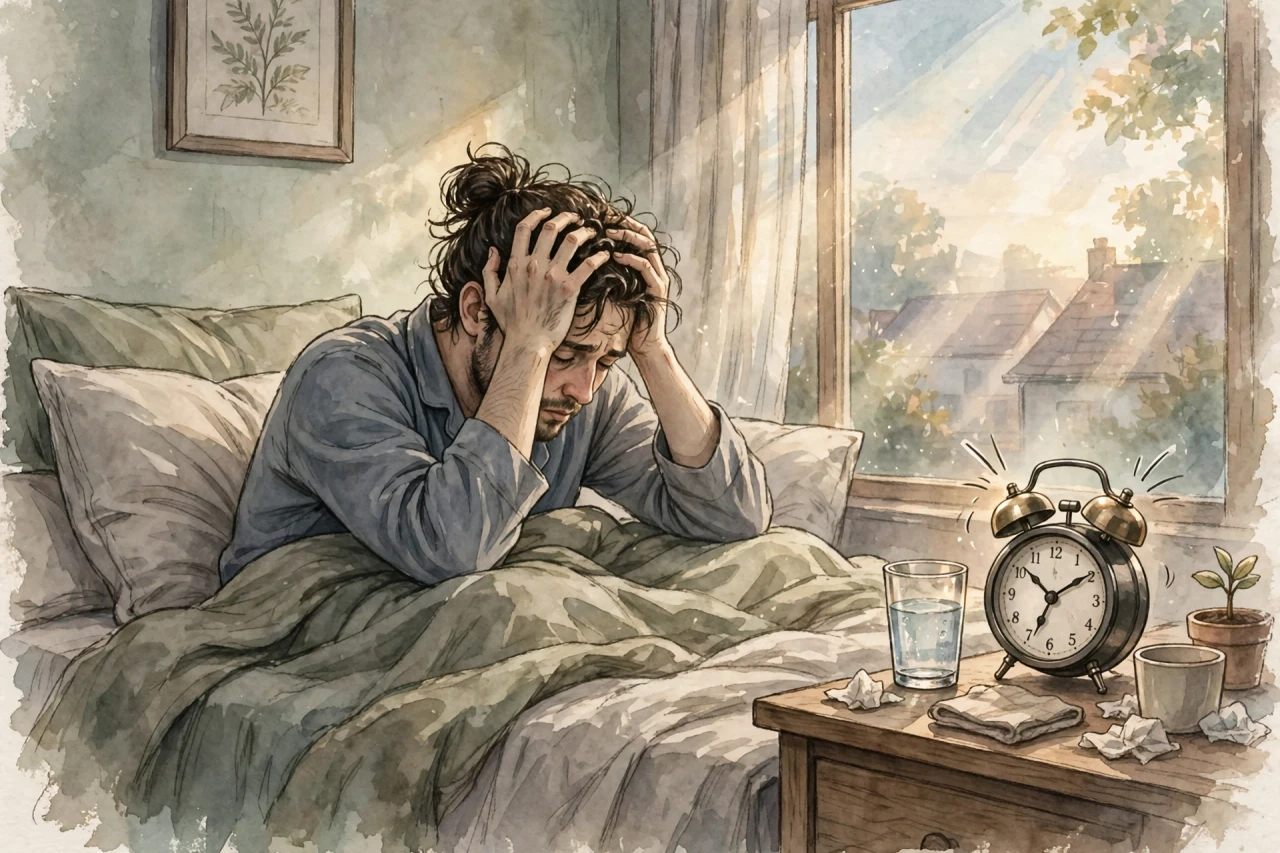
Waking with headaches or feeling unrested despite a full night in bed can point to disrupted sleep.
5. Risk Factors Worth Knowing
Certain factors are consistently linked with higher likelihood of obstructive sleep apnea in the medical literature summarized by organizations like the Mayo Clinic and CDC:
- Excess body weight — fat deposits around the upper airway can narrow it. This is the strongest modifiable risk factor.
- Larger neck circumference — a thicker neck can mean a narrower airway.
- Age and sex — risk rises with age; it is more common in men, though risk for women increases after menopause.
- Anatomy — a naturally narrow throat, enlarged tonsils, a deviated septum, or a recessed chin can all contribute.
- Alcohol and sedatives before bed — these relax throat muscles further and can worsen breathing pauses.
- Smoking — associated with higher risk, possibly through airway inflammation and fluid retention.
- Family history — sleep apnea appears to run in families.
Important nuance: plenty of people with sleep apnea are not overweight, and many heavy snorers never develop it. Risk factors raise probability; they don't decide anything. That's why symptoms, not body type, should drive the decision to get evaluated.
6. What a Doctor's Evaluation Usually Involves
There is no reliable home test for sleep apnea, and phone apps that record snoring cannot diagnose it. A proper evaluation starts with a clinician asking about symptoms, sleep habits, and medical history, often including input from a bed partner. They may use a structured sleepiness questionnaire and a physical examination of the airway.
If sleep apnea seems possible, the usual next step is a sleep study — either an overnight study at a sleep center or, for some patients, a simplified home sleep test. These measure breathing effort, airflow, blood oxygen, and sleep stages. Based on the results, the clinician can determine whether sleep apnea is present, how severe it appears to be, and what management options fit. Common management approaches clinicians discuss include continuous positive airway pressure (CPAP) therapy, oral appliances, positional strategies, and lifestyle measures such as weight management and avoiding alcohol before bed. The right path is an individual medical decision — not something to choose from an article.

Only a qualified clinician can evaluate sleep apnea — usually starting with a conversation and possibly a sleep study.
Sleep Apnea: Myths vs Facts
- Myth: Only overweight older men get sleep apnea.
Fact: They are at higher risk, but sleep apnea occurs in women, younger adults, children, and people at healthy weights. Anyone with the warning signs deserves evaluation.
- Myth: If I snore, I must have sleep apnea.
Fact: Many loud snorers do not have sleep apnea, and some people with sleep apnea snore quietly. It's the pattern — snoring plus pauses, gasping, or daytime sleepiness — that matters.
- Myth: I'll know if my breathing stops at night.
Fact: Most people don't. The brief arousals that restart breathing usually aren't remembered. Partners, or daytime symptoms, are typically what reveal the problem.
- Myth: Sleep apnea is just about being tired — it's not dangerous.
Fact: Health authorities link untreated sleep apnea with increased risk of high blood pressure, heart problems, stroke, and type 2 diabetes, as well as impaired driving. It's a legitimate medical condition, not a personality quirk.
- Myth: I can diagnose it with a snoring app.
Fact: Apps can record sounds, but diagnosis requires measuring breathing, airflow, and oxygen — which is what sleep studies do. Bring app recordings to your doctor as context, not as a diagnosis.
When to See a Doctor
Make an appointment if you recognize several of these signs in yourself:
- Loud, nightly snoring — especially if a partner reports gasping, choking, or breathing pauses.
- Waking with headaches, a dry mouth, or feeling unrested most mornings.
- Daytime sleepiness that interferes with work, conversations, or daily activities.
- Dozing while driving or during other situations where alertness matters — treat this as urgent.
- High blood pressure that is hard to control, since untreated sleep apnea can contribute.
Bring specifics to the appointment: how often the snoring occurs, what your partner has observed, and how your days feel. Concrete details help clinicians decide on next steps.
Sponsored: check today's offers on recommended wellness products
Frequently Asked Questions
Is all snoring a sign of sleep apnea?
No. Occasional, quiet snoring — especially when you're congested or slept on your back — is common and usually harmless. Sleep apnea becomes a consideration when snoring is loud and habitual and comes with other signs like witnessed breathing pauses, gasping, morning headaches, or persistent daytime sleepiness.
Can I test myself for sleep apnea at home?
Not reliably. Snoring apps and wearable devices can track sounds or movement, but they can't measure the airflow and oxygen levels that define sleep apnea. Some clinicians do prescribe simplified home sleep tests, which are proper medical devices — different from consumer apps. Ask your doctor what's appropriate for you.
Does sleep apnea only affect older adults?
Risk increases with age, but sleep apnea affects adults of all ages and even children (often linked with enlarged tonsils or adenoids). Don't dismiss symptoms because you feel "too young" for it.
Will losing weight cure sleep apnea?
For people carrying excess weight, weight loss may reduce the severity of obstructive sleep apnea and is generally recommended as part of management — but it doesn't reliably eliminate it for everyone, and it's not a substitute for proper evaluation and treatment. Discuss a plan with your clinician.
What should I tell my doctor at the appointment?
Describe the snoring pattern (loudness, frequency), anything a partner has witnessed (pauses, gasping), your daytime symptoms (sleepiness, headaches, concentration), and relevant history such as blood pressure, weight changes, alcohol use, and medications. If possible, bring your partner or their written observations.
Disclaimer: This article is for general information only and is not medical advice. It cannot diagnose sleep apnea or any other condition. Snoring and daytime tiredness have many possible causes. If you have warning signs described here — especially witnessed breathing pauses, gasping at night, or sleepiness while driving — consult a qualified healthcare professional for proper evaluation. Never use this article to diagnose or treat a medical condition.
Does someone in your household snore like a freight train? Share this guide with them — and tell us in the comments whether a partner's nudge was what finally got you to a checkup.


Comments
Post a Comment