Black beans are one of the most affordable and versatile foods you can keep in your kitchen. Earthy, hearty, and satisfying, they turn up in tacos, soups, salads, rice bowls, and dips — and they carry an impressive nutritional profile for something that costs so little. If you have ever wondered whether black beans deserve a regular place in your meals, the short answer is yes.
In this guide, you will learn what makes black beans so nutritious, how they may support heart health, digestion, steady energy, and weight management, and how to cook them simply at home — whether you start from a can or from dried beans. As with any food, black beans work best as part of an overall balanced eating pattern, not as a magic fix on their own.
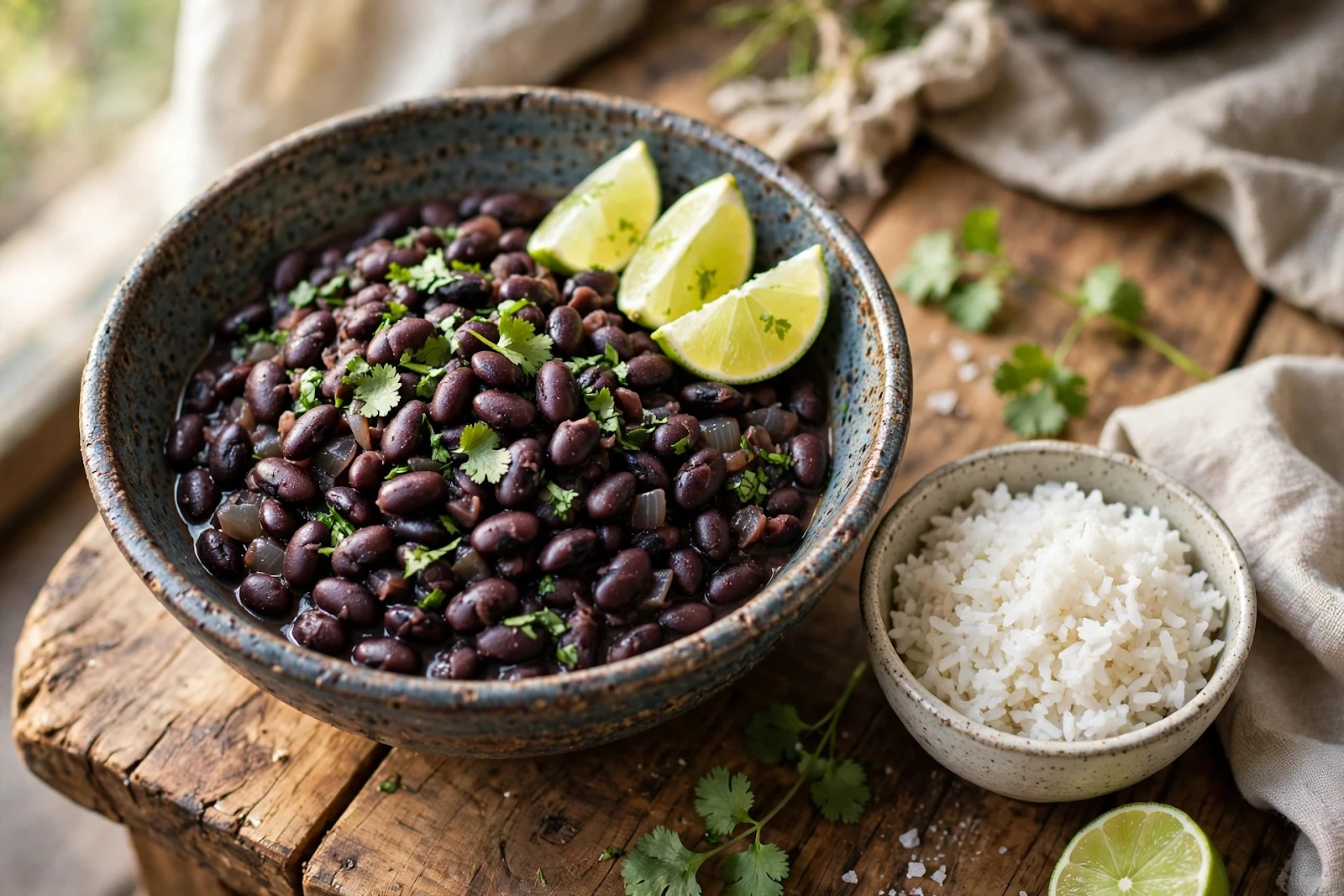
A bowl of simply cooked black beans — a versatile base for many meals.
Key Takeaways
- Black beans are rich in fibre, plant protein, folate, magnesium, iron, and potassium.
- Their fibre and protein may help support heart health, digestion, and steady energy.
- About half to one cup of cooked beans is a sensible serving for most meals.
- Black beans work in tacos, soups, salads, rice bowls, and dips — canned or dried.
- Rinse canned beans to reduce sodium, and introduce beans gradually if you are new to high-fibre foods.
1. What's Inside a Cup of Black Beans
A cup of cooked black beans delivers a remarkable mix of nutrients for very few ingredients: roughly 15 grams of fibre, 15 grams of plant protein, and a generous share of folate, magnesium, iron, potassium, and zinc. They are naturally low in fat, contain no cholesterol, and provide slow-digesting complex carbohydrates.
That combination is what makes beans so filling. Fibre adds bulk and slows digestion, protein contributes to satiety, and the complex carbohydrates release energy gradually rather than in a sharp spike. Studies suggest that diets rich in legumes are linked to better overall diet quality, largely because beans replace less nutritious foods rather than simply adding to them.
2. Heart Health
Black beans may support heart health in several ways. Their soluble fibre can help maintain healthy cholesterol levels, and their potassium and magnesium contribute to healthy blood pressure as part of a balanced diet. Because they are naturally free of saturated fat and cholesterol, they are an easy swap for fattier proteins.
Health authorities such as the Mayo Clinic and Harvard Health often highlight legumes as part of heart-healthy eating patterns, including Mediterranean-style and plant-forward diets. The benefit comes from the whole pattern — vegetables, whole grains, healthy oils, and less processed meat — with black beans playing a supporting role. Swapping beans in for processed meat a few times a week is a simple upgrade that may help over time.
3. Digestion and Gut Health
Black beans are one of the richest common sources of dietary fibre, and that fibre feeds the beneficial bacteria in your gut. A diverse, well-fed gut microbiome is associated with more comfortable digestion and regular bowel habits, and emerging research continues to explore the links between fibre-rich diets and gut health.
If you are new to high-fibre foods, increase your intake gradually and drink enough water, since a sudden jump in fibre can cause temporary bloating or gas. Starting with half a cup of beans a few times a week, and rinsing canned beans well, is a gentle way to let your gut adjust. Soaking dried beans and cooking them thoroughly also helps.
4. Steady Energy and Blood Sugar
Because black beans are rich in fibre and protein and low in fast-digesting carbohydrate, they have a gentle effect on blood sugar. Pairing beans with whole grains — the classic beans-and-rice combination — creates a complete protein profile and an especially steady source of energy.
This makes black beans a useful staple for people who feel hungry again an hour after eating. A bean-based lunch tends to sustain energy far longer than a refined-carbohydrate meal of similar size. If you live with diabetes or another condition that affects blood sugar, discuss portion sizes with your clinician or dietitian.
Black bean tacos are a quick, satisfying weeknight dinner.
5. Weight Management
Beans are a natural ally for weight management, not because they burn fat, but because they make it easier to feel full on fewer calories. The fibre and protein in black beans slow eating and extend satiety, which may help reduce snacking between meals.
Portion awareness still matters, especially with calorie-dense toppings like cheese, sour cream, or fried tortilla chips. Building your plate around beans and vegetables, with modest amounts of richer toppings, keeps the meal satisfying without tipping the balance. Think of black beans as the hearty centre of the plate, not a side note.
6. Bone and Muscle Support
Black beans contribute minerals that matter for bones and muscles, including magnesium, calcium, phosphorus, and potassium. Magnesium in particular plays a role in muscle function and bone structure, and many people do not get enough of it from their diets.
Beans also supply plant protein that supports muscle maintenance, especially when combined with grains, dairy, or eggs across the day. They are not a replacement for resistance exercise or a varied diet, but they are an inexpensive way to add both protein and minerals to everyday meals.
7. Cooking Black Beans: Canned vs Dried
Canned black beans are the fastest option: drain, rinse well under cold water to remove much of the sodium and some of the gas-causing compounds, and they are ready to use. Look for cans with no added salt where possible, and check that the can is not dented or damaged.
Dried beans take more planning but cost less and let you control the salt completely. Soak them overnight in plenty of water, drain, then simmer in fresh water for 60 to 90 minutes until tender. A pressure cooker cuts this to about 25 minutes. Season with salt only near the end of cooking, since adding it too early can keep the beans firm. Cooked beans freeze well for up to three months, so a big batch can stock your freezer for weeks.
8. Simple Ways to Eat Black Beans Every Day
The easiest way to enjoy black beans is to keep a can or a container of cooked beans ready in your kitchen. Here are some simple ideas:
- Tacos: warm seasoned beans with cumin and garlic, and serve in tortillas with avocado, salsa, and lime.
- Soup: simmer beans with onion, peppers, cumin, and stock, then blend half for a thick, creamy texture.
- Rice bowls: spoon beans over rice with roasted vegetables, corn, and a drizzle of lime dressing.
- Salads: toss beans with corn, diced tomato, red onion, cilantro, and olive oil for a quick side.
- Dips: blend beans with garlic, lime juice, and cumin for a hearty alternative to hummus.
- Burgers: mash beans with oats, spices, and a little egg or flax, then pan-fry into patties.
- Breakfast: serve beans with scrambled eggs, toast, and avocado for a filling start to the day.
- Nachos: layer beans over tortilla chips with cheese and vegetables for a lighter sharing plate.
Seasoning is what turns plain beans into something you crave: cumin, smoked paprika, garlic, oregano, lime juice, and fresh cilantro all pair beautifully. A squeeze of citrus at the end brightens the whole dish.
Black bean soup is an easy way to turn pantry staples into a nourishing meal.
Myths vs Facts
Myth: Beans cause unbearable gas, so they are best avoided.
Fact: Beans can cause gas, especially when eaten in large amounts suddenly, but rinsing canned beans, soaking dried beans, and increasing portions gradually usually reduces the effect considerably.
Myth: Canned beans are far less healthy than dried beans.
Fact: Canned and dried beans are nutritionally very similar. The main difference is sodium — rinsing canned beans removes a large share of it.
Myth: You must eat beans and rice in the same meal to get complete protein.
Fact: Your body pools amino acids across the day, so eating a variety of plant proteins over the day is enough — the same-meal rule is outdated advice.
Myth: Black beans are only useful in Mexican-style dishes.
Fact: Black beans work in soups, salads, burgers, dips, and grain bowls from many cuisines — their mild, earthy flavour adapts easily.
Myth: Eating beans every day is too much.
Fact: Beans are a staple food in many of the world's healthiest traditional diets, eaten daily in modest portions. Variety across legumes is still a good idea.
When to See a Doctor
Black beans are safe for most people, but there are situations where professional advice matters:
- If you have persistent digestive symptoms — ongoing bloating, pain, or changes in bowel habits — after eating beans, discuss it with your clinician.
- If you have a legume allergy, or suspect one, avoid black beans and seek medical testing before trying them.
- If you take medication affected by potassium or vitamin K intake, ask your clinician or pharmacist whether large amounts of beans matter for you.
- If you have kidney disease or another condition that limits potassium or phosphorus, check appropriate portions with your care team.
- If you follow a very low-fibre diet for a medical reason, ask before adding beans in quantity.
Sponsored: check today's offers on recommended wellness products
Frequently Asked Questions
Are black beans healthy?
Yes. Black beans are rich in fibre, plant protein, folate, magnesium, and iron, and they are naturally low in fat and free of cholesterol, making them a nutritious staple in a balanced diet.
Should I rinse canned black beans?
Yes, rinsing under cold water removes much of the added sodium and some of the compounds that cause gas, while keeping the beans' nutrients largely intact.
How long do cooked black beans last?
Cooked black beans keep for 3 to 4 days in an airtight container in the refrigerator, or up to 3 months in the freezer.
Can I eat black beans every day?
For most people, a modest daily portion is fine and is common in many traditional diets. If you are new to beans, build up gradually to avoid digestive discomfort.
Are black beans good for weight loss?
Black beans may help with weight management because their fibre and protein promote fullness, but results depend on your overall diet and activity, not on any single food.
Black beans prove that healthy eating does not have to be expensive or complicated. Keep a few cans in the pantry or a batch in the freezer, season them well, and you have the base for dozens of satisfying meals. What is your favourite way to cook black beans? Share your ideas in the comments below.
Disclaimer: This article is for general information only and is not medical advice. It does not diagnose, treat, or replace professional care. If you have a health condition, allergy, or dietary restriction, or you take medication that may interact with certain foods, please consult a qualified healthcare professional or registered dietitian before making changes to your diet.




Comments
Post a Comment