Black pepper sits on almost every table in the world, and most of us reach for it without a second thought. A few twists of the mill over eggs, soup, or a salad, and the dish tastes more complete — warmer, sharper, a little more alive. It is so familiar that it is easy to forget it is a real spice with a real story: a dried berry from a tropical vine, traded across oceans for centuries, once so valuable it was used as currency in parts of the ancient world.
Today, black pepper is usually talked about as a seasoning rather than a health food, and that is probably the right frame. It is not a medicine, and no amount of it will transform your health on its own. But the little black berry does contain compounds that researchers find interesting — most famously piperine, the alkaloid behind its bite — and using it well can make healthy food taste better, which is a genuine benefit in itself. This guide explains what black pepper actually is, what its compounds may offer, where the evidence is thin, and how to use it in everyday cooking.
Whole black peppercorns — the dried berries of the pepper vine, best ground fresh for full flavour.
Key Takeaways
- Black pepper is the dried, ground berry of the Piper nigrum vine. Its bite comes from piperine, a compound that has been studied for its effects on digestion and nutrient absorption.
- In normal cooking amounts, black pepper is a low-calorie seasoning that adds flavour without salt, sugar, or fat — which may help make healthy meals more enjoyable.
- Piperine has been studied for increasing the absorption of some nutrients and plant compounds, but most of that research used concentrated extracts, not the pinch of pepper on your dinner.
- Black pepper may support digestion for some people, but it can also irritate acid reflux or a sensitive stomach — pay attention to how your own body responds.
- Whole peppercorns, ground fresh, keep their aroma far longer than pre-ground pepper. Store them in a sealed jar away from light and heat.
1. What Is Black Pepper, Really?
Black pepper comes from Piper nigrum, a flowering vine native to the Malabar Coast of India and now grown across tropical regions including Vietnam, Brazil, and Indonesia. The spice is the vine's fruit: small round berries picked while still green and unripe, then dried in the sun. As they dry, the berries darken, wrinkle, and harden into the familiar black peppercorns.
The same plant gives us the other peppers on the shelf. White pepper is made from the same berries, left to ripen fully and then soaked so the dark outer skin can be removed. Green pepper is the unripe berry preserved without drying, usually in brine or freeze-dried. They share a family resemblance, but their flavours differ: black pepper is the most pungent and complex, white pepper is milder and earthier, and green pepper is fresher and softer.
Nutritionally, black pepper is used in such small amounts that it contributes very little to your daily intake. A teaspoon of ground pepper contains only a few calories and small amounts of manganese, vitamin K, and iron. Nobody eats black pepper for its vitamins — its value is flavour, and the compounds that create that flavour.
2. Piperine: The Compound Behind the Bite
The heat of black pepper comes from piperine, an alkaloid that makes up a small percentage of the peppercorn. Piperine is what makes your nose tingle and gives pepper its sharp, warming character. It is also the compound behind most of the research interest in black pepper.
Studies suggest piperine may influence how the body handles certain substances. It appears to slow down some of the enzymes in the liver and gut that break down drugs and plant compounds, which is why it is sometimes described as a "bioavailability enhancer." The best-known example is curcumin, the yellow compound in turmeric: in laboratory and small human studies, piperine has been shown to increase curcumin absorption substantially. That is one reason many turmeric blends include a little black pepper.
It is important to keep the scale in mind. The studies showing these effects generally used concentrated piperine extracts at doses far above what you would get from seasoning your food. A pinch of pepper on your soup is not the same as a piperine supplement, and the two should not be confused. If you are considering a piperine or black pepper supplement — especially if you take prescription medication — talk to a clinician first, because piperine may affect how some medicines are processed.
3. Black Pepper and Digestion
Black pepper has a long history in traditional cooking and medicine as a digestive aid, and there is some modern support for the idea. Piperine may stimulate the production of digestive enzymes and stomach acid, which may help the stomach break down food more efficiently. Some people find that a little pepper makes a heavy meal feel lighter, and pepper is a traditional remedy for sluggish digestion in Ayurvedic practice.
The evidence here is modest and mostly comes from animal and laboratory studies rather than large human trials, so it is best treated as promising rather than proven. What is clearer is that black pepper, used as a seasoning, can help you enjoy food more — and enjoying your food is part of eating well. A well-seasoned vegetable dish is more satisfying than a bland one, and that satisfaction may help you eat more of the foods that genuinely support your health.
There is a flip side. For some people, black pepper can irritate the stomach lining or trigger acid reflux, especially in larger amounts or on an empty stomach. If you notice heartburn after peppery meals, try using less, or skip it in dishes you eat late at night. This is a matter of personal tolerance, not a rule that applies to everyone.
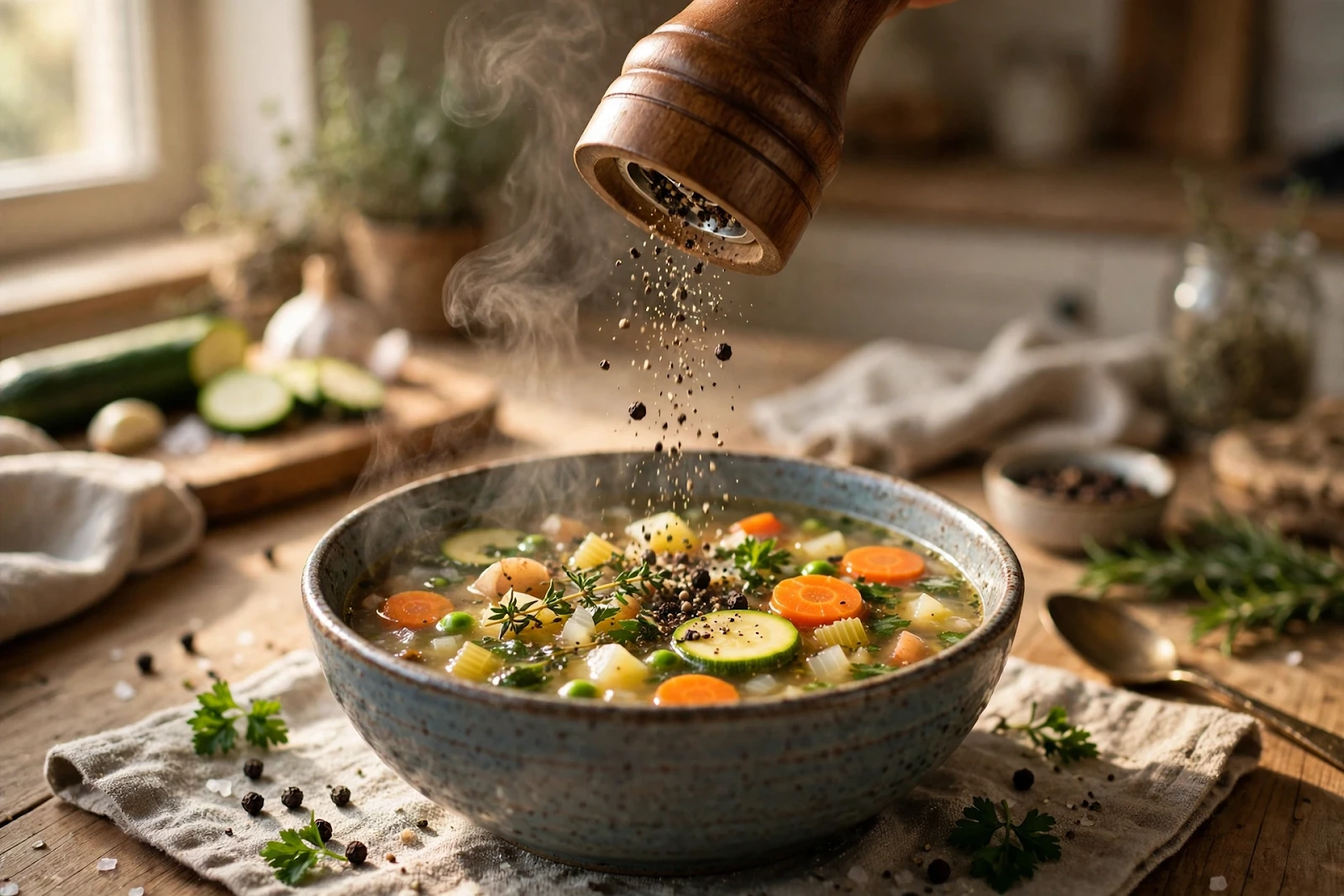
Freshly ground black pepper over a warm bowl of soup — the simplest way to add gentle heat and aroma.
4. Black Pepper and Nutrient Absorption
The most talked-about benefit of piperine is its effect on absorption. Certain nutrients and plant compounds are poorly absorbed on their own: the body breaks them down quickly, and only a small fraction reaches the bloodstream. Piperine appears to interfere with that breakdown process, allowing more of the compound to pass through.
The curcumin example is the clearest. Curcumin is known for poor bioavailability, and studies have found that taking it with piperine can raise blood levels of curcumin many times over. Similar effects have been explored with other compounds, including some vitamins and plant antioxidants. This is why you will often see black pepper listed as an ingredient in turmeric supplements and golden milk recipes.
Again, dose matters. The amount of piperine in a normal serving of seasoned food is small, and it is unlikely to transform the absorption of your meal in a dramatic way. But pairing black pepper with turmeric in cooking — a classic combination in Indian cuisine — is a sensible, traditional habit that costs nothing. Think of it as a small bonus, not a strategy to rely on.
5. Antioxidant Compounds in Black Pepper
Like many spices, black pepper contains plant compounds with antioxidant activity. Piperine itself has shown antioxidant effects in laboratory studies, and black pepper also contains small amounts of other phenolic compounds. Antioxidants help neutralise free radicals — unstable molecules that can damage cells over time — and diets rich in plant foods are consistently linked with better long-term health.
It would be a stretch to call black pepper an antioxidant powerhouse. The amounts you eat are tiny compared with the antioxidants you get from fruits, vegetables, and whole grains. But spices contribute to the overall pattern: a diet seasoned with a variety of herbs and spices tends to be a diet rich in plant compounds. Black pepper is one small part of that picture, and it earns its place through flavour as much as chemistry.
Some laboratory research has also explored piperine's effects on inflammation, with early results suggesting it may influence inflammatory pathways. This is interesting science, but it is very early — mostly cell and animal studies — and it does not support claims that eating black pepper reduces inflammation in the body. If you are managing an inflammatory condition, follow your clinician's advice rather than reaching for the pepper mill.
6. Black Pepper, Metabolism, and Weight
You may have seen claims that black pepper "burns fat" or "boosts metabolism." The truth is more modest. Some studies suggest piperine may slightly increase thermogenesis — the body's production of heat — and may influence how fat cells develop in laboratory settings. These are real findings, but they are small effects observed under controlled conditions, and no spice can replace the basics of weight management: overall diet, movement, sleep, and consistency.
Where black pepper may genuinely help with weight is indirect. It adds bold flavour without calories, salt, sugar, or fat, which makes lighter foods more satisfying. A salad, a bowl of steamed vegetables, or a piece of grilled fish seasoned well is more likely to be finished and enjoyed than a bland version. In that sense, pepper is a tool for making healthy eating sustainable — not a fat-burner, but a flavour-builder.
Be cautious of supplements marketed as "black pepper fat burners" or high-dose piperine capsules. These products use doses far beyond culinary use, and their safety — particularly alongside medications — is not well established. The safest and most enjoyable way to use black pepper is the oldest one: in your cooking.
Black pepper starts as green berries on a climbing vine — dried in the sun, they turn dark and wrinkled.
7. Black Pepper and Everyday Cooking
Black pepper is one of the most versatile spices in the kitchen, and it pairs well with almost everything savoury. It is a natural partner for eggs, soups, stews, roasted vegetables, grilled meats, and pasta. It sharpens the flavour of tomatoes, balances the richness of creamy sauces, and adds warmth to salad dressings and marinades.
A few practical habits make a real difference. Grind your pepper fresh whenever you can — the volatile oils that carry its aroma fade quickly once the peppercorn is cracked, and pre-ground pepper loses its punch within a few months. Add pepper early in cooking when you want its heat to mellow into a dish, and add a fresh grind at the end when you want its bright, sharp aroma to stand out. And remember that a little goes a long way: start with a few twists of the mill and taste before adding more.
Black pepper also works well in combinations. The classic pairing with salt is only the beginning — try it with turmeric in curries and golden milk, with lemon and olive oil over vegetables, with garlic and herbs in a simple rub, or even with strawberries and a little honey, where its warmth brings out the fruit's sweetness. Exploring these pairings is one of the simplest ways to make everyday cooking more interesting.
8. Simple Ways to Use Black Pepper at Home
If you want to get more out of the pepper already sitting in your kitchen, start with the basics. First, buy whole peppercorns and a simple mill or grinder — the difference in flavour compared with pre-ground pepper is immediately noticeable, and whole peppercorns keep for a year or more when stored properly.
Second, make pepper part of your daily cooking rather than an afterthought. A grind over morning eggs, a twist into your salad dressing, a pinch in your soup, and a crack over roasted vegetables will use more pepper — and more flavour — than the shaker ever did sitting untouched on the table.
Third, try one new pairing each week. Pepper with roasted sweet potatoes, pepper in a simple tomato sauce, pepper over fresh fruit with a squeeze of lime — each one teaches you something about how the spice behaves. And fourth, store it well: an airtight jar in a cool, dark cupboard, away from the stove's heat and steam. Heat and light are the enemies of every spice, and black pepper is no exception.
Myths vs Facts
Myth: Black pepper causes stomach ulcers.
Fact: There is no good evidence that black pepper causes ulcers. Ulcers are most commonly linked to a bacterial infection (H. pylori) or long-term use of certain painkillers. Pepper may irritate an existing sensitive stomach, but it does not create an ulcer.
Myth: White pepper is healthier than black pepper.
Fact: Both come from the same plant and contain similar compounds, including piperine. White pepper has a milder, earthier flavour and a slightly different aroma because the outer skin is removed. Neither is clearly healthier — choose based on the flavour you want.
Myth: Black pepper burns fat and melts weight away.
Fact: No spice melts fat. Piperine may have small effects on metabolism in laboratory studies, but these do not translate into weight loss from seasoning your food. Pepper helps weight management only indirectly, by making healthy food taste better.
Myth: The more pepper, the better.
Fact: Culinary amounts are fine for most people, but very large amounts — or concentrated supplements — carry more risk of stomach irritation and interactions with medications. In cooking, a few twists of the mill are plenty.
Myth: Pre-ground pepper is just as good as freshly ground.
Fact: Once ground, pepper's aromatic oils fade within weeks to months. Freshly ground pepper tastes sharper and more fragrant. Whole peppercorns keep their flavour far longer, so a small mill is a worthwhile kitchen investment.
When to See a Doctor
Black pepper in food is safe for most people, but there are situations worth discussing with a clinician:
- You have persistent heartburn, acid reflux, or stomach pain that seems linked to spicy or peppery food.
- You experience allergy-like symptoms after eating black pepper — such as itching, swelling, or difficulty breathing — which are rare but possible.
- You take prescription medication and are considering a piperine or black pepper supplement, since piperine may affect how some medicines are processed.
- You have a digestive condition such as gastritis, an ulcer, or inflammatory bowel disease and are unsure how much pepper is sensible for you.
- You are pregnant or breastfeeding and considering a high-dose pepper supplement rather than normal cooking amounts.
Sponsored: check today's offers on recommended wellness products
Frequently Asked Questions
Is black pepper good for you?
In normal cooking amounts, yes — it is a low-calorie seasoning that adds flavour without salt, sugar, or fat, and it contains piperine, a compound researchers find interesting. It is not a medicine, and its benefits are best understood as part of an overall healthy diet.
How much black pepper is safe per day?
There is no official daily limit for black pepper used as a seasoning. The amounts used in everyday cooking — a teaspoon or less across a whole day — are fine for most healthy adults. Supplements are a different matter and should be discussed with a clinician.
Does black pepper help you absorb nutrients?
Piperine has been studied for increasing the absorption of some compounds, most famously curcumin from turmeric. The effect is real in research settings, but the amount of piperine in a normal serving of seasoned food is small, so the effect from cooking alone is likely modest.
Is black pepper bad for acid reflux?
It can be a trigger for some people. If you notice heartburn after peppery meals, try using less pepper, avoid it late at night, and see whether your symptoms improve. If reflux is frequent or severe, speak to a clinician.
How should I store black pepper?
Keep whole peppercorns in a sealed, airtight jar in a cool, dark cupboard, away from heat and light. They keep well for a year or more. Grind only what you need, and replace ground pepper every few months, since its aroma fades quickly.
Do you grind your pepper fresh, or has the shaker been sitting on your table for years? Share your favourite way to use black pepper in the comments — and if you have a recipe where pepper makes all the difference, from a simple soup to a roasted vegetable dish, other readers would love to hear it.
Disclaimer: This article is for general information only and is not medical advice. It is based on generally available health information and does not replace professional advice, diagnosis, or treatment. If you have a medical condition, are pregnant or breastfeeding, or take medication, consult a qualified health professional before changing your diet or using supplements.




Comments
Post a Comment