Buckwheat is one of the most misunderstood foods in the pantry. Despite its name, it is not wheat at all — it is a seed, related to rhubarb and sorrel, and it is naturally gluten-free. For centuries it has been a staple in Eastern Europe, Russia, Japan, and parts of Asia, appearing as hearty porridge, delicate soba noodles, and rustic pancakes. If you have never cooked with it, you may be missing out on one of the most nutritious and versatile grains in the store.
In this guide, you will learn what buckwheat actually is, why it is so nutritious, how it may support heart health, digestion, and steady energy, and how to cook it simply at home — whether you start with raw groats, toasted kasha, or buckwheat flour. As with any food, buckwheat works best as part of an overall balanced eating pattern, not as a magic fix on its own.
Raw buckwheat groats — small, triangular seeds with a mild, nutty flavour.
Key Takeaways
- Buckwheat is a gluten-free seed, not a type of wheat, and it is safe for people with coeliac disease when certified gluten-free.
- It is rich in fibre, plant protein, magnesium, manganese, and the antioxidant rutin.
- Buckwheat contains all nine essential amino acids, which is unusual for a plant food.
- Its fibre and resistant starch may support digestion, heart health, and steady blood sugar.
- Buckwheat cooks in about 15 minutes and works in porridge, salads, pancakes, and noodle dishes.
1. What Is Buckwheat, Exactly?
Buckwheat comes from the seeds of the flowering plant Fagopyrum esculentum. The hulled seeds, called groats, are small, triangular, and pale greenish-brown. When the groats are roasted, they become kasha, which has a deeper, toastier flavour and is the form most familiar in Eastern European cooking.
Because buckwheat is not a cereal grain, it contains no gluten. That makes it a valuable option for people with coeliac disease or gluten sensitivity — with one caution: buy buckwheat labelled certified gluten-free, since bulk-bin buckwheat can pick up traces of wheat during handling and transport.
2. What's Inside a Cup of Buckwheat
A cup of cooked buckwheat delivers a remarkable mix of nutrients: roughly 6 grams of plant protein, 4 to 5 grams of fibre, and generous amounts of magnesium, manganese, copper, and phosphorus. It is also a source of B vitamins, including niacin and folate, and it provides slow-digesting complex carbohydrates.
What sets buckwheat apart is its protein quality. Unlike most plant foods, buckwheat contains all nine essential amino acids in useful proportions, including lysine, which is often low in grains. It is also rich in rutin, a plant compound studied for its antioxidant and blood-vessel-supporting properties. Health authorities such as Harvard Health and the Mayo Clinic often highlight whole, minimally processed plant foods like buckwheat as part of heart-healthy eating patterns.
3. Heart Health
Buckwheat may support heart health in several ways. Its soluble fibre can help maintain healthy cholesterol levels, and its magnesium and potassium contribute to healthy blood pressure as part of a balanced diet. Because it is naturally low in fat and free of cholesterol, it is an easy swap for refined grains.
Studies suggest that diets rich in whole grains and pseudocereals are linked to better cardiovascular outcomes, largely because these foods tend to replace refined, low-fibre options. Rutin, the antioxidant found in buckwheat, has also been studied for its role in supporting healthy blood vessel function, though researchers are careful to note that more human studies are needed before strong claims can be made.
4. Digestion and Gut Health
Buckwheat's fibre supports digestion in two ways. Its soluble fibre adds softness to stools and feeds friendly gut bacteria, while its insoluble fibre adds bulk and helps keep things moving. Buckwheat also contains resistant starch, a type of carbohydrate that resists digestion in the small intestine and is fermented by gut bacteria in the colon — a process linked to a healthier gut environment.
If you are new to high-fibre foods, introduce buckwheat gradually. A sudden jump in fibre can cause bloating or gas, so start with a small serving, drink enough water, and let your digestive system adjust over a week or two.
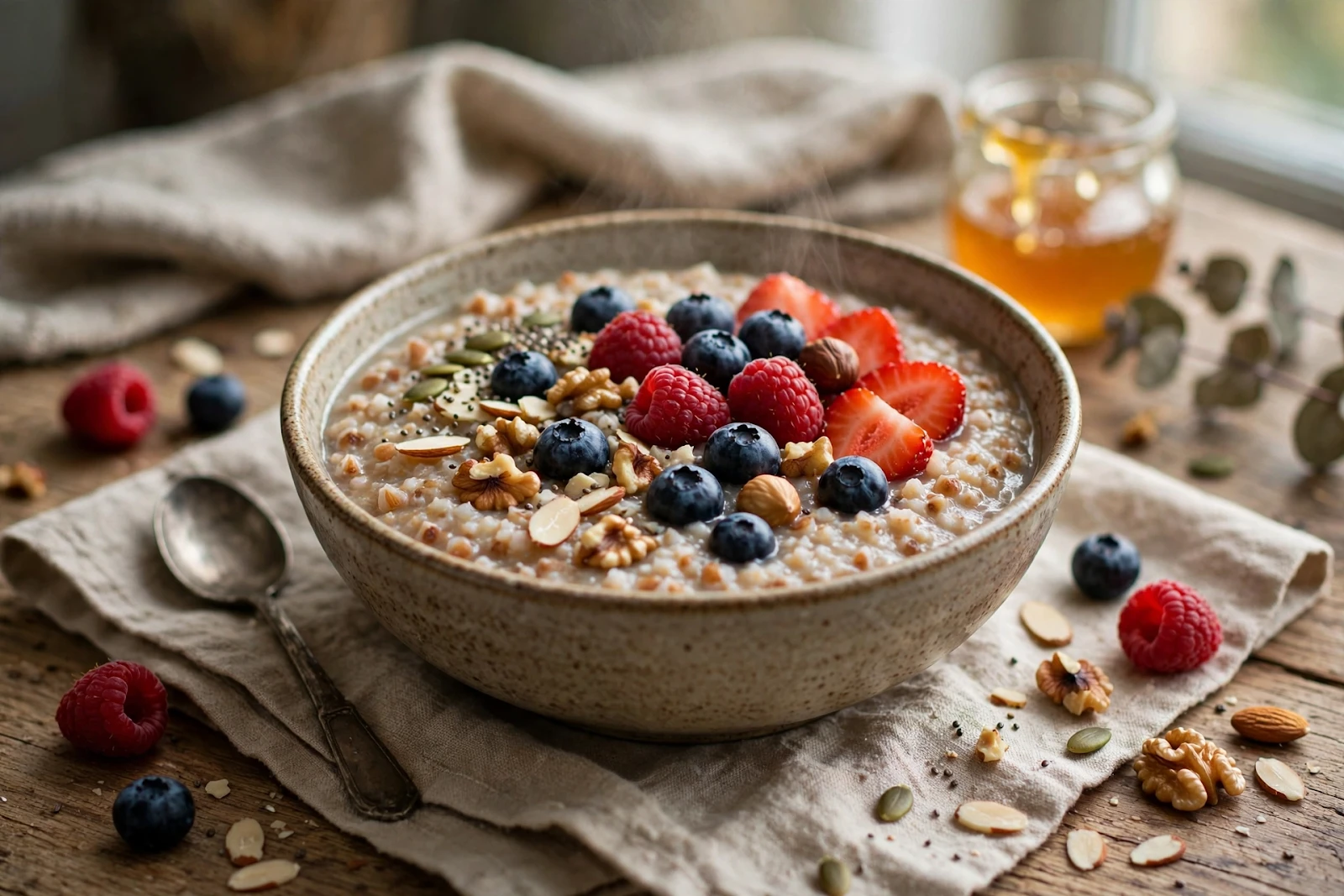
Buckwheat porridge with berries and nuts — a filling, naturally gluten-free breakfast.
5. Steady Energy and Blood Sugar
Buckwheat has a relatively low glycaemic index compared with refined grains, meaning it tends to raise blood sugar more gradually. Its combination of fibre, protein, and complex carbohydrates slows digestion, which may help you feel full for longer and avoid the sharp energy dips that follow very refined meals.
That makes buckwheat a practical choice for breakfast in particular. A bowl of buckwheat porridge, or buckwheat pancakes made with a little fruit, can keep you satisfied through the morning in a way that a sugary cereal often does not. For people managing blood sugar, pairing buckwheat with protein or healthy fat — such as nuts, seeds, or yoghurt — may help even out the response further, though individual responses vary.
6. Weight Management
Buckwheat may help with weight management simply because it is filling. Foods high in fibre and protein tend to increase satiety, which can make portion control easier without feeling deprived. A cup of cooked buckwheat is also relatively modest in calories for the fullness it provides.
It is worth being honest, though: no single food causes weight loss on its own. Buckwheat helps most when it replaces refined, low-fibre foods in meals you already eat — swapping white rice for buckwheat in a grain bowl, for example — rather than simply being added on top of everything else.
7. How to Cook Buckwheat Simply
Cooking buckwheat is straightforward. Rinse one cup of raw groats under cold water, then combine with two cups of water and a pinch of salt in a saucepan. Bring to a boil, cover, reduce the heat to low, and simmer for about 15 minutes until the water is absorbed. Let it stand, covered, for five minutes, then fluff with a fork.
Toasted kasha cooks a little faster and has a stronger, nuttier flavour; it is the classic choice for Eastern European kasha dishes, often served with mushrooms and onions. If your buckwheat turns out mushy, you have probably used too much water or stirred it too often — treat it gently, like rice, and it will stay pleasantly separate and slightly chewy.
8. Simple Ways to Eat Buckwheat
Buckwheat porridge is the easiest start: cook groats in milk or water, then top with berries, nuts, and a drizzle of honey. For lunch, toss cooled cooked buckwheat with roasted vegetables, chickpeas, and a lemon dressing for a hearty grain salad. Buckwheat flour makes tender, earthy pancakes and crêpes — the French galette is the classic example — and it works well blended half-and-half with wheat flour in muffins and quick breads if gluten is not a concern.
Soba noodles, made from buckwheat flour, are another easy entry point: serve them chilled with a dipping sauce in summer, or in a hot broth with vegetables in winter. Check the label, though — some soba noodles are blended with wheat flour, so look for 100% buckwheat (juwari soba) if you need a gluten-free option.
Buckwheat pancakes — earthy, tender, and easy to make gluten-free.
Myths vs Facts
Myth: Buckwheat contains wheat and gluten.
Fact: Despite the name, buckwheat is not wheat and contains no gluten. Choose certified gluten-free buckwheat if you have coeliac disease, to avoid cross-contact.
Myth: Buckwheat is only for porridge.
Fact: Buckwheat works in salads, soups, pancakes, crêpes, noodles, and baked goods. Its nutty flavour suits both sweet and savoury dishes.
Myth: Buckwheat is a new health-food fad.
Fact: Buckwheat has been cultivated for thousands of years and remains a daily staple in many countries. Its recent popularity in the West is a rediscovery, not an invention.
Myth: All soba noodles are gluten-free.
Fact: Many soba noodles contain wheat flour. Only noodles labelled 100% buckwheat are reliably gluten-free.
Myth: Buckwheat is high in calories and should be avoided for weight control.
Fact: Cooked buckwheat is moderate in calories and high in fibre and protein, which can support fullness. Portion size and what you serve it with matter more than the buckwheat itself.
When to See a Doctor
Buckwheat is a wholesome food for most people, but talk to a healthcare professional if you have a known buckwheat allergy — rare, but documented, and sometimes linked to latex or other seed allergies — or a digestive condition that flares with high-fibre foods. If you have coeliac disease, confirm your buckwheat is certified gluten-free. Seek medical advice promptly if you experience swelling of the lips or tongue, difficulty breathing, or severe stomach pain after eating buckwheat.
Sponsored: check today's offers on recommended wellness products
Frequently Asked Questions
Is buckwheat gluten-free?
Yes. Buckwheat is a seed, not a grain, and contains no gluten. For coeliac disease, choose buckwheat labelled certified gluten-free to avoid cross-contact with wheat.
What is the difference between buckwheat groats and kasha?
Groats are raw hulled buckwheat seeds with a mild flavour. Kasha is the same seed, roasted, with a deeper, toastier, nuttier taste. Both cook in a similar way.
How long does buckwheat take to cook?
Raw groats usually take about 15 minutes of simmering after rinsing, plus a 5-minute rest. Toasted kasha may cook slightly faster. Use a 1:2 ratio of buckwheat to water.
Can I eat buckwheat every day?
Yes, as part of a varied diet. Like any single food, it works best alongside other grains, vegetables, proteins, and fruits rather than as your only staple.
Is buckwheat better than rice?
Buckwheat generally offers more fibre, protein, and magnesium than white rice, and a lower glycaemic index. Brown rice is also nutritious, so the best choice often comes down to taste, texture, and variety in your meals.
Have you cooked with buckwheat before — a family kasha dish, a stack of buckwheat pancakes, or a bowl of soba? Share your favourite way to eat it in the comments below; your idea might become someone else's new weeknight staple.
Disclaimer: This article is for general information only and is not medical advice. If you have a health condition, food allergy, or specific dietary needs, please consult a qualified healthcare professional before making changes to your diet.





Comments
Post a Comment