Cardamom is one of the world's most fragrant spices, and also one of its most expensive. A single small green pod can perfume a whole pot of tea, a curry, or a tray of baked goods with a warm, citrusy, slightly minty aroma that is hard to mistake for anything else. For thousands of years it has been a prized ingredient in South Asian, Middle Eastern, and Scandinavian cooking, and it has long been used in traditional herbal teas and remedies.
Cardamom is not a medicine, and it is not a miracle spice. What it is, is a flavourful, aromatic plant food that may support several aspects of everyday health when it is used as part of a balanced diet. This guide explains what cardamom is, what the research actually suggests, how to use green and black cardamom in everyday cooking, and who should take extra care before using it in large amounts.
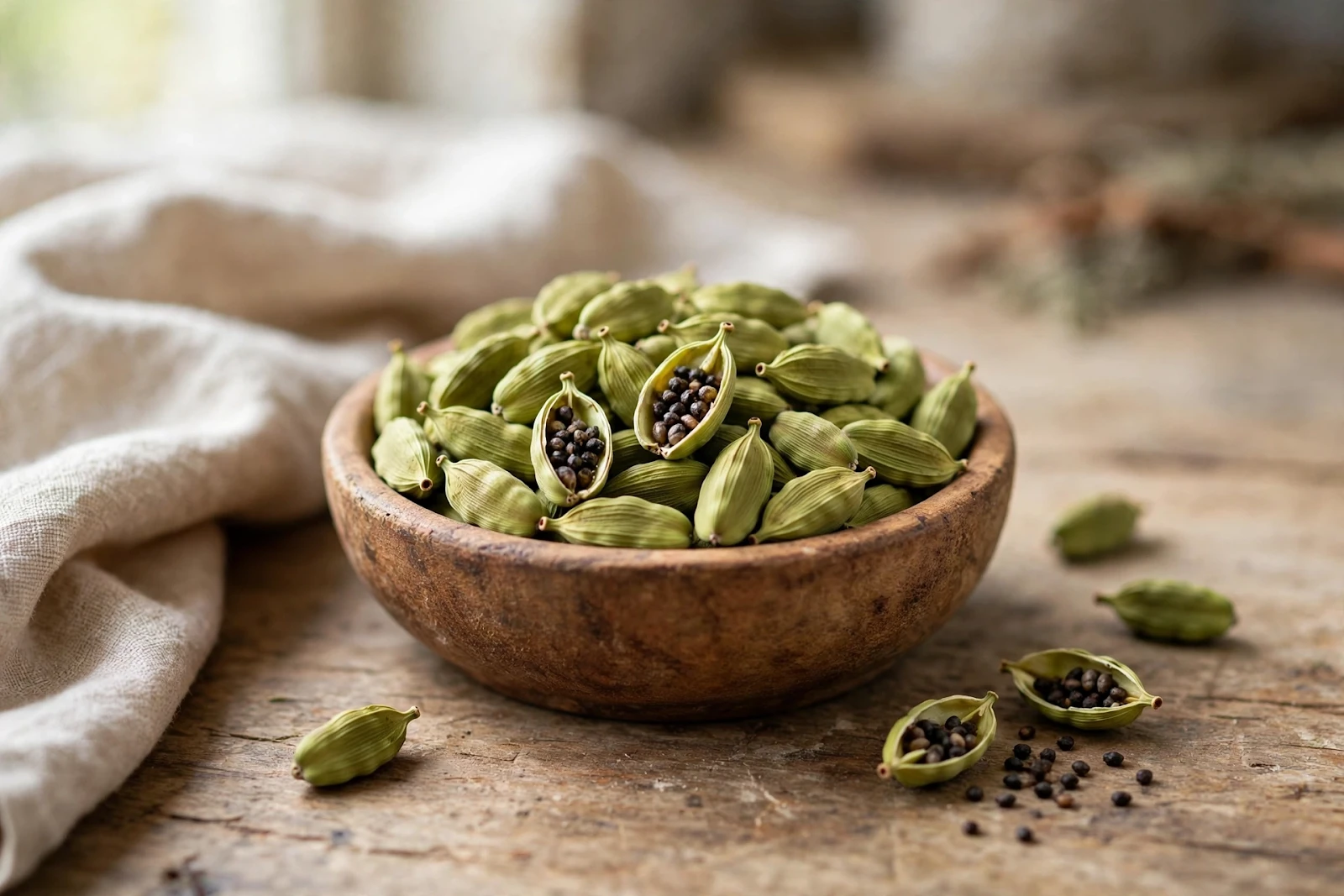
Green cardamom pods — small, fragrant, and full of flavour.
Key Takeaways
- Cardamom comes in two main types: green cardamom, which is delicate and sweet, and black cardamom, which is larger, smoky, and more robust.
- The pods contain aromatic oils, fibre, and plant compounds that give cardamom its distinctive scent and flavour.
- Studies suggest cardamom may help support digestion, fresh breath, and healthy blood pressure, but results vary and it is not a treatment for any condition.
- The easiest ways to use it are brewing cardamom tea, adding crushed pods to curries and rice, or grinding the seeds into baking and coffee.
- Cardamom is safe in normal food amounts for most people, but large supplement-sized doses can interact with some medicines — check with a healthcare professional if you are pregnant or taking medication.
1. What Is Cardamom?
Cardamom is the dried fruit of plants in the ginger family. Green cardamom (Elettaria cardamomum) grows mainly in India, Guatemala, and Sri Lanka, while black cardamom (Amomum subulatum) is grown in the Himalayan region, including Nepal and parts of India and China. Both are sold as whole dried pods, and both hide tiny dark seeds inside a papery husk.
Green cardamom pods are small, pale green, and intensely aromatic, with a sweet, lemony, slightly eucalyptus-like scent. They are the type most often used in teas, desserts, and Scandinavian baking. Black cardamom pods are larger, dark brown, and dried over open fires, which gives them a smoky, camphor-like flavour that suits slow-cooked stews, biryanis, and hearty meat dishes. The two types are not interchangeable, but both reward a light hand: a little cardamom goes a long way.
Cardamom has been traded along spice routes for centuries, and at times it was worth nearly its weight in silver. Today it remains the third most expensive spice by weight, after saffron and vanilla, largely because the pods must be picked by hand and dried carefully to preserve their volatile oils. That cost is also a reason to buy whole pods rather than pre-ground powder: ground cardamom loses its aroma quickly, while whole pods keep well for months in an airtight container away from light and heat.
2. What Is Inside Cardamom?
Cardamom's flavour and scent come from its essential oils, including compounds such as cineole, limonene, and terpinyl acetate. These are the same kinds of aromatic compounds found in many herbs and spices, and they are responsible for cardamom's fresh, warming character. The seeds also provide a small amount of fibre, potassium, calcium, and magnesium, along with plant antioxidants.
It is worth keeping the amounts in perspective. A typical recipe uses only a few pods, so the nutrients cardamom adds to a single meal are modest. Its real value in the kitchen is flavour: it makes healthy foods more appealing, which can make it easier to enjoy teas without added sugar, plain yoghurt, whole grains, and vegetable dishes. That flavour role matters more than any single nutrient on the label.
Because cardamom is used in such small amounts, general health guidance about it is best read as "a flavourful part of a varied diet" rather than as a dose of a particular compound. Supplements and concentrated extracts are a different matter, and the evidence for them is much thinner than the evidence for cardamom as a food.
3. Cardamom and Digestion
One of cardamom's oldest traditional uses is for digestion. In South Asian and Middle Eastern households, cardamom tea or a few chewed seeds after a meal are a familiar way to settle the stomach and freshen the breath. Modern research offers some support for this tradition: small studies suggest cardamom may help stimulate digestive juices and ease occasional bloating, although the evidence is still limited and mostly comes from small trials or laboratory work.
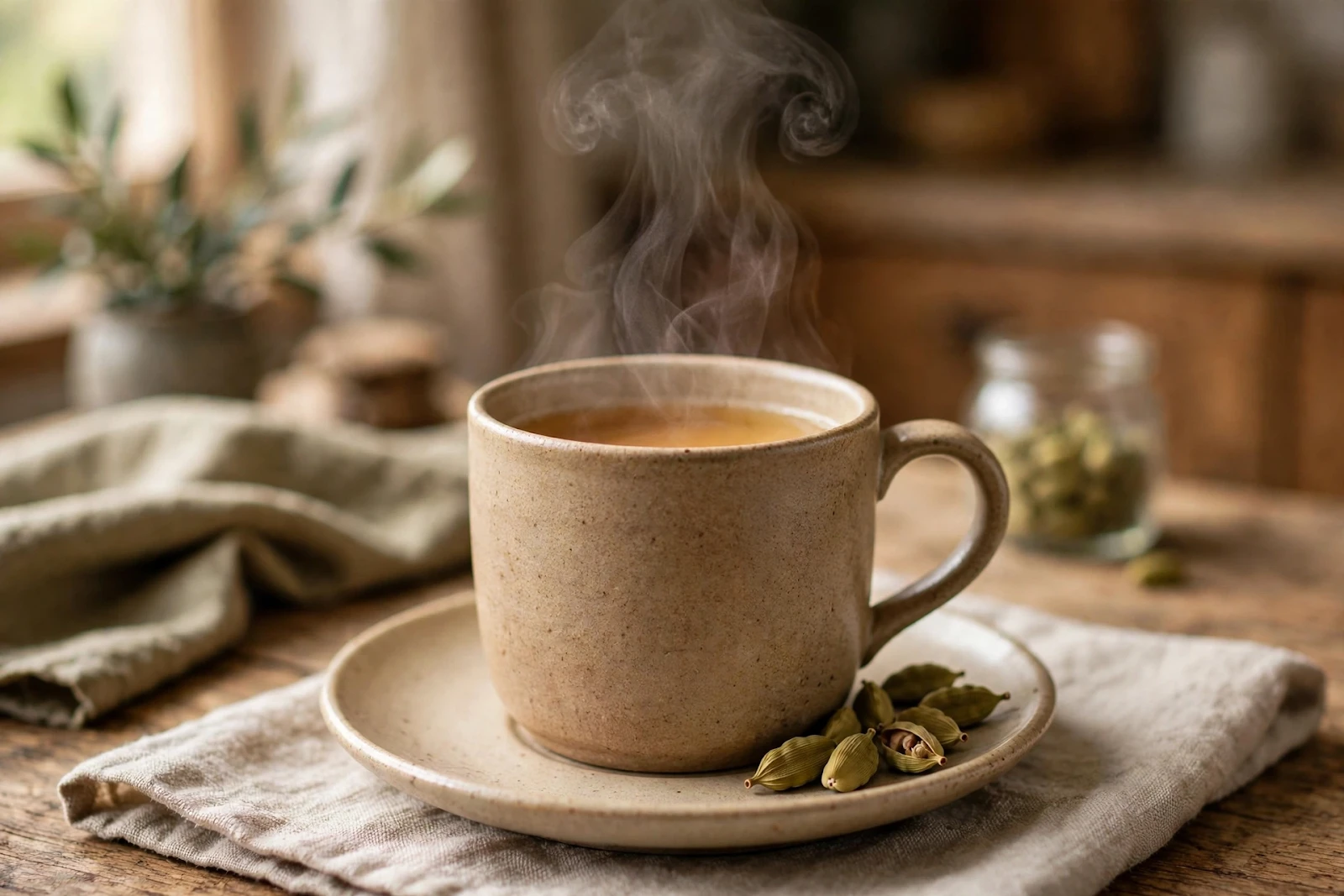
If you want to try it, the simplest approach is also the gentlest. Crush two or three green cardamom pods lightly, steep them in hot water for five to ten minutes, and drink the tea after a meal. You can also add a crushed pod to a pot of rice, a lentil soup, or a stew, where it adds fragrance without dominating the dish. Avoid very large amounts, which can irritate the stomach in sensitive people.
Cardamom is not a remedy for persistent digestive problems. Ongoing heartburn, abdominal pain, unexplained weight loss, or changes in bowel habits deserve medical attention rather than a spice-based workaround, and this guide's "When to See a Doctor" section below explains the warning signs to watch for.
4. Cardamom, Blood Pressure, and Heart Health
Some small human studies have looked at cardamom and blood pressure with encouraging, but preliminary, results. In one small trial, people who took cardamom powder daily for several weeks showed modest reductions in blood pressure, possibly linked to its antioxidant compounds and its mild diuretic effect. Other research points in a similar direction, but the studies so far are small, short, and not enough to support a firm claim.
What can be said with more confidence is that cardamom fits well into a heart-friendly eating pattern. It adds big flavour without salt, sugar, or fat, which makes it easier to enjoy foods that support heart health: whole grains, beans, vegetables, and unsweetened teas. Replacing a sugary drink with cardamom tea, or seasoning a dish with cardamom instead of extra salt, is a small change that can add up over time.
Cardamom should never replace blood pressure medication or any other prescribed treatment. If you have high blood pressure or heart disease, talk with your doctor before adding cardamom supplements, and keep taking your prescribed medicines as directed.
5. Fresh Breath and Oral Health
Chewing cardamom seeds after a meal is a long-standing habit in many cultures, and there is a sensible reason for it: the aromatic oils can temporarily freshen breath, and the act of chewing stimulates saliva, which helps clear food particles from the mouth. Some laboratory studies also suggest cardamom extracts may slow the growth of certain oral bacteria, but this is early evidence, not proof that cardamom prevents gum disease or tooth decay.
As a breath freshener, cardamom works best as an occasional after-meal habit, not as a substitute for brushing, flossing, or dental check-ups. A single pod chewed gently, then discarded, is enough; swallowing large numbers of whole pods is unnecessary and could irritate the mouth or stomach.
If bad breath persists despite good oral hygiene, it can sometimes signal gum disease, a sinus problem, or another health issue, and it is worth mentioning to a dentist or doctor rather than masking it with stronger flavours.
Cardamom tea — the simplest way to enjoy this spice daily.
6. How to Use Cardamom in Everyday Cooking
Start with whole green pods for most everyday uses. To release their flavour, press a pod gently with the flat of a knife until it cracks, then drop it whole into tea, rice, or a simmering curry and remove it before serving. For baking and coffee, split the pods, shake out the small dark seeds, and grind them fresh in a spice grinder or mortar; freshly ground cardamom is far more fragrant than powder that has sat on a shelf.
Here are simple ways to build cardamom into your week. Brew cardamom tea by steeping two or three crushed pods with black or green tea, or on their own with a slice of ginger. Add a pod or two to oatmeal, rice pudding, or stewed fruit. Stir ground cardamom into pancake or muffin batter, sprinkle it over roasted sweet potatoes or carrots, or add a pinch to your morning coffee for a Scandinavian-style twist. In savoury cooking, black cardamom suits slow dishes: add one or two whole pods to a biryani, a bean stew, or a pot roast, and fish them out before serving.
A few practical tips help. Buy whole pods from a shop with good turnover, store them airtight and away from heat, and grind only what you need. Start with less than you think: one or two pods will perfume a pot of tea, and too much cardamom can turn soapy or medicinal. If a recipe calls for ground cardamom, remember that about ten pods yield roughly one and a half teaspoons of ground spice.
7. Green vs. Black Cardamom: Which Should You Buy?
If you buy only one type, make it green cardamom. It is the most versatile: it works in teas, desserts, rice dishes, and light curries, and its sweet, floral aroma suits both sweet and savoury food. Look for plump, pale-green pods that feel slightly oily and smell strongly when you open the packet; pale, dry, odourless pods are past their best.
Black cardamom is a different ingredient rather than a substitute. Its smoky, earthy flavour is wonderful in slow-cooked dishes, but it can overwhelm delicate teas and desserts. Keep a small packet for biryanis, stews, and spice blends such as garam masala, where its depth adds a warm, almost menthol-like background note.
Both types keep for six to twelve months in an airtight jar stored in a cool, dark place. Ground cardamom, by contrast, is best used within a month or two of grinding, so whole pods are almost always the better buy.
8. How Much Cardamom Is Safe?
In normal food amounts — a few pods a day in tea or cooking — cardamom is considered safe for most people. It has been eaten for centuries in far larger culinary quantities than most home cooks will ever use, and side effects from food amounts are uncommon.
Caution is needed mainly with concentrated forms. Cardamom supplements and essential oil are much stronger than the spice, and they may interact with medicines or irritate the stomach. People who are pregnant or breastfeeding, people with gallstones, and people taking blood-thinning or blood-sugar medicines should talk with a healthcare professional before using cardamom in supplement-sized doses. The same advice applies if you are considering cardamom oil, which should never be swallowed undiluted.
Allergies to cardamom are rare but possible. Stop using it and seek advice if you notice itching, swelling, or breathing difficulty after eating it, and seek urgent care for any severe reaction.
Cardamom in the kitchen — a little goes a long way.
Myths vs. Facts
Myth: Cardamom melts fat or detoxes the body.
Fact: No spice melts fat or detoxifies the body. Cardamom may add flavour to healthy meals, but weight and liver health depend on overall diet, activity, sleep, and medical care, not on any single ingredient.
Myth: Cardamom tea cures high blood pressure.
Fact: Small studies suggest a possible modest effect, but cardamom tea is not a treatment for hypertension. Anyone with high blood pressure should follow their doctor's plan and keep taking prescribed medicines.
Myth: The more cardamom, the healthier the dish.
Fact: Cardamom is potent, and large amounts can taste soapy and irritate the stomach. A few pods give all the aroma you need; more is not better.
Myth: Green and black cardamom are interchangeable.
Fact: They have very different flavours. Green cardamom is sweet and floral, while black cardamom is smoky and robust. Swapping them changes the dish, sometimes dramatically.
Myth: Cardamom supplements are just as safe as the spice.
Fact: Supplements and essential oils are far more concentrated than food amounts and carry a higher risk of interactions and side effects. Check with a healthcare professional before using them.
When to See a Doctor
See a healthcare professional if you notice persistent digestive symptoms such as ongoing abdominal pain, frequent heartburn, vomiting, blood in vomit or stool, or unexplained weight loss. Seek prompt care for chest pain, severe breathlessness, or signs of an allergic reaction such as swelling of the lips or tongue or difficulty breathing.
Also talk with your doctor if you have high blood pressure, diabetes, gallstones, or a bleeding condition, or if you take regular medication and are considering cardamom supplements or large daily amounts. A short conversation can prevent an interaction and give you a clearer sense of what is safe for your situation.
Sponsored: check today's offers on recommended wellness products
Frequently Asked Questions
What does cardamom taste like?
Green cardamom tastes warm, sweet, and citrusy with a hint of mint and eucalyptus. Black cardamom is smokier, earthier, and more camphor-like, suited to slow-cooked savoury dishes.
Can I drink cardamom tea every day?
Yes, for most people a daily cup made with two or three pods is a reasonable food amount. If you are pregnant, breastfeeding, or taking medication, check with a healthcare professional about larger or concentrated uses.
Should I buy whole pods or ground cardamom?
Whole pods keep their aroma far longer. Buy whole pods, store them airtight, and grind the seeds fresh when you need ground cardamom.
Can cardamom replace my blood pressure medicine?
No. Cardamom is a flavourful food, not a treatment for hypertension. Never stop or change prescribed medication without talking to your doctor.
How do I store cardamom?
Keep whole pods in an airtight container in a cool, dark place for six to twelve months. Discard pods that have lost their scent, and grind only what you need at a time.
Have you cooked with cardamom before — in tea, curry, or baking? Share your favourite way to use it in the comments below; your idea might inspire another reader's next meal.
Disclaimer: This article is for general information only and is not medical advice. Cardamom is a food and a flavouring, not a treatment for any health condition. If you have a health condition, are pregnant or breastfeeding, or take regular medication, talk with a qualified healthcare professional before using cardamom in large or supplement-sized amounts.




Comments
Post a Comment