Millet is one of the oldest grains in the world, yet in many modern kitchens it is still the grain nobody quite knows what to do with. It has fed families across Africa and Asia for thousands of years, it appears in porridges, flatbreads, and festive dishes, and it is now finding its way back onto supermarket shelves as more people look for affordable, gluten-free whole grains. If you have walked past a bag of millet and wondered whether it is worth trying, the short answer is yes — it is nutritious, versatile, and much easier to cook than its unfamiliar name suggests.
In this guide, you will learn what millet actually is, what it offers nutritionally, how it may support digestion, heart health, and steady energy, and how to cook it simply at home — as a fluffy side dish, a warm breakfast porridge, or a base for grain bowls. As with any single food, millet works best as part of an overall balanced eating pattern, not as a magic fix on its own.
Warm millet porridge — a comforting, gluten-free way to start the day.
Key Takeaways
- Millet is a naturally gluten-free whole grain rich in fibre, magnesium, plant protein, and B vitamins.
- It may support digestive comfort, heart health, and steadier blood sugar as part of a balanced diet.
- Cooked millet is soft, mildly nutty, and works in porridge, salads, grain bowls, and pilafs.
- Rinsing before cooking and using the right water ratio are the two steps that make the biggest difference to texture.
- A serving or two a day is plenty — millet is nutritious but, like all grains, it is also a source of energy.
1. What Is Millet, Exactly?
The word millet does not refer to a single grain. It is a group of small-seeded grasses that includes pearl millet, foxtail millet, proso millet, finger millet, and others, each with a slightly different colour, size, and flavour. What they share is hardiness: millets grow well in dry climates and poor soils where wheat and rice struggle, which is why they have long been staple foods in parts of Africa, India, and China. The United Nations even named 2023 the International Year of Millets, drawing fresh attention to these resilient grains.
Most millet sold in Western supermarkets is proso millet — small, round, golden-yellow grains with a mild, slightly nutty taste. Pearl millet, common in African and Indian cooking, is a little larger and greyish in colour. Finger millet, also known as ragi, is reddish-brown and especially valued in South Indian cuisine. For everyday cooking, any of them can be used in much the same way, so start with whatever your shop stocks and adjust from there.
2. What's Inside a Serving of Millet
A cup of cooked millet — roughly 170 grams — provides about 200 calories, around 6 grams of plant protein, 2 to 3 grams of fibre, and about 40 grams of carbohydrate, most of it in the form of slow-digesting starch. It is low in fat and naturally free of gluten, which makes it a useful option for people with coeliac disease or gluten sensitivity, provided the packet is certified gluten-free and has not been processed alongside wheat.
Where millet really stands out is its mineral content. It is a good source of magnesium, a mineral involved in muscle function, nerve signalling, and bone health, and it also supplies phosphorus, manganese, iron, zinc, copper, and B vitamins including niacin and folate. Finger millet is particularly noted for its calcium content, which is unusually high for a grain. Millet is not a complete protein on its own, but paired with legumes such as lentils, beans, or chickpeas — a classic combination in many traditional cuisines — it forms a well-balanced meal.
3. Millet and Digestive Health
Millet's fibre supports digestion in the same gentle way as other whole grains. Fibre adds bulk to stools, supports regular bowel movements, and helps you feel full after eating. Because millet is a whole grain, it also retains the bran and germ that refined grains lose, and those parts carry much of the fibre and micronutrients.
Some people find millet easier on the stomach than wheat, and its gluten-free nature makes it a comfortable choice for those who need to avoid gluten. A few practical notes help: rinse millet well before cooking to remove dust and any bitter coating, cook it thoroughly, and introduce it gradually if you are not used to high-fibre foods, drinking enough water alongside. As with any fibre-rich food, a sudden large increase can cause temporary bloating, so a modest serving to start is the sensible approach.
4. Millet and Heart Health
Heart health is one of the more promising areas for millet. Whole grains in general are associated with better heart health in population studies, and organisations such as the World Health Organization and the American Heart Association encourage replacing refined grains with whole grains as part of a heart-friendly eating pattern. Millet contributes to that pattern through its fibre, magnesium, and plant compounds, and because it is naturally low in sodium and saturated fat.
Magnesium deserves a mention here: it helps maintain normal blood pressure and heart rhythm, and many diets fall short of it. Millet also contains plant sterols and antioxidants that may modestly support healthy cholesterol levels, though the evidence for millet specifically is still developing and mostly comes from small studies. The sensible takeaway is not that millet treats heart disease, but that it is a heart-friendly grain within a diet rich in vegetables, legumes, fish, and other whole grains.
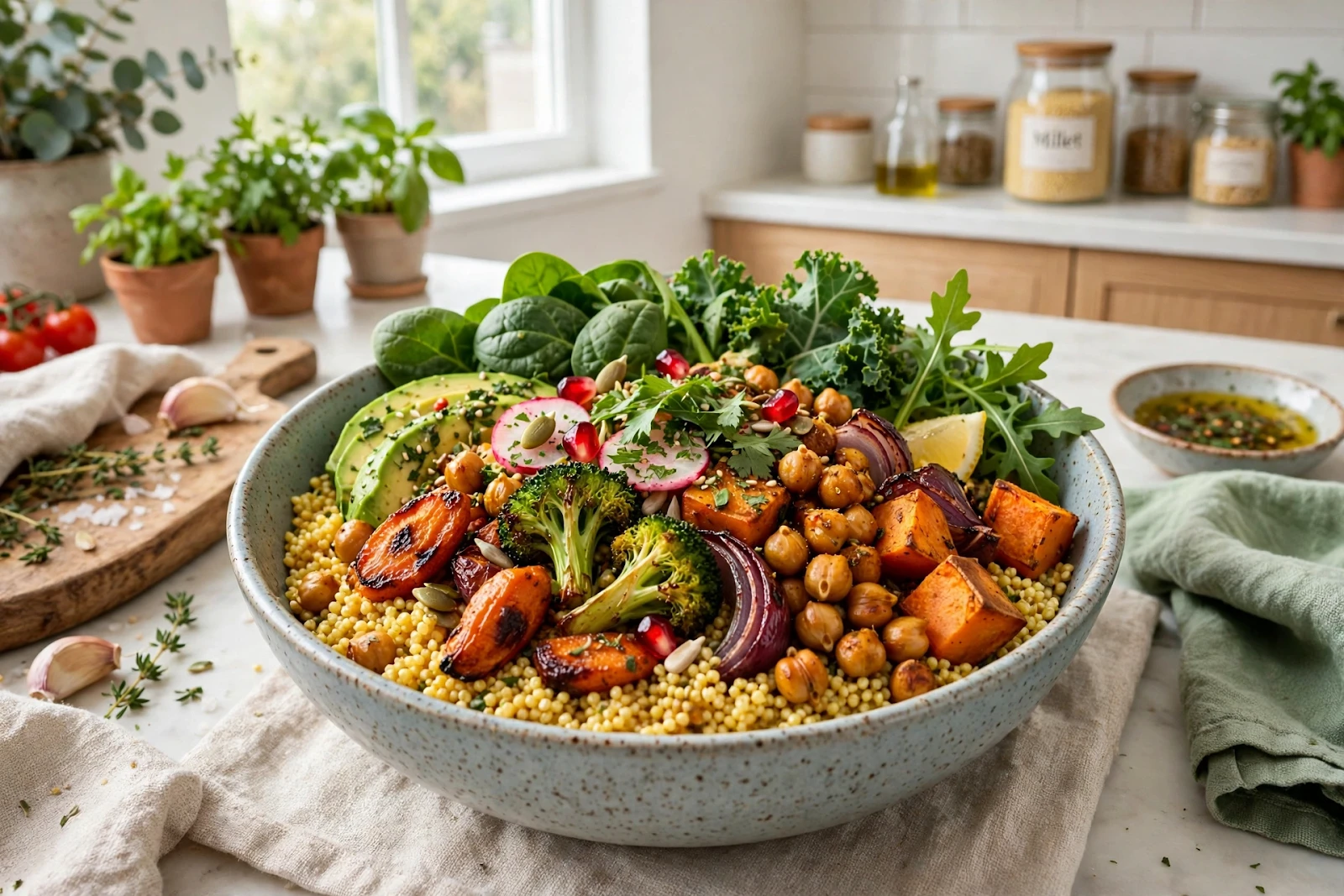
A millet grain bowl with vegetables and chickpeas — an easy, balanced lunch.
5. Blood Sugar and Steady Energy
Millet has a moderate glycaemic index, meaning it tends to raise blood sugar more slowly than refined grains such as white rice or white bread. That slower digestion comes from its fibre and its intact grain structure, and it can help meals feel more satisfying and energy feel steadier through the afternoon. Pairing millet with protein and healthy fat — for example, chickpeas and olive oil, or nuts and yoghurt — slows digestion further and makes the effect more reliable.
Some small studies have found that millet-based meals may modestly improve markers of blood sugar control compared with refined-grain meals, but the evidence is preliminary and the effect sizes are modest. For people managing blood sugar, portion size still matters, and any change to a regular eating pattern is worth discussing with a clinician or dietitian. The practical point is simpler: millet is a better everyday grain choice than a refined one, and it fits naturally into balanced, satisfying meals.
6. Weight Management and Fullness
Because millet is high in fibre and volume for its calories, it can help you feel full without needing a large portion. A cup of cooked millet with vegetables and a protein source makes a substantial meal, and its mild flavour means it takes on the taste of sauces, herbs, and spices rather than dominating the plate. That versatility is a real advantage when you are trying to eat more whole grains without getting bored.
It is worth remembering, though, that millet is still an energy-dense grain. The healthiest approach is the plate method: roughly half vegetables, a quarter protein, and a quarter millet or another whole grain, rather than a heaped bowl of grain alone. Used that way, millet supports steady appetite and makes it easier to keep meals balanced.
7. A Naturally Gluten-Free, Budget-Friendly Grain
For people who cannot eat gluten, millet is a welcome change from rice and corn, which can become monotonous. It makes a fluffy pilaf, a creamy porridge, and a sturdy base for salads, and millet flour is used in flatbreads and baked goods in many cuisines. If you buy millet flour for baking, look for a certified gluten-free label, since cross-contact can occur in mills that also process wheat.
Millet is also one of the most affordable whole grains. Dried millet keeps well in an airtight container in a cool, dark place for months, and a small bag cooks up into many meals. In a time when healthy eating can feel expensive, that combination of nutrition, shelf life, and low cost is genuinely useful — and it is one reason millets are promoted as a sustainable crop for the future.
8. How to Cook Millet Simply
Cooking millet is straightforward once you know the ratio. For a fluffy, rice-like result, rinse one cup of millet in a fine sieve, toast it briefly in a dry pot until fragrant, then add two cups of water and a pinch of salt. Bring to a boil, cover, reduce to a low simmer, and cook for about 18 to 20 minutes, then rest off the heat for 10 minutes before fluffing with a fork. For a softer, porridge-like texture, use two and a half to three cups of water and cook a little longer, stirring occasionally.
From there, the options are wide open:
- Breakfast porridge: Cook millet with milk or water, then top with berries, nuts, and a drizzle of honey or maple syrup.
- Grain bowls: Use cooled, fluffy millet as a base for roasted vegetables, chickpeas, herbs, and a lemon-tahini dressing.
- Pilaf: Toast millet, then cook it with onion, garlic, and vegetable stock, finishing with toasted nuts and fresh herbs.
- Salads: Toss cooled millet with cucumber, tomato, parsley, and lemon for a tabbouleh-style salad.
- Soups and stews: Stir a handful of millet into vegetable soup during the last 20 minutes of cooking for extra body.
- Flatbreads: Try millet flour blended with wheat or gluten-free flour in pancakes, muffins, and flatbreads.
Store cooked millet in the fridge for up to four days, and reheat with a splash of water to loosen it. Dry millet keeps best in a sealed jar away from heat and light, and a quick rinse before cooking is always worth the extra minute.
Raw millet grains — small, hardy, and packed with nutrients.
Myths vs Facts
Myth: Millet is only birdseed, not real food for people.
Fact: Millet has been a human staple for thousands of years across Africa and Asia, and it is a respected whole grain in its own right — birdseed is simply one of its many uses.
Myth: All millets taste the same.
Fact: Pearl, foxtail, proso, and finger millet differ in colour, size, and flavour, from mild and nutty to earthier and more robust. Trying two or three kinds is the best way to find your favourite.
Myth: Millet is hard to cook.
Fact: Millet cooks in about 20 minutes with a simple water ratio, much like rice. Rinsing and resting off the heat are the only steps that really matter for good texture.
Myth: Millet is a complete protein.
Fact: Like most grains, millet is low in one essential amino acid, lysine. Pairing it with legumes such as lentils or beans gives you a complete protein profile.
Myth: You must soak millet overnight.
Fact: Soaking can shorten cooking time slightly and may improve digestibility, but it is optional. A good rinse and thorough cooking are enough for everyday meals.
When to See a Doctor
Millet is safe for most people, but a few situations are worth knowing about:
- Gluten-related conditions: If you have coeliac disease, choose millet labelled certified gluten-free to avoid cross-contact with wheat during processing.
- Thyroid conditions: Millet contains small amounts of goitrogenic compounds, similar to those in some vegetables. Normal culinary amounts are generally fine, but if you have a thyroid condition, discuss large or daily amounts with your clinician.
- Digestive conditions: If you have a condition that limits fibre, such as during a flare of inflammatory bowel disease, follow your clinician's guidance rather than general whole-grain advice.
- Blood sugar medication: If you take medication for blood sugar, talk to your clinician about portion sizes when you add a new grain regularly — small culinary amounts are rarely an issue, but consistency matters.
- Allergy symptoms: Millet allergy is uncommon, but if you develop itching, swelling, hives, or breathing difficulty after eating millet, seek medical care promptly.
Sponsored: check today's offers on recommended wellness products
Frequently Asked Questions
Is millet gluten-free?
Yes, millet is naturally gluten-free. For coeliac disease, choose a packet labelled certified gluten-free to rule out cross-contact in processing.
How is millet different from quinoa?
Both are gluten-free and nutritious, but quinoa is a seed with a complete protein profile, while millet is a true grain with a milder, nuttier flavour and a lower price. They can be used interchangeably in most grain-bowl and pilaf recipes.
Do I need to soak millet before cooking?
No, soaking is optional. Rinse millet well, cook it with the right amount of water, and let it rest before fluffing — that is enough for a good result.
Can I eat millet every day?
Yes, millet can be part of a daily eating pattern, just as rice or oats can. Variety still helps: rotating millet with other whole grains such as oats, brown rice, and quinoa gives you a wider range of nutrients.
What does millet taste like?
Millet has a mild, slightly nutty and earthy flavour. It takes on the taste of sauces, herbs, and spices well, which makes it easy to use in both savoury and sweet dishes.
Have you cooked with millet before, or is this your first time trying it? Share your favourite way to serve it — or your best beginner tip — in the comments below.
Disclaimer: This article is for general information only and is not medical advice. It does not diagnose, treat, or prevent any condition. If you have a health condition, take medication, or are considering a significant change to your diet, please consult a qualified healthcare professional first.




Comments
Post a Comment