There is something quietly lovely about a cup of rose tea. Before you even take a sip, the soft floral scent rises from the cup, delicate and sweet, and the pale pink liquid catches the light like a summer garden in a glass. For centuries, people in parts of the Middle East, South Asia, and China have brewed drinks from rose petals and buds, using them in warm teas, cooling drinks, and fragrant desserts. Today, rose tea is enjoyed all over the world — in quiet morning rituals, in slow afternoon breaks, and in evening moments when people want something soothing and naturally caffeine-free.
But rose tea is more than a pretty colour and a pleasant aroma. It is a herbal drink made from dried rose petals or whole rose buds, usually from fragrant varieties such as Rosa damascena, and it contains plant compounds that researchers have begun to study, including polyphenols and the pigments that give the tea its pink hue. The evidence for specific health benefits is still limited, and most of what we know comes from laboratory studies and traditional use rather than large trials in people. In this guide, we look at what rose tea is, what current evidence suggests it may offer, how to brew it well, and who should enjoy it with a little extra care.
Key Takeaways
- Rose tea is a herbal drink brewed from dried rose petals or buds, usually from fragrant varieties such as Rosa damascena — it is naturally caffeine-free because it contains no true tea leaves.
- It is not the same as rosemary tea or rosehip tea: rosemary comes from a different plant entirely, and rosehip tea is made from the fruit of the rose plant rather than its petals.
- Its pink colour comes from plant pigments called anthocyanins, and rose petals also contain polyphenols and small amounts of vitamin C — though the amounts in a cup are modest.
- The floral aroma and the ritual of brewing may help some people feel calmer, and many drinkers enjoy rose tea as a gentle evening drink — though it is not a treatment for anxiety or sleep problems.
- Only food-grade, pesticide-free roses are safe for tea. Never brew tea from florist roses or garden roses treated with chemicals.
Illustration: A glass cup of pale pink rose tea with fresh pink rose petals floating in it on a wooden table.
1. What Is Rose Tea?
Rose tea is a herbal infusion made by steeping dried rose petals or whole dried rose buds in hot water. Unlike black, green, or white tea, it is not made from the leaves of the Camellia sinensis plant, so it is technically a tisane rather than a true tea — and that is why it is naturally free of caffeine. The most commonly used variety is Rosa damascena, the Damask rose, which has been grown for centuries in regions such as Iran, Bulgaria, and Turkey for its strong fragrance. Other fragrant varieties, including Rosa gallica and some garden roses grown specifically for food use, are also used. The buds are picked before they fully open, then dried carefully so they keep their scent and colour, while petals are dried in thin layers away from direct sunlight.
It is easy to confuse rose tea with two other drinks, so the distinction matters. Rosehip tea is made from the fruit of the rose plant — the small red hips that form after the flower fades — and it has a tangier, fruitier flavour and a different nutritional profile. Rosemary tea is something else entirely: it is made from the leaves of rosemary, a woody herb from the mint family, and has a pine-like, savoury flavour. Rose tea, by contrast, is floral, gentle, and slightly sweet, with a soft pink colour that deepens the longer it steeps. You can buy rose tea as loose dried buds, as loose petals, or in tea bags, and it is sometimes blended with green tea, black tea, or chamomile — so if you want a caffeine-free cup, check the label to make sure the blend is made from rose alone.
2. What Is Inside a Cup of Rose Tea?
A cup of rose tea is mostly water, but dissolved in that water is a small collection of compounds from the petals and buds. The most visible group is the anthocyanins, the plant pigments that give the tea its pink and rosy colour. Anthocyanins belong to the wider family of polyphenols, plant compounds that have been widely studied in laboratory research for their antioxidant activity — their ability to neutralise certain unstable molecules in test-tube conditions. Rose petals also contain other polyphenols, including flavonoids, along with small amounts of vitamin C and fragrant volatile oils such as geraniol and citronellol, which give rose tea its distinctive scent. It is important to keep the scale in mind: a single cup of rose tea contains only small amounts of these compounds, and the evidence linking them to specific health outcomes in people is limited.
What we do know with more confidence is simpler. Plain rose tea brewed without sugar contains almost no calories, which makes it an easy alternative to sweetened drinks — a swap that health organisations such as the World Health Organization have encouraged in their general guidance on reducing free sugars in the diet. It is also naturally caffeine-free, so it can be enjoyed at any time of day without adding to your total caffeine intake. And because it is a warm, fragrant drink, it can support hydration in a pleasant way. What rose tea is not, however, is a concentrated source of nutrients: the vitamin C in a cup is modest, and rose tea should never be treated as a substitute for eating a varied diet rich in fruits, vegetables, and whole grains.
3. Rose Tea, Calm, and Stress
Ask a rose tea drinker why they love it, and the answer is often about the feeling it gives: a moment of calm, a pause in a busy day, a warm cup held in both hands. First, the ritual itself matters. Preparing tea — warming the water, watching the buds slowly open, waiting a few minutes — creates a small pocket of slowness, and research on stress often notes that simple, predictable rituals can help people feel more settled. Second, the aroma may play a role: the scent of rose, carried partly by geraniol and citronellol, is widely described as soothing, and some small studies on scent and mood have explored whether floral aromas are linked with calmer self-reported feelings. The evidence is limited, and the amounts inhaled from a cup of tea are small, so any effect is likely gentle and subjective.
It would be wrong to call rose tea a treatment for anxiety or stress, and it does not replace professional support for mental health concerns. But many people find that a warm, fragrant drink helps them slow down, and that slowing down itself can support a sense of calm. Because rose tea is caffeine-free, it does not carry the restlessness that caffeinated drinks can bring, which makes it a comfortable choice for an evening wind-down. If you find that the ritual helps you, enjoy it as part of a wider pattern of rest — regular sleep, time outdoors, movement you enjoy, and connection with people you care about — rather than expecting one cup of tea to carry the whole weight of a stressful day.
4. Rose Tea and Skin Health
Skin health is one of the topics most often linked with rose tea, and it is worth separating what the evidence suggests from what marketing claims. The honest summary: rose tea may support skin health in small, indirect ways, but it is not a skincare treatment. In laboratory studies, the polyphenols and anthocyanins in rose petals have shown antioxidant activity, and researchers have explored whether such compounds might help protect skin cells from damage caused by ultraviolet light and pollution. A few small studies have looked at rose extracts in relation to skin hydration and appearance, with modest and mixed results. Be clear about the limits: most of the research is early, small, or conducted in test tubes and animal models, and there is very little research on drinking rose tea specifically and skin outcomes in people.
Rose tea can still play a small supporting role in a skin-friendly routine. Staying hydrated supports skin appearance, and choosing unsweetened rose tea over sugary drinks reduces added sugar intake. Rose petals also contain small amounts of vitamin C, a nutrient the body uses in the normal formation of collagen, the protein that helps keep skin firm — though a cup of tea provides only a small fraction of your daily needs, so food sources such as citrus fruits, berries, and peppers matter far more. The strongest evidence-based advice for skin health remains familiar: protect skin from excessive sun, avoid smoking, eat a varied diet, stay hydrated, and get enough sleep. Drinking rose tea will not erase wrinkles, clear acne, or replace sun protection, and for specific skin concerns, a dermatologist can offer advice based on evidence rather than tradition.
Illustration: Dried rose buds and rose petals in a small ceramic bowl beside a glass teapot of brewed rose tea.
5. Rose Tea and Digestion
Rose tea has a long history of being served after meals in several food cultures, and many people reach for it when they want something warm and gentle after eating. Part of the appeal is simple: a warm drink can feel soothing, and sipping slowly gives the body a moment to settle. Some traditional uses describe rose tea as helpful for easing feelings of fullness or mild stomach discomfort, and small laboratory studies have explored whether rose extracts may influence gut bacteria or digestive processes. But the human evidence is thin. There are no large clinical trials showing that rose tea improves digestion, relieves bloating, or treats any digestive condition, and any benefit is likely to be modest and different from person to person.
Keep this in perspective: rose tea is not a treatment for digestive problems, and it should never replace medical care for ongoing symptoms such as persistent stomach pain, frequent heartburn, or changes in bowel habits. If you enjoy a cup after a meal and find it pleasant, that is reason enough to keep the habit — but the real foundations of digestive health are the familiar ones recommended by sources such as the NHS and the CDC: a varied diet with enough fibre, regular physical activity, enough water, and not rushing meals. Sweetened rose tea would work against that pattern, because added sugar can contribute to digestive discomfort for some people, so enjoy it plain when you can.
6. Rose Tea, Hydration, and Everyday Wellness
One of the most practical roles of rose tea is also the simplest: it helps you drink more water. Many people find plain water boring, and a fragrant, caffeine-free drink can make it easier to stay hydrated through the day. Because rose tea contains no caffeine, it counts toward your daily fluid intake in the same way water does, and it can be enjoyed in the morning, in the afternoon, or in the evening without worrying about sleep. For people who are trying to cut back on sugary drinks, swapping a sweetened soft drink or a sugary iced tea for a cup of unsweetened rose tea can reduce daily sugar and calorie intake over time — a small change that works best alongside an overall pattern of balanced meals, regular movement, and enough sleep.
You may also see claims that rose tea "boosts immunity" or "fights colds". Treat these claims with caution. Rose petals contain small amounts of vitamin C and polyphenols, and vitamin C does play a role in the normal functioning of the immune system — but there is no good evidence that drinking rose tea prevents colds, flu, or other infections, and no single food or drink can strengthen the immune system on its own. Trusted health sources, including the Mayo Clinic and Harvard Health, describe immune health as the result of a whole pattern: a varied diet, enough sleep, regular physical activity, not smoking, and managing stress. Rose tea can be one pleasant part of that pattern, but it is not a shield against illness, and it should never replace vaccination, hygiene, or medical care when you are unwell.
7. Rose Tea and Sleep: A Gentle Evening Ritual
Because rose tea is naturally caffeine-free, it is a natural fit for the evening. Many people enjoy a warm cup an hour or so before bed as part of a wind-down routine: the warmth, the floral scent, and the slow ritual of brewing can signal to the body that the day is ending. Some small studies have explored whether rose scent is linked with calmer feelings, and a regular evening ritual — a warm drink, dim lights, a book instead of a screen — is one of the habits sleep researchers often recommend as part of good sleep hygiene. But it is important to be honest about the limits: there is no strong evidence that rose tea itself improves sleep quality or treats insomnia, and any benefit is most likely to come from the routine around the tea rather than the tea alone.
If you struggle with sleep regularly, the foundations matter more than any single drink: keeping a regular bedtime, limiting bright screens and caffeine in the evening, keeping the bedroom cool and dark, and getting daylight and movement during the day. Rose tea can sit comfortably inside that routine, especially if you enjoy it without sweetener and keep the serving modest. And if poor sleep persists for weeks, or if you regularly rely on drinks or supplements to fall asleep, it is worth talking with a healthcare professional, who can help you find evidence-based support rather than leaving the problem to a single beverage.
8. How to Brew and Enjoy Rose Tea
Brewing rose tea well is simple, but a few details make a real difference. Start with food-grade dried rose buds or petals, bought from a reputable tea or food supplier — never use roses from a florist or from a garden that has been treated with pesticides or other chemicals, because those roses are not grown to be eaten or drunk. For a single cup, use about one to two teaspoons of dried buds, or roughly one tablespoon of dried petals, in a teapot or infuser. Pour over freshly boiled water that has cooled very slightly, around 90–95°C (195–205°F), and steep for about five minutes. The buds will slowly open and release their colour; a longer steep gives a deeper pink and a stronger floral flavour, but steeping for too long can make the tea taste slightly bitter.
Good-quality buds can usually be steeped a second time, with a slightly longer steep, and the second cup is often softer and more delicate. Rose tea pairs well with light foods such as fresh fruit, plain biscuits, or a simple salad, and many people enjoy it with a little honey — though adding sweetener also adds sugar, so a small amount goes a long way. Iced rose tea is another pleasant option in warm weather: brew it a little stronger than usual, let it cool, and pour it over ice with a slice of lemon or a few mint leaves. Store the dried buds or petals in an airtight container in a cool, dark cupboard, away from strong smells — like all teas, rose tea absorbs odours easily. And if you are buying rose tea for the first time, look for whole, unbroken buds with a strong fragrance; faded, dusty buds usually mean the tea has been stored too long.
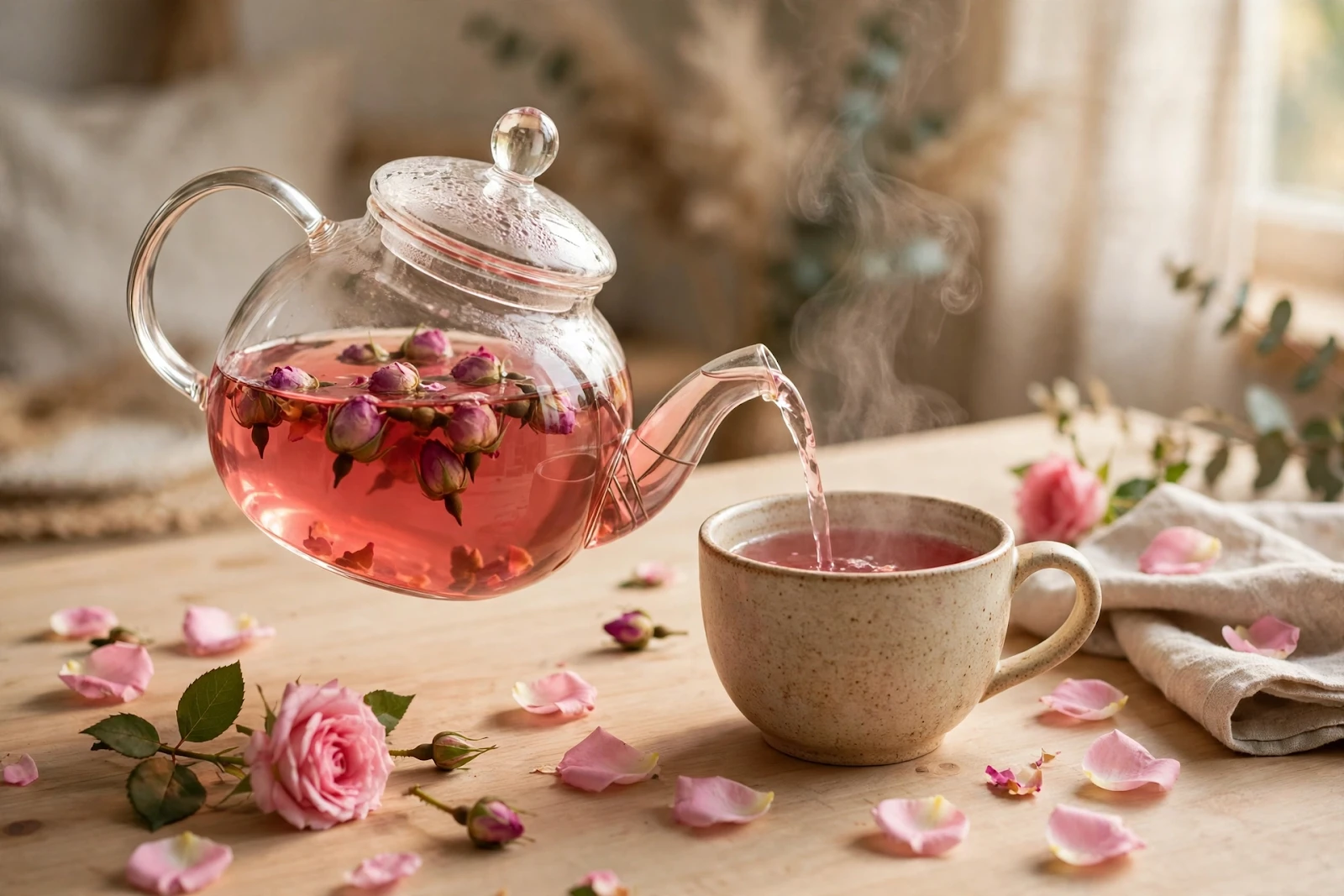
Illustration: A glass teapot pouring pink rose tea into a ceramic cup with fresh rose petals scattered on a wooden table.
A Note on Who Should Be Careful
Rose tea is a gentle drink for most adults, but a few groups should enjoy it with extra care. People with an allergy to plants in the rose family — which includes apples, pears, peaches, plums, cherries, and almonds — may be more likely to react to rose, so if you have a known allergy to any of these, try a small amount first or ask your doctor before drinking rose tea regularly. People who are pregnant or breastfeeding should also be cautious: there is very little research on rose tea in pregnancy, so follow the advice of your own doctor or midwife rather than assuming it is safe simply because it is herbal. If you take medication regularly, note that herbal drinks can occasionally interact with medicines, and a brief check with your doctor or pharmacist can give personalised guidance. Finally, rose tea is a food and drink, not a medicine: it should never replace prescribed treatment, and anyone who notices itching, swelling, or breathing difficulty after drinking it should stop and seek medical advice.
Myths vs Facts
Myth: Rose tea detoxifies the body.
Fact: The liver and kidneys already handle the body's waste removal continuously, and no tea has been shown to detoxify the body. Staying hydrated supports normal body functions, but "detox" claims about rose tea are marketing, not evidence.
Myth: Drinking rose tea will cure anxiety or insomnia.
Fact: Many people find the scent and ritual of rose tea relaxing, and some small studies have explored links between floral aromas and calmer feelings. But rose tea is not a treatment for anxiety, stress, or sleep problems, and persistent symptoms deserve a conversation with a healthcare professional.
Myth: Rose tea makes your skin glow overnight.
Fact: Rose tea contains polyphenols and small amounts of vitamin C, and staying hydrated supports skin appearance, but there is no evidence that drinking it changes skin overnight. Healthy skin comes from a whole pattern — sun protection, a varied diet, enough sleep, and not smoking — not from a single drink.
Myth: Any rose from the garden is safe to brew into tea.
Fact: Only food-grade roses grown without pesticides or chemical treatments are safe for tea. Florist roses and garden roses treated with sprays may carry residues that are not safe to drink, so always buy rose buds or petals from a reputable food or tea supplier.
Myth: Rose tea boosts your immunity and prevents colds.
Fact: Rose petals contain small amounts of vitamin C and polyphenols, but there is no good evidence that drinking rose tea prevents colds or other infections. Immune health depends on a whole pattern — a varied diet, enough sleep, regular activity, and not smoking — not on one beverage.
When to See a Doctor
Rose tea is a beverage, not a health intervention. But some situations deserve a conversation with a healthcare professional: signs of an allergic reaction, such as itching, swelling of the lips or tongue, difficulty breathing, or a spreading rash, after drinking rose tea; pregnancy or breastfeeding, where your clinician can advise whether herbal drinks suit you; or regular medication, where your doctor or pharmacist can check for possible interactions. Seek medical advice promptly for chest pain, severe shortness of breath, or any severe allergic reaction. And if you have been using tea or any other drink to manage anxiety, low mood, digestive problems, or a sleep problem, a healthcare professional can help you find evidence-based support.
Sponsored: check today's offers on recommended wellness products
Frequently Asked Questions
Does rose tea contain caffeine?
No. Rose tea is a herbal drink made from rose petals or buds, not from true tea leaves, so it is naturally caffeine-free. It can be enjoyed at any time of day, including in the evening. Be aware that some blends mix rose with green or black tea, which do contain caffeine, so check the label if you want a caffeine-free cup.
Can I drink rose tea every day?
For most healthy adults, one to three cups a day is moderate. Notice how it affects you, and keep it unsweetened when you can. People who are pregnant, breastfeeding, taking medication, or living with an allergy to plants in the rose family should follow their clinician's guidance first.
Is rose tea the same as rosemary tea?
No. Rose tea is brewed from rose petals or buds, while rosemary tea is made from the leaves of rosemary, a woody herb from the mint family with a pine-like, savoury flavour. They are different plants with different flavours, and they should not be confused when buying or brewing.
How should I brew rose tea?
Use one to two teaspoons of food-grade dried rose buds (or about a tablespoon of dried petals) per cup, pour over hot water that has cooled slightly from the boil, and steep for about five minutes. Taste as you go: a longer steep gives a deeper colour and stronger floral flavour, but too long can turn slightly bitter.
Can I use roses from my garden or a florist?
No. Only food-grade roses grown without pesticides or chemical treatments are safe for tea. Florist roses and garden roses treated with sprays may carry residues that are not safe to drink, so always buy dried rose buds or petals from a reputable food or tea supplier.
Have you tried rose tea, and do you have a favourite way to enjoy it — plain and warm, iced with lemon, or blended with another tea? Share your experience in the comments below; we would love to hear how rose tea fits into your daily routine.
Disclaimer: This article is for general information only and is not medical advice. It is not intended to diagnose, treat, cure, or prevent any disease. Always consult a qualified healthcare professional before making changes to your diet or health routine, especially if you are pregnant, breastfeeding, taking medication, or living with a health condition.




Comments
Post a Comment