Tarragon is the herb that makes a simple roast chicken taste like something from a French bistro. Its flavour is sweet, warm, and faintly like anise, with a gentle peppery edge that lifts eggs, fish, vegetables, and creamy sauces without overpowering them. A small handful can transform a plain weeknight dinner, which is why tarragon has been prized in European kitchens for centuries, even though it is far less famous than basil, parsley, or mint.
Unlike herbs that are mainly decorative, tarragon earns its place by flavour alone. It is one of the classic fines herbes of French cooking, alongside parsley, chives, and chervil, and it is the defining flavour of béarnaise sauce and tarragon chicken. This guide looks at what tarragon is, what it offers nutritionally, how it may support everyday health as part of a balanced diet, and the simplest ways to use, store, and grow it — without overstating what a single herb can do.
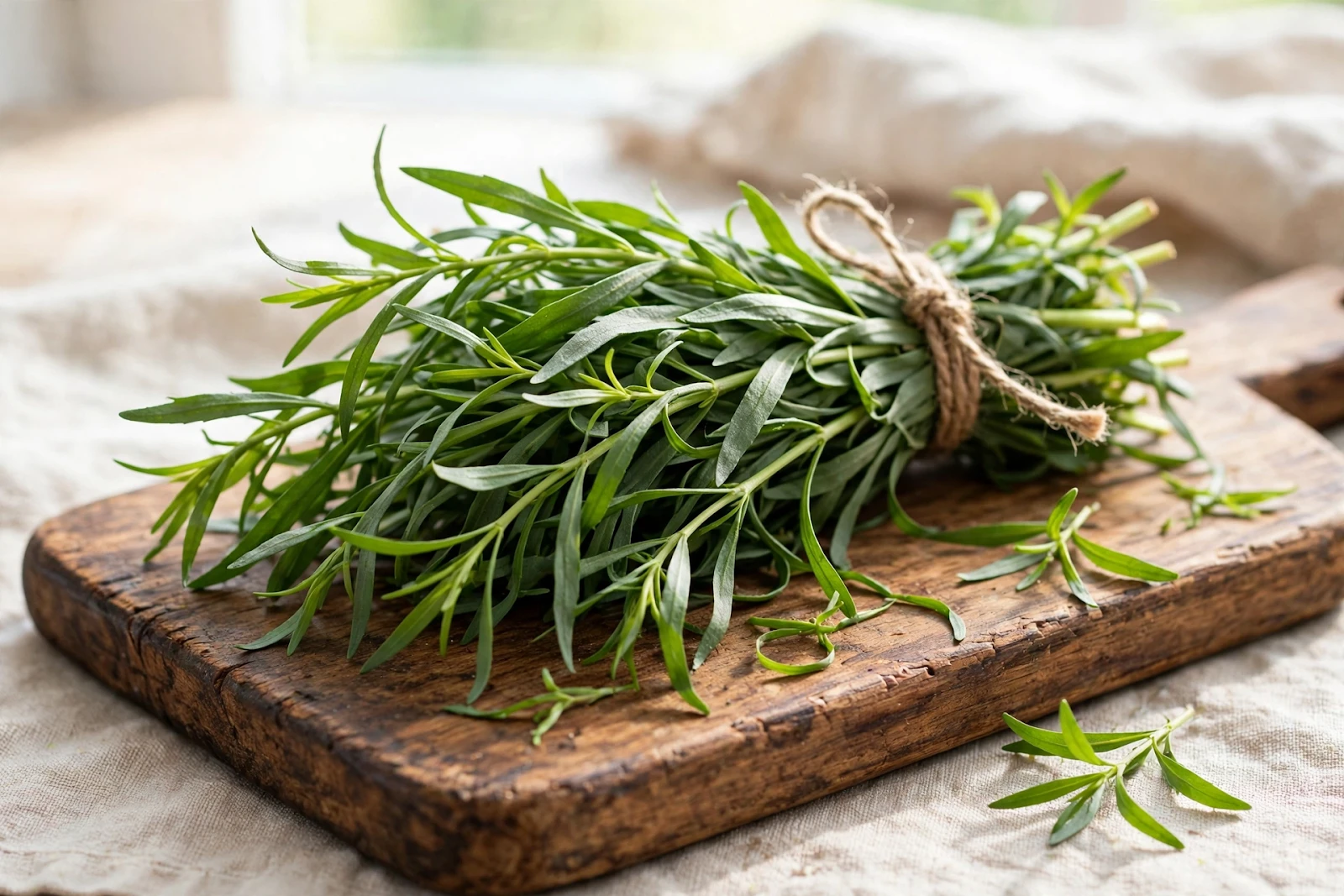
Fresh tarragon — a sweet, anise-like herb that is best added near the end of cooking.
Key Takeaways
- Tarragon is a fragrant herb with a sweet, anise-like flavour, best known from French cooking and classic sauces.
- It adds distinctive flavour without adding fat, sugar, or much salt, which makes it a useful seasoning for everyday cooking.
- Tarragon provides small amounts of vitamins and minerals, along with aromatic plant compounds, but it is a flavouring herb, not a major source of nutrition on its own.
- French tarragon is the culinary type to look for; the hardier Russian type is milder and less flavourful in cooking.
- Tarragon is best added near the end of cooking, or used fresh, because long, harsh heat dulls its delicate aroma.
1. What Is Tarragon, Exactly?
Tarragon, known botanically as Artemisia dracunculus, is a perennial herb with slender, pointed, dark green leaves that grow along upright stems. It is a member of the daisy family, a distant relative of wormwood and mugwort, though its kitchen character could hardly be more different: where those relatives are bitter and medicinal, tarragon is sweet, aromatic, and unmistakably food-friendly. The leaves are the part cooks use, picked fresh or dried, and the plant returns year after year in many climates once established.
There are two main types, and the difference matters in the kitchen. French tarragon is the culinary star: it has a rich, sweet, anise-like aroma, rarely sets viable seed, and is usually propagated from cuttings or division. Russian tarragon, grown from seed, is hardier and more vigorous, but its flavour is much milder, sometimes grassy or slightly bitter, and it can disappoint cooks who expect the French herb. If a bunch or plant is simply labelled “tarragon” without qualification, it is worth checking which type it is, especially when buying a plant for the garden. For cooking, French tarragon is almost always the better choice.
Tarragon has a long history in French and Central Asian cooking. In France it became one of the fines herbes, the delicate herb mixtures used to finish omelettes, salads, and light sauces, and it gives béarnaise sauce its signature character. In parts of Central Asia and the Caucasus, tarragon has also been used to flavour drinks, including the bright green tarragon soda that remains popular in Georgia. That range — from a refined sauce herb to a refreshing drink flavouring — says something about its versatility: tarragon is aromatic enough to lead a sauce, yet gentle enough to finish a simple salad.
2. What Is in Tarragon?
Like most fresh herbs, tarragon is mostly water, very low in calories, and used in small amounts, so it contributes flavour far more than bulk nutrition. Even so, a tablespoon or two of chopped fresh tarragon adds a useful mix of nutrients to a meal. It contains vitamin A, which supports normal vision and immune function, vitamin C, which supports the immune system and helps the body absorb iron from plant foods, and vitamin K, which plays a role in normal blood clotting and bone health. It also provides small amounts of folate, calcium, magnesium, potassium, and iron.
Tarragon also contains aromatic compounds that give it its distinctive scent, including estragole, which is responsible for much of its anise-like character, along with other plant compounds such as flavonoids that are common in green herbs. These compounds are part of why diets rich in a variety of vegetables and herbs are generally linked to better health. It is worth keeping the dose in perspective, however: the amounts of these compounds in a normal culinary serving are small, and tarragon should be enjoyed as part of a varied diet rather than treated as a concentrated remedy.
Portion perspective matters here, as it does with every herb. A spoonful of tarragon scattered over chicken will not meet your daily needs for any vitamin on its own, and that is fine. Herbs work best as part of a varied diet: they make nutritious foods taste better, which makes it easier to enjoy vegetables, eggs, fish, beans, and whole grains more often. Tarragon's real nutritional contribution is indirect but genuine — it helps good food taste good enough to eat again.
3. A Distinctive Flavour Without Extra Salt, Fat, or Sugar
One of the most practical benefits of tarragon is what it replaces. Many everyday dishes rely on salt, butter, cream, or sugary sauces for flavour. Tarragon offers a different route: a sweet, warm, slightly peppery flavour that brightens food without adding fat or sugar and without the need for extra salt. A chicken breast rubbed with tarragon, lemon, and a little olive oil tastes complete in a way that plain grilled chicken often does not, and it needs far less salt to get there.
This matters for anyone trying to eat a little more mindfully. Public health guidance from organisations such as the World Health Organization and the NHS consistently encourages flavouring food with herbs and spices as one simple way to keep salt intake in check, and tarragon fits that advice well. Its flavour is strong enough to carry a dish, so it can reduce reliance on salty stocks, heavy dressings, and rich sauces. Eggs with tarragon and a pinch of pepper feel satisfying without a heavy cheese sauce. Roasted carrots or green beans tossed with tarragon and lemon gain a fresh, almost luxurious note from a herb alone.
Tarragon also pairs beautifully with foods that are already nutritious. It softens the richness of eggs and cream, lifts the flavour of chicken and fish, and adds warmth to mushrooms, potatoes, and root vegetables. When a healthy meal tastes good, it is much easier to repeat — and that repeatability is where real dietary benefits come from. A herb that makes you look forward to cooking chicken and vegetables at home is doing more for your diet than any single nutrient claim could.
4. Digestive Comfort: What Tradition and General Nutrition Suggest
Tarragon has traditionally been used in folk practice as a digestive herb, sipped as a tea or added to meals in the hope of easing feelings of fullness or sluggish digestion. Modern nutrition does not turn that tradition into a proven treatment, and it would be wrong to present tarragon as a remedy for digestive conditions. What can be said more carefully is that aromatic herbs in general, used as part of meals, may help make food more appetising and enjoyable, and that enjoying a meal slowly, with flavourful food, is itself part of comfortable eating.
Some people also find that herbs like tarragon help them enjoy lighter, vegetable-rich meals that are naturally easier on digestion than very fatty or heavily processed food. A tarragon vinaigrette over a grain salad, for example, can make a fibre-rich meal appealing without a heavy, creamy dressing. The benefit here is the overall meal pattern — more vegetables, more whole foods, less excess fat and salt — rather than any direct medicinal action of the herb itself. Studies suggest that dietary patterns rich in plant foods are linked to better digestive health, though researchers are careful to credit the pattern, not any single ingredient.
If you experience persistent digestive symptoms, tarragon is not a substitute for medical advice. Bloating, pain, reflux, or changes in bowel habits that do not settle deserve a conversation with a clinician, who can look for causes that a herb cannot address. Tarragon can still be part of enjoyable everyday cooking in the meantime, but it should be enjoyed as food, not relied on as treatment.
5. Plant Compounds, Antioxidants, and the Bigger Picture
Tarragon contains a range of plant compounds, including flavonoids and other antioxidants that are common in green herbs and leafy vegetables. Antioxidants help protect cells from everyday oxidative stress, and diets rich in fruits, vegetables, and herbs are linked to better long-term health outcomes in population studies. That link is real, but it is a link to the whole dietary pattern, and it is not a promise that eating tarragon will prevent any particular disease.
It is also worth being honest about one compound that sometimes raises questions: estragole, the aromatic substance behind tarragon's anise scent. Estragole is also found in basil, fennel, and anise, and it has been studied at very high doses in laboratory settings. Food safety authorities generally consider the small amounts found in normal culinary use of herbs to be part of an ordinary diet, and tarragon has been eaten as a food herb for centuries. As with many flavour compounds, the sensible approach is the culinary one: use tarragon as a seasoning in normal amounts, as part of varied meals, rather than consuming large quantities or concentrated extracts. Anyone considering herbal supplements or extracts should talk with a clinician or pharmacist first, since concentrated products are a different matter from food.
The honest way to think about tarragon here is as a small, regular contributor to a varied diet. Adding fresh herbs to meals you already eat — eggs in the morning, chicken at dinner, vegetables on the side — is an easy habit that nudges your overall intake of vitamins and plant compounds upward. Combined with enough sleep, regular movement, and a varied diet, that pattern supports general health far more reliably than any one “superfood” claim.
6. How to Use Tarragon in Everyday Cooking
The golden rule with tarragon is to treat it gently. Its aroma is delicate, so it is usually added near the end of cooking, or stirred into a finished sauce, dressing, or dish. Long, vigorous boiling dulls its character, while a brief warming releases it beautifully. Fresh tarragon is generally more fragrant than dried, though dried tarragon is still useful in slow-cooked dishes, soups, and stews, where it has time to soften and infuse. As a rough guide, use about one tablespoon of fresh chopped tarragon where a recipe calls for one teaspoon of dried.
Start with the classics. Tarragon and chicken are a natural pair: roast a chicken with tarragon, lemon, and garlic, stir chopped tarragon into a chicken salad, or finish a simple pan sauce with tarragon and a squeeze of lemon. Tarragon and eggs are another classic — stir it into scrambled eggs, omelettes, or egg salad for a flavour that feels instantly more refined. With fish, especially salmon, trout, or white fish, tarragon adds a sweet warmth that pairs well with lemon and butter, used sparingly so it does not overwhelm the fish.
Tarragon also shines in sauces and dressings. A simple tarragon vinaigrette — olive oil, white wine vinegar or lemon juice, Dijon mustard, chopped tarragon, salt, and pepper — transforms green salads, potato salads, and grain bowls. Stirred into mayonnaise or yoghurt, tarragon makes a quick sauce for grilled vegetables, sandwiches, or cold chicken. And for a special occasion, a homemade béarnaise, built on tarragon-infused vinegar, egg yolks, and butter, is the sauce that made tarragon famous. Even a simplified version, with tarragon stirred into melted butter with lemon, gives roast vegetables or fish a restaurant touch.
Roast chicken with tarragon and lemon — the herb's most classic pairing.
7. Pairings That Work: Vegetables, Grains, and Drinks
Beyond chicken, fish, and eggs, tarragon has a wide range of partners. It pairs well with mushrooms, whose earthy flavour welcomes its sweetness, and with potatoes, carrots, green beans, and peas, where it adds a warm, savoury note. Stir chopped tarragon into mashed potatoes, roasted root vegetables, or a pea soup at the end of cooking, and the dish gains depth without extra fat. It also works in grain salads: a farro or quinoa salad with tarragon, lemon, toasted nuts, and feta or goat cheese is a satisfying lunch that keeps well.
Tarragon is also a good herb for pickles and preserves. A sprig in a jar of pickled cucumbers, carrots, or green beans adds a subtle anise note that develops over weeks. In drinks, fresh tarragon can be muddled gently into lemonade or sparkling water with lemon and a little honey, or steeped briefly in hot water for a fragrant herbal tea. As with all herbal teas, it is best enjoyed as a pleasant drink rather than a health treatment, and anyone who is pregnant, takes regular medication, or has a health condition should check with a clinician before drinking herbal infusions regularly.
A note on balance: tarragon's flavour is distinctive, so a little goes a long way. Start with a modest amount, taste, and add more if needed. In delicate dishes, such as a light fish fillet or a simple green salad, too much tarragon can dominate. In richer dishes, such as a creamy chicken sauce or a roast, it can take a more generous hand. Learning that balance is part of the pleasure of cooking with it.
8. How to Store, Dry, Freeze, and Grow Tarragon
Fresh tarragon keeps best in the refrigerator. Wrap the bunch loosely in a damp paper towel, place it in a bag or container, and use within a week or so. If the stems are long, standing them in a glass of water in the fridge, like a bouquet, can extend their life by a few days. Discard any leaves that turn dark or slimy. Fresh tarragon is more perishable than woody herbs such as rosemary or thyme, so buy or pick only what you will use within the week when possible.
For longer storage, tarragon dries and freezes reasonably well, though neither method fully preserves its fresh aroma. To dry it, hang small bunches upside down in a warm, airy spot away from direct sunlight, then strip the leaves and store them in an airtight jar. Dried tarragon is best used in cooked dishes, where it has time to rehydrate. To freeze it, chop the leaves and freeze them in ice cube trays topped with water or olive oil, or spread them on a tray to freeze briefly before transferring to a bag. Frozen tarragon works well stirred into soups, sauces, and cooked dishes straight from the freezer.
Growing tarragon is rewarding if you choose the right type. French tarragon needs a sunny spot, well-drained soil, and protection from waterlogging, and it is best bought as a plant rather than grown from seed, since seed-grown plants are usually the milder Russian type. It grows well in a pot on a sunny balcony or in a garden bed, and it dies back in winter in cold climates before returning in spring. Snip the top leaves regularly to encourage bushy growth, and divide an established plant every few years to keep it vigorous. Having a pot within reach makes it far more likely you will actually use tarragon — and fresh, just-picked leaves are where its flavour is at its best.
Tarragon growing in a pot — buy French tarragon as a plant for the best flavour.
Myths vs Facts
Myth: Tarragon is just for fancy French sauces.
Fact: While tarragon is famous for béarnaise, it is equally at home in everyday cooking — scrambled eggs, roast chicken, potato salad, vinaigrettes, and vegetable dishes all benefit from a little tarragon.
Myth: All tarragon tastes the same.
Fact: French tarragon is sweet and richly anise-like, while Russian tarragon is much milder and sometimes grassy. For cooking, French tarragon is the type to seek out, and the difference in flavour can be striking.
Myth: Tarragon can treat digestive problems.
Fact: Tarragon has a traditional reputation as a digestive herb, but it is not a proven treatment for any digestive condition. It can be enjoyed as a flavourful part of meals, but persistent symptoms deserve medical advice, not a herb.
Myth: Dried tarragon is useless.
Fact: Fresh tarragon is more fragrant, but dried tarragon still works well in soups, stews, and slow-cooked dishes, where it has time to soften and infuse. Use about one-third as much dried as fresh.
Myth: Tarragon is unsafe because it contains estragole.
Fact: Estragole is a normal aromatic compound also found in basil, fennel, and anise. The small amounts in ordinary culinary use have been part of human diets for centuries. Concentrated extracts and supplements are a different matter and should be discussed with a clinician.
When to See a Doctor
Tarragon is a common food herb and is generally well tolerated, but seek medical advice if you notice anything unusual. Talk with a clinician if you experience repeated digestive discomfort after eating tarragon or other herbs, signs of an allergic reaction such as swelling of the lips or tongue, difficulty breathing, or a widespread rash, or if you are considering herbal supplements or extracts rather than ordinary food use. People with a known allergy to plants in the daisy family, such as ragweed or chamomile, should be cautious with tarragon as well, since cross-reactions can occur.
This article is general information only and is not medical advice. If you have a health condition, are pregnant, or take regular medication, a qualified health professional can give advice tailored to your situation.
Sponsored: check today's offers on recommended wellness products
Frequently Asked Questions
What does tarragon taste like?
Tarragon tastes sweet, warm, and faintly like anise or liquorice, with a gentle peppery edge. French tarragon is richer and more aromatic than the milder Russian type, which is why it is preferred for cooking.
Is French tarragon better than Russian tarragon?
For cooking, yes, in most cases. French tarragon has a much stronger, sweeter aroma. Russian tarragon is hardier and easier to grow from seed, but its flavour is milder and can be grassy, so it is less satisfying in sauces and dressings.
Can you eat tarragon raw?
Yes. Fresh tarragon can be chopped and scattered over salads, egg dishes, and finished sauces. It is also often added near the end of cooking, so its delicate aroma is not lost to long heat.
How do you store fresh tarragon?
Wrap it loosely in a damp paper towel and refrigerate it in a bag or container, where it usually lasts about a week. For longer storage, dry it for cooked dishes or freeze chopped leaves for soups and sauces.
What foods pair best with tarragon?
Chicken, fish, eggs, mushrooms, potatoes, green beans, and peas are classic partners, along with lemon, mustard, and cream-based sauces. Tarragon vinaigrette is also excellent over green salads, potato salads, and grain bowls.
Tarragon will never be the loudest herb in the kitchen, and that is exactly why it is so useful. It is the herb that makes good food taste a little more refined, a little warmer, and a little more finished — with almost no effort at all. Keep a bunch in the fridge or a pot on a sunny windowsill, add it near the end of cooking, and let this quiet French classic do its work where it belongs. What is your favourite way to use tarragon? Share your ideas in the comments below.
Disclaimer: This article is for general information only and is not medical advice. It does not diagnose, treat, cure, or prevent any disease. If you have a health condition, take regular medication, or have concerns about your diet, please consult a qualified healthcare professional before making changes.




Comments
Post a Comment