
Tulsi Tea: Health Benefits and Simple Ways to Use It
There is something quietly grounding about a cup of tulsi tea. Before you even take a sip, the warm, slightly spicy aroma rises from the cup — a scent that carries hints of clove, pepper, and fresh green leaves. For centuries, households across India have brewed the leaves of holy basil, known as tulsi, into a fragrant tea that is shared in the morning, offered after meals, and sipped slowly in the evening. Today, tulsi tea is finding its way into kitchens and cafés far beyond India, as people look for a naturally caffeine-free drink that feels both comforting and a little bit special.
But what does tulsi tea actually offer? In Ayurvedic tradition, tulsi is described as an adaptogen — a plant believed to help the body cope with stress — and modern researchers have begun studying its compounds in laboratories and in small human trials. The honest picture is more modest than many wellness claims suggest: early research points to some interesting possibilities around stress, immune function, and blood sugar, but much of the evidence is preliminary, and several of the most-cited studies used concentrated extracts rather than an ordinary cup of tea. In this guide, we look at what tulsi tea is, what current evidence suggests it may offer, how to brew it well, and who should enjoy it with a little extra care.
Key Takeaways
- Tulsi tea is an herbal infusion made from holy basil (Ocimum sanctum, also called Ocimum tenuiflorum), not from true tea leaves — so it is naturally caffeine-free.
- It has been used for centuries in Ayurvedic tradition, and modern research into its compounds is still early, mostly small, and often based on concentrated extracts rather than brewed tea.
- Early studies suggest tulsi may support stress resilience and immune function, but the human evidence is limited and no effect is proven.
- Because it contains no caffeine, tulsi tea suits evenings and sensitive drinkers, and it is simple to brew from fresh leaves, dried leaves, or tea bags.
- People who are pregnant, breastfeeding, trying to conceive, or taking medication — especially for blood sugar or blood clotting — should check with a clinician before drinking tulsi tea regularly.
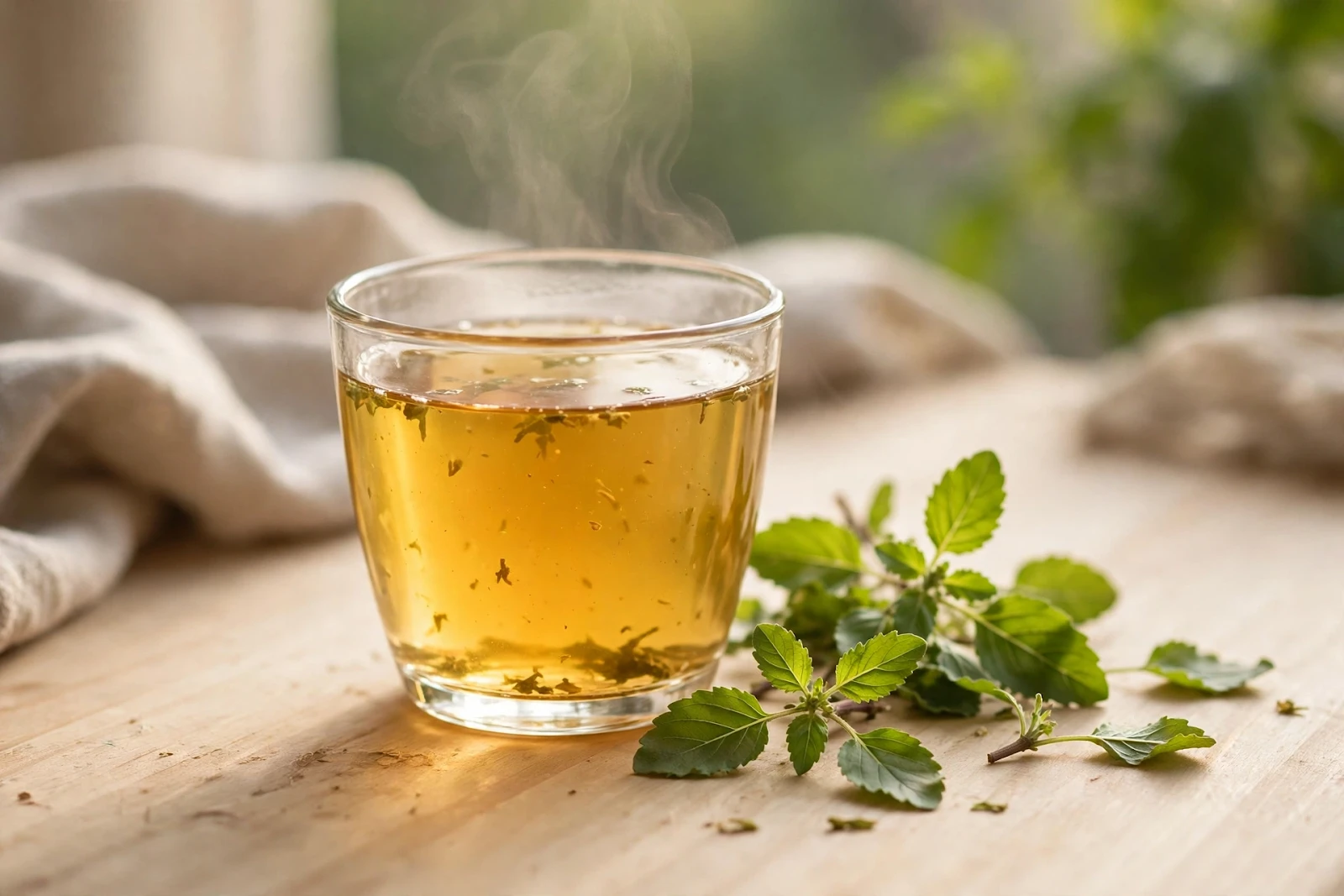
Illustration: A glass cup of golden tulsi tea with fresh green holy basil leaves beside it on a wooden table.
1. What Is Tulsi Tea?
Tulsi tea is an herbal infusion made from the leaves of holy basil, a plant known in India as tulsi and in botanical terms as Ocimum sanctum (also classified as Ocimum tenuiflorum). Despite the name, it is not a true tea: true teas come from the Camellia sinensis plant, while tulsi is a member of the basil family, a close relative of the sweet basil used in cooking. Because it contains no true tea leaves, tulsi tea is naturally caffeine-free, which sets it apart from green, black, and oolong teas and makes it a popular choice for evenings and for people who avoid caffeine.
In India, tulsi holds a special place that goes beyond the kitchen. The plant is traditionally grown in home courtyards and near temples, and its leaves have been used for centuries in Ayurvedic practice, where tulsi is often called the "queen of herbs" and described as an adaptogen — a plant thought to help the body adapt to stress. There are three main types: Rama tulsi, with green leaves and a milder, slightly sweet flavour; Krishna tulsi, with purple-tinged leaves and a stronger, more peppery taste; and Vana tulsi, a wild variety with a lemony note. Most commercial tulsi teas blend Rama and Krishna leaves. The flavour is warm and lightly spicy, with hints of clove and black pepper, and it needs no sweetener to taste pleasant — although many people enjoy it with a little honey or lemon.
2. What Is Inside a Cup of Tulsi Tea?
A cup of tulsi tea is mostly water, but dissolved in it is a small collection of plant compounds from the leaves. The most studied include eugenol, the aromatic compound also found in cloves; rosmarinic acid, a polyphenol found in many herbs of the mint family; ursolic acid; and a range of flavonoids. In laboratory studies, several of these compounds have shown antioxidant activity, meaning they can neutralise certain unstable molecules in test-tube conditions. Researchers have also explored their effects on inflammation markers in cell and animal studies. It is important to keep the scale in mind: the amounts of these compounds in a single cup of brewed tea are small, and antioxidant activity in a laboratory does not automatically translate into a health benefit in the human body.
Beyond those compounds, tulsi leaves contain small amounts of vitamins and minerals, including vitamin A, vitamin C, calcium, and iron — though a cup of tea provides only a modest amount of any of them, and tea should never be counted on as a source of nutrients. What tulsi tea does offer, more reliably, is a warm, unsweetened, calorie-free drink. Plain tulsi tea brewed without sugar contains almost no calories, which makes it a simple alternative to sweetened drinks — a swap that health organisations such as the World Health Organization have encouraged in their general guidance on reducing free sugars in the diet. In short, a cup of tulsi tea is best understood as a pleasant, low-calorie herbal drink with an interesting set of plant compounds, rather than as a concentrated source of nutrition.
3. Tulsi Tea and Stress
Stress is the area where tulsi is most often discussed, and the conversation begins with the word "adaptogen". In Ayurvedic tradition, tulsi is described as a plant that helps the body respond to physical and mental stress, and modern researchers have taken an interest in that idea. A small number of human studies have explored tulsi extracts — usually capsules or concentrated preparations, not brewed tea — in relation to self-reported stress, and some have reported modest improvements in feelings of stress or general wellbeing compared with a placebo. However, these studies have generally been small and short, lasting a few weeks, and their results have not been consistent enough to support a firm conclusion. No major health authority, including the Mayo Clinic or Harvard Health, describes tulsi as an established treatment for stress.
That said, there are gentler, more everyday ways a cup of tulsi tea may help a stressful day feel a little easier. First, the ritual itself matters: warming the water, steeping the leaves, and sitting down with a warm cup creates a small pocket of slowness, and behavioural research on stress often notes that simple, predictable rituals can help people feel more settled. Second, the aroma may play a role — tulsi's warm, clove-like scent is widely described as comforting. Third, because tulsi tea contains no caffeine, it will not add the jitteriness or restlessness that coffee or strong black tea sometimes brings. In short, tulsi tea may help create a calmer moment through ritual, aroma, and the absence of caffeine, but it is not a therapy for anxiety and does not replace professional support for stress or mental health concerns.
4. Tulsi Tea and Immune Health
Tulsi has a long traditional reputation as a plant that supports the body's defences, and this is one of the reasons it is brewed so often during the colder months in India. Laboratory and animal studies have explored whether tulsi extracts may influence certain immune cells and markers, and researchers have described these effects as immunomodulatory — meaning the extracts appear to interact with immune activity in test conditions. A few small human studies have looked at tulsi extracts in relation to immune markers, with some reporting modest changes. But the evidence is thin: the studies are few, small, and short, and most of them used concentrated extracts at doses far above what a cup of tea provides. No trusted health source, including the CDC or NHS, recommends tulsi tea for preventing or treating infections.
It helps to keep immune health in its proper context. Trusted health sources such as the CDC and NHS describe immune function as the result of a whole pattern of habits: enough sleep, a varied diet rich in vegetables, fruits, and whole grains, regular physical activity, not smoking, and managing stress. A cup of tulsi tea can fit comfortably into that pattern as a warm, unsweetened drink that replaces a sugary beverage — and enjoying it as part of a restful evening routine may support better sleep, which in turn supports general health. What it cannot do is act as a shield against colds, flu, or other infections, and it should never be used as a substitute for vaccination, hand hygiene, or medical care when illness strikes.

Illustration: Fresh green tulsi holy basil leaves in a small ceramic bowl beside a glass teapot of brewed tea.
5. Tulsi Tea, Blood Sugar, and Metabolism
Blood sugar is another area where tulsi has attracted research interest. A small number of clinical studies — mostly conducted in India — have looked at tulsi leaf extracts in people with type 2 diabetes, and some reported modest improvements in fasting blood sugar or related markers over a period of weeks. These findings are intriguing, but they come with important limits: the studies were small, often short, and many used concentrated extracts or powdered leaf rather than brewed tea, so it is not clear how much, if any, of the effect would come from a daily cup. The results have also been inconsistent across studies. For that reason, no major health authority describes tulsi as a treatment for diabetes or high blood sugar, and tulsi tea should never replace prescribed medication or a clinician's advice about blood sugar management.
On the question of weight and metabolism, the honest summary is similar to that for many herbal teas: unsweetened tulsi tea is a low-calorie drink that may modestly support a weight-management pattern, but it does not burn fat or speed up metabolism in any dramatic way. Some laboratory studies have explored whether tulsi compounds affect how the body handles fats and sugars, but the evidence in people is far too limited to draw conclusions. The more meaningful role of tulsi tea is simpler: a cup contains almost no calories, so choosing it instead of a sugary soft drink or sweetened coffee can reduce daily calorie intake over time — a swap, not a shortcut, that works best alongside meals built around vegetables, fruits, whole grains, and protein, plus regular movement and enough sleep. Claims that tulsi tea "detoxifies" the body deserve the same caution: the liver and kidneys already handle waste removal, and no tea has been shown to detoxify the body. Sustainable changes — the kind recommended by sources such as the CDC and NHS — come from patterns, not from one beverage.
6. Tulsi Tea and Respiratory Comfort
In Indian households, tulsi tea is a familiar home remedy for a scratchy throat or a winter cold, and this traditional use is one of the reasons the plant is so widely grown. The warm liquid itself can feel soothing on an irritated throat, and the steam rising from the cup carries tulsi's aromatic compounds, including eugenol, which gives the tea its clove-like scent. Some laboratory studies have explored whether tulsi extracts may affect certain microbes or airway responses, and traditional texts describe tulsi as helpful for coughs and congestion. But there is very little clinical research in people to support these uses, and the studies that exist are small and preliminary. A cup of tulsi tea is best thought of as a comforting warm drink during a cold, not as a treatment for any respiratory condition.
For everyday comfort, tulsi tea can be a pleasant part of looking after yourself when you feel under the weather: a warm cup, perhaps with a little honey and lemon, taken slowly while you rest. Note that honey should never be given to children under one year of age. Tulsi tea is not a treatment for asthma, chronic bronchitis, or any other respiratory condition, and it should never replace prescribed inhalers or medication. If a cough lasts more than a few weeks, if breathing becomes difficult, or if a fever is high or persistent, those are reasons to seek medical advice rather than to rely on tea — a point covered in more detail in the "When to See a Doctor" section below.
7. Tulsi Tea, Digestion, and Everyday Comfort
Tulsi tea is often served after meals in India, and many drinkers describe it as settling for the stomach. In Ayurvedic tradition, tulsi is considered helpful for digestion, and some small studies in animals have explored whether tulsi extracts may affect gut motility or stomach comfort. In people, however, direct evidence is very limited: there are few clinical studies looking specifically at tulsi tea and digestion, and none strong enough to support a health claim. What can be said with more confidence is that warm, unsweetened herbal drinks in general are often experienced as gentle on the stomach, and that sipping a warm drink slowly after a meal encourages a pause — which itself can be part of eating more mindfully.
It is worth being clear about what tulsi tea does not do for the gut. It is not a probiotic and does not add beneficial bacteria to the digestive system; it does not treat acid reflux, irritable bowel syndrome, or any other digestive condition; and drinking large amounts is more likely to cause discomfort than to relieve it. For everyday digestive comfort, the habits with the strongest general support are familiar ones: eating slowly, chewing well, including fibre-rich foods such as vegetables, fruits, and whole grains, staying hydrated, and moving regularly — guidance echoed by sources such as the NHS and Harvard Health. Tulsi tea can be one small, pleasant part of that pattern, enjoyed after a meal as a caffeine-free alternative to coffee or a sweet dessert drink.
8. How to Brew and Enjoy Tulsi Tea
Brewing tulsi tea well is simple, and the herb is forgiving: unlike delicate green tea, tulsi leaves tolerate water that is just off the boil. If you are using fresh leaves, take a small handful — roughly ten to fifteen leaves — rinse them, and gently crush or tear them to release their aroma. If you are using dried leaves, start with about one teaspoon per cup (roughly 240 ml). Pour over water that has just come off the boil, around 90–95°C, cover the cup, and steep for about five minutes. Covering the cup matters: it keeps the aromatic compounds, including eugenol, in the tea rather than letting them escape with the steam. Taste as you go — if the tea seems weak, steep a little longer next time; if it tastes too strong or peppery, use fewer leaves or shorten the steep.
Good-quality leaves can usually be steeped more than once, and a second infusion, with a slightly longer steep, often still carries a pleasant warm note. Tulsi tea pairs well with light foods such as fresh fruit, plain biscuits, or a simple salad, and many people enjoy it in the evening as a caffeine-free alternative to black tea. Iced tulsi tea is another pleasant option in warm weather: brew it a little stronger than usual, let it cool, and pour it over ice with lemon or a few mint leaves. A spoonful of honey is a traditional addition, though the tea is enjoyable without any sweetener. Store dried leaves in an airtight container in a cool, dark cupboard, away from strong smells — like all dried herbs, tulsi absorbs odours easily. One to three cups a day is a common and moderate pattern for most adults who enjoy it.

Illustration: A glass teapot pouring golden tulsi tea into a cup with fresh holy basil leaves scattered on a wooden table.
A Note on Who Should Be Careful
Tulsi tea is a gentle drink for most adults, but a few groups should enjoy it with extra care. People who are pregnant or breastfeeding should note that there is very little reliable safety data on regular tulsi consumption in pregnancy, so it is best to ask a doctor or midwife before drinking it often. People taking medication for blood sugar should be aware that tulsi has been studied for possible effects on blood sugar, and anyone taking blood-thinning medication should note that tulsi may, in theory, affect blood clotting — in both cases, a brief check with a doctor or pharmacist can give personalised guidance. Animal studies using very high doses of tulsi extracts have also raised questions about fertility, although it is not known whether ordinary amounts of brewed tea have any such effect; people who are trying to conceive may wish to mention tulsi tea to their clinician. People with an allergy to basil or other plants in the mint family should avoid it, although true tulsi allergy is uncommon. Finally, tulsi tea is a food and drink, not a medicine: it should never replace prescribed treatment.
Myths vs Facts
Myth: Tulsi tea cures colds and flu.
Fact: Tulsi tea is a traditional home drink for colds, and a warm cup can feel soothing on a sore throat. But there is no good evidence that it prevents or cures colds, flu, or any other infection, and it should never replace rest, fluids, or medical care when illness is serious.
Myth: Tulsi tea detoxifies the body.
Fact: The liver and kidneys already handle the body's waste removal continuously, and no tea has been shown to detoxify the body. Staying hydrated supports normal body functions, but "detox" claims about tulsi tea are marketing, not evidence.
Myth: Tulsi tea has no side effects because it is natural.
Fact: Natural does not mean risk-free. Tulsi may interact with medication for blood sugar or blood clotting, and there is limited safety data for pregnancy. Anyone who is pregnant, breastfeeding, or taking regular medication should check with a clinician before drinking it often.
Myth: Drinking tulsi tea will melt body fat.
Fact: No tea melts fat. Unsweetened tulsi tea is very low in calories, so choosing it instead of sugary drinks can help reduce daily calorie intake, but lasting weight management depends on overall eating patterns, physical activity, and sleep.
Myth: Tulsi tea treats anxiety and can replace medication.
Fact: Some small studies have explored tulsi extracts and self-reported stress, with modest and inconsistent results, and those studies used extracts rather than brewed tea. Tulsi tea may support a calming ritual, but it is not a treatment for anxiety, stress, or sleep problems, and it should never replace prescribed medication or professional care.
When to See a Doctor
Tulsi tea is a beverage, not a health intervention. But some situations deserve a conversation with a healthcare professional: pregnancy, breastfeeding, or trying to conceive, where your clinician can advise whether regular tulsi tea suits you; taking medication for blood sugar or blood clotting, where tulsi may interact; or planning to drink tulsi tea in large amounts every day. Seek medical advice promptly for a cough that lasts more than a few weeks, fever that is high or persistent, difficulty breathing, or signs of an allergic reaction such as swelling of the lips or tongue, difficulty breathing, or a spreading rash. And if you have been using tea or any other drink to manage anxiety, low mood, or a sleep problem, a healthcare professional can help you find evidence-based support.
Sponsored: check today's offers on recommended wellness products
Frequently Asked Questions
Does tulsi tea contain caffeine?
No. Tulsi tea is made from holy basil leaves, not from true tea leaves, so it is naturally caffeine-free. That makes it a good choice for evenings and for people who are sensitive to caffeine.
Can I drink tulsi tea every day?
For most healthy adults, one to three cups a day is moderate. Notice how it affects you, and adjust if needed. People who are pregnant, breastfeeding, trying to conceive, or taking medication should follow their clinician's guidance before drinking it regularly.
Is tulsi tea safe during pregnancy?
There is very little reliable safety data on regular tulsi consumption during pregnancy, so most cautious advice is to ask your doctor or midwife first. Do not assume that a herbal tea is automatically safe in pregnancy simply because it is natural.
How should I brew tulsi tea?
Use about one teaspoon of dried leaves (or a small handful of fresh leaves) per cup, pour over water just off the boil, cover the cup, and steep for about five minutes. Covering the cup keeps the aromatic compounds in the tea. Add honey or lemon if you like, or enjoy it plain.
Can tulsi tea help with sleep?
Because tulsi tea is caffeine-free, it will not keep you awake the way coffee or black tea might, and many people enjoy it as part of a calming evening ritual. But it is not a treatment for insomnia or sleep problems — if sleep troubles persist, speak with a healthcare professional.
Have you tried tulsi tea, and do you have a favourite way to brew it — fresh leaves from the garden, dried leaves, or a simple tea bag? Share your experience in the comments below; we would love to hear how tulsi tea fits into your daily routine.
Disclaimer: This article is for general information only and is not medical advice. It is not intended to diagnose, treat, cure, or prevent any disease. Always consult a qualified healthcare professional before making changes to your diet or health routine, especially if you are pregnant, breastfeeding, taking medication, or living with a health condition.


Comments
Post a Comment